.webp)
Home / world / Iran Launches Missile and Drone Attacks on Bahrain, Kuwait, and Jordan After US Strikes on Nuclear Facility
Iran Launches Missile and Drone Attacks on Bahrain, Kuwait, and Jordan After US Strikes on Nuclear Facility
By: My India Times
7 minutes read 2Updated At: 2026-07-20

Iran Expands Retaliatory Strikes Across the Gulf
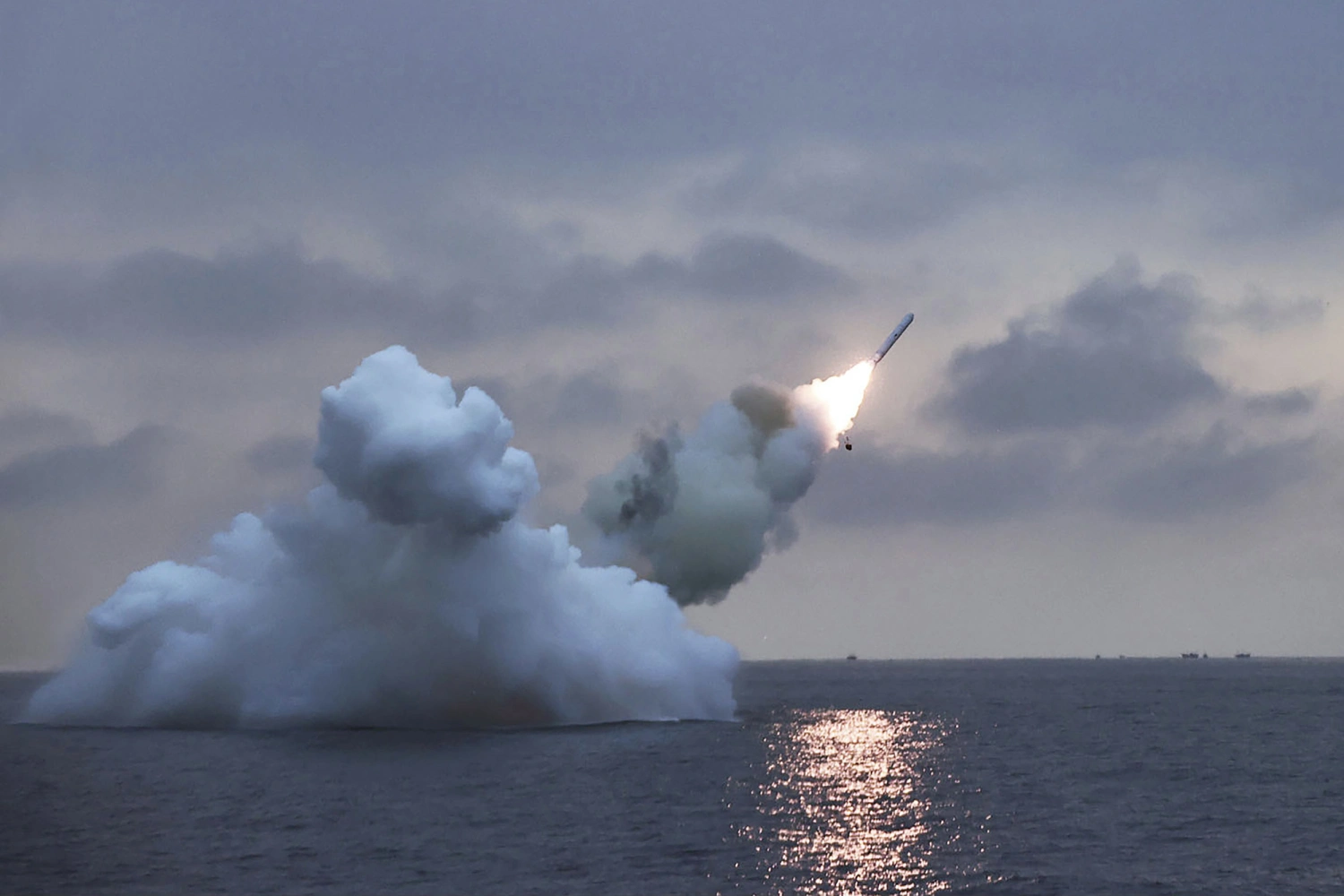
Iran launched missile and drone attacks on Bahrain, Kuwait, and Jordan on Sunday, causing the Middle East to see yet another dramatic escalation. This was one of the biggest regional conflicts since hostilities between Tehran and Washington escalated. The latest military action came just hours after the United States carried out another round of airstrikes on Iranian territory, including locations near the under-construction Darkhovin nuclear power plant in southwestern Iran. Concerns that the confrontation might turn into a larger regional conflict involving several Gulf states have been heightened by the exchange. While emergency services dealt with damage from falling debris and direct strikes on vital infrastructure, authorities in Kuwait, Bahrain, and Jordan claimed that they had intercepted multiple incoming rockets.
Kuwait Reports Damage to Power and Water Infrastructure
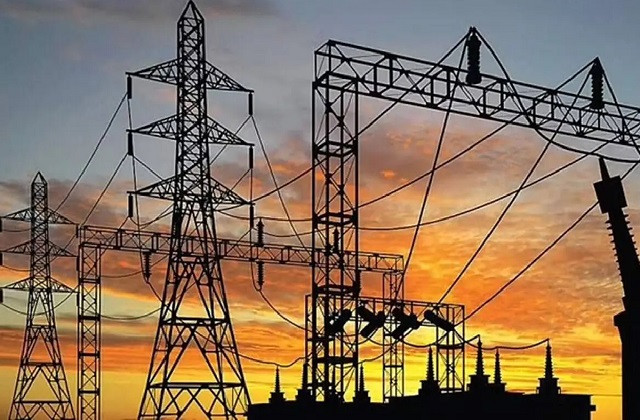
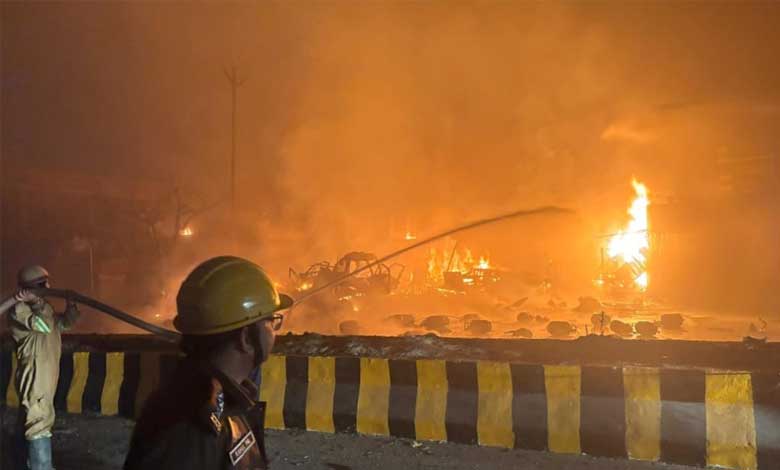
Kuwait appeared to be among the hardest-hit countries during Sunday's attacks. Officials confirmed that an Iranian strike caused a fire at a power generation and desalination facility, the second such incident within 48 hours. Emergency crews quickly responded to contain the blaze while engineers assessed the extent of the damage. Authorities classified the strike as a major assault on the nation's vital infrastructure, even though they did not immediately record civilian casualties. For Gulf countries that mainly rely on desalinated seawater to supply domestic water demand, power and desalination plants are vital, making them strategically significant.
Bahrain Activates Air Defences
Bahrain also experienced multiple waves of missile and drone threats during the latest escalation. The country's defence forces announced that air defence systems successfully intercepted incoming projectiles before they reached their intended targets. Air raid sirens sounded across several areas, prompting residents to seek shelter while authorities monitored the evolving security situation. Bahrain is one of Iran's main strategic concerns at times of increased conflict with Washington because it is home to substantial American military forces.
Jordan Intercepts Iranian Missiles
Jordan confirmed that its air defence systems intercepted several missiles crossing its airspace. Military officials stated that three missiles were successfully destroyed before impact, while another projectile failed to reach its target. Later, the Jordanian authorities called Iran's ambassador, calling the attacks intolerable breaches of the nation's territorial integrity and sovereignty. Jordan has repeatedly found itself caught between regional powers due to its strategic geographic location and longstanding security partnerships with Western allies.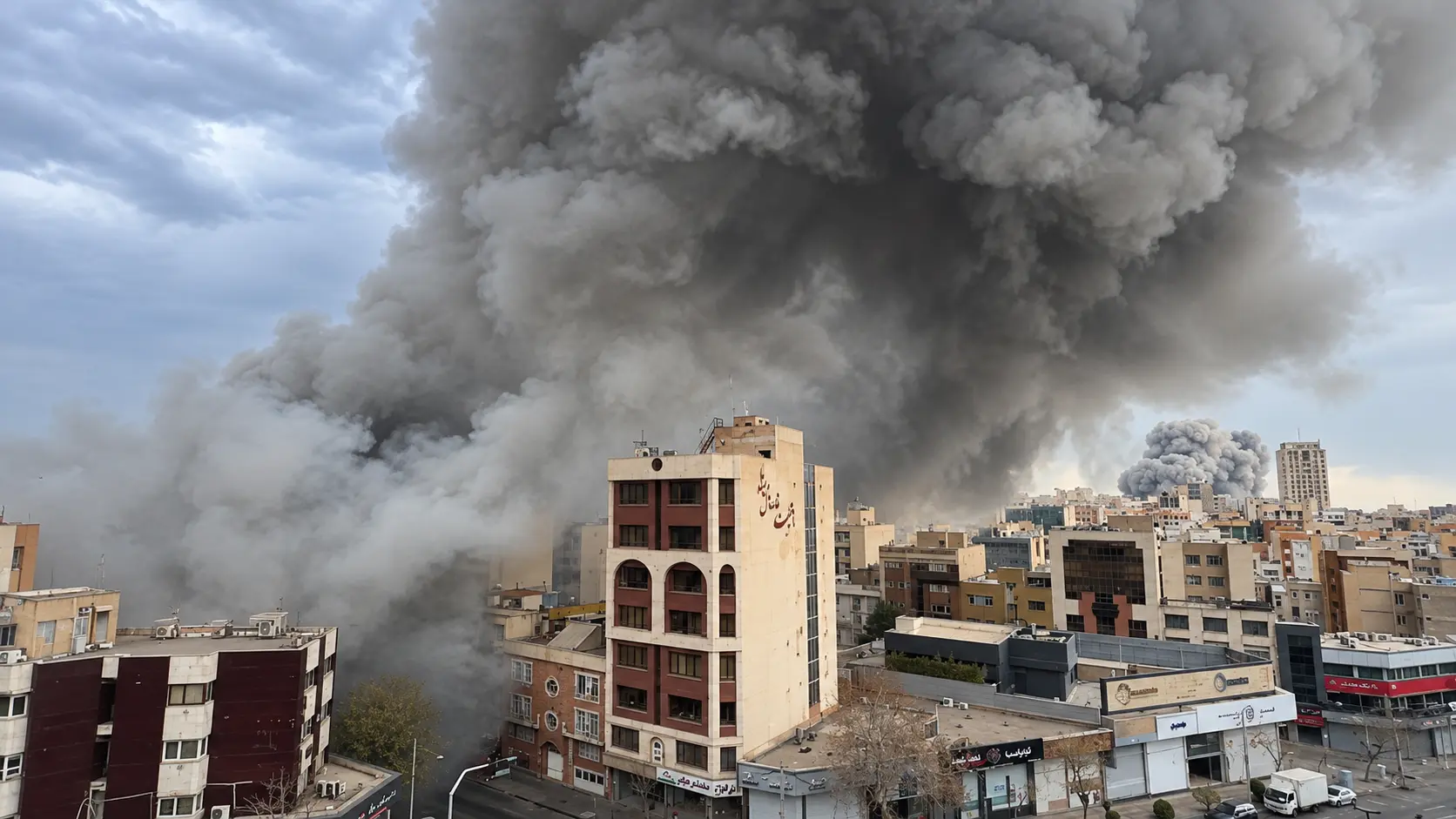
Iran Says US Military Facilities Were the Target
Iran's Islamic Revolutionary Guard Corps (IRGC) maintained that the attacks were directed exclusively at military objectives connected to the United States. According to Iranian military statements, the intended targets included American military installations and logistical infrastructure operating within Kuwait and Jordan. Iran argued that the latest strikes were carried out in response to continued US military operations against Iranian territory. Tehran has consistently maintained that countries hosting American military forces become legitimate military targets whenever US operations are launched from those locations.
US Airstrikes Target Iranian Military and Nuclear Infrastructure
The Iranian attacks followed another night of US military operations inside Iran. American officials stated that precision strikes targeted surveillance systems, military storage facilities, and infrastructure believed to support operations in the Persian Gulf and the Strait of Hormuz. One of the most closely watched developments was the reported strike near the Darkhovin nuclear power project, an under-construction civilian nuclear facility located in Iran's Khuzestan province.US officials argued that the broader campaign is designed to reduce Iran's military capabilities and limit threats against international shipping routes.
Iran Condemns Strike on Darkhovin Nuclear Facility
Iran strongly criticized the reported strike involving the Darkhovin nuclear site. Government officials described the attack as a dangerous escalation and accused Washington of violating international norms protecting civilian nuclear infrastructure. Iranian authorities insisted that the facility is part of the country's peaceful nuclear energy programme and vowed that attacks on strategic infrastructure would not alter its long-term plans. The incident has intensified international concern regarding the risks associated with military activity near nuclear installations.
IAEA Monitoring the Situation
The International Atomic Energy Agency (IAEA) said it is reviewing information regarding the reported strike. According to the agency, inspectors had previously confirmed that the Darkhovin project remained under construction and did not contain nuclear material during earlier inspections. Even so, experts note that attacks involving nuclear facilities raise broader concerns about environmental safety, regional security, and compliance with international law. The agency continues monitoring developments as additional information becomes available.
Gulf Nations Condemn Iran's Actions
Several Middle Eastern governments issued strong statements condemning Iran's latest military operations. Kuwait accused Tehran of attacking civilian infrastructure, particularly facilities responsible for electricity generation and water production. The United Arab Emirates expressed solidarity with countries affected by the strikes and reiterated support for measures aimed at protecting regional stability. Qatar also called for restraint, urging all parties to avoid further escalation and return to diplomatic engagement before the crisis expands further. Regional leaders warned that continued military exchanges risk destabilizing the entire Gulf region.
Lebanon Voices Concern
Lebanese Prime Minister Nawaf Salam joined regional leaders in criticizing the attacks. He described the strikes against Kuwait and Jordan as violations of national sovereignty and warned that the conflict threatens broader Arab security. Lebanon has consistently advocated diplomatic solutions amid rising tensions involving Iran, Israel, and the United States.
Strait of Hormuz Again Becomes Global Focus
Beyond the missile exchanges, attention has once again shifted toward the Strait of Hormuz, one of the world's most strategically important maritime corridors. Iran's Revolutionary Guard announced that it had stopped two vessels after they allegedly attempted to use what Tehran described as an unsafe navigation route. Although details remain limited, the incident has renewed fears regarding commercial shipping through the narrow waterway. Nearly one-fifth of global oil exports pass through the Strait of Hormuz, meaning any disruption has immediate implications for international energy markets. Shipping companies continue monitoring the situation closely as insurance costs and security concerns increase.
Growing Risk of Regional Conflict
Military analysts believe the conflict has entered a more dangerous phase than earlier confrontations. Unlike previous exchanges that largely involved proxy groups or isolated operations, recent attacks directly involve sovereign states hosting American military facilities. Each round of retaliation increases the possibility of broader regional participation. Security experts warn that further attacks on Gulf infrastructure—including ports, airports, desalination plants, or energy facilities—could significantly affect regional economies and international trade.
Diplomatic Efforts Face Major Challenges
Despite repeated international appeals for restraint, diplomatic progress remains uncertain. The latest exchange comes despite earlier understandings intended to reduce tensions between Washington and Tehran. With both sides continuing military operations while insisting they are acting defensively, prospects for immediate de-escalation appear increasingly limited. International organizations continue urging dialogue, emphasizing that prolonged conflict could have severe humanitarian, economic, and geopolitical consequences across the Middle East.
Global Markets Watching Closely
Financial markets are also closely tracking developments. Oil traders remain particularly sensitive to any disruption affecting Gulf shipping routes or energy infrastructure. Analysts note that sustained military activity around the Strait of Hormuz could influence crude oil prices, shipping insurance premiums, and supply chains worldwide. Governments across Europe and Asia are monitoring the situation due to their dependence on stable energy supplies from the Gulf.
As both Iran and the United States continue exchanging military strikes, uncertainty continues to grow across the region. Security experts believe the coming days will be critical in determining whether diplomatic efforts can slow the escalation or whether further military actions will draw additional countries into the conflict. For now, Gulf nations remain on heightened alert, strengthening air defences and monitoring potential threats while international leaders continue urging restraint. The evolving confrontation has become one of the most closely watched geopolitical crises of the year, with implications extending far beyond the Middle East.
....Independent reporting, fact-checked analysis and breaking news coverage from India and around the world.
Trusted source for breaking news, business, technology, world affairs, finance, economy, health, sports and market insights from India and around the globe.
Join our WhatsApp Channel
Similiar News


.jpeg)


-1782441789939.jpg)


.jpg)





.jpg)


















































.png)











.png)




.jfif)










Turkey Blocks LGBTQ+ Cruise Ship From Docking, Sparking Global Debate Over Tourist Rights
2026-07-06

Iran Warns Shipping Against Altering Strait of Hormuz Route Amid Rising Regional Tensions
2026-06-29













































































.png)
 (1).png)