.webp)
Home / home / Pakistan Continues Ceasefire Violations for Fourth Consecutive Day, Indian Army Retaliates With Swift, Strong And Effective Response At LoC
Pakistan Continues Ceasefire Violations for Fourth Consecutive Day, Indian Army Retaliates With Swift, Strong And Effective Response At LoC
By: My India Times
6 minutes read 182Updated At: 2025-04-28

Amid escalating tensions along the volatile Line of Control (LoC), Pakistan continued its unprovoked ceasefire violations for the fourth consecutive day. Indian troops, staying alert and prepared, responded to the provocations with prompt and decisive action, ensuring the security and integrity of the nation’s borders.
According to an official statement from the Indian Army, the latest incident occurred during the night of April 27-28, 2025. Pakistani forces initiated unprovoked small arms fire targeting Indian positions in areas opposite to Kupwara and Poonch districts of Jammu and Kashmir. In line with established protocols and defensive postures, Indian troops delivered a "swift and effective" response to suppress and neutralize the hostile firing.
This latest ceasefire violation follows a pattern of escalating hostility observed over recent days. On Saturday night (April 26-27, 2025), Pakistani posts had also engaged in similar provocative actions. They opened fire across the LoC targeting Indian posts in the Tutmari Gali and Rampur sectors. Once again, the Indian Army had retaliated firmly, utilizing appropriate small arms fire to counter the attack.
In both instances, the Indian side reported no casualties or damage, underscoring the high level of preparedness, resilience, and tactical acumen of the Indian soldiers deployed along the sensitive border regions.
Rising Tensions Along The LoC
The Line of Control, which divides the Indian-administered and Pakistan-administered territories of Jammu and Kashmir, has historically been a flashpoint for skirmishes and ceasefire breaches. Although a ceasefire agreement was renewed in February 2021, instances of violations have been sporadically reported since then. However, the recent back-to-back violations have raised concerns about a potential escalation of conflict in the region.
Military experts believe that the renewed aggression from Pakistan may be linked to multiple factors — ranging from internal political turmoil to strategic posturing. Some analysts argue that Pakistan often resorts to border provocations to divert attention from its domestic crises or to maintain its hold over its military and political narratives.
Indian Army's Measured Yet Firm Response
The Indian Army has maintained a clear stance of responding to provocations with strength and precision while exercising maximum restraint to prevent unwarranted escalation. The army's doctrine along the LoC emphasizes "effective and proportionate" retaliation, ensuring that hostile acts do not go unanswered but without unnecessarily widening the scope of conflict.
The Indian Army’s quick retaliation over the past four days has demonstrated its high operational readiness and unwavering commitment to safeguarding the nation’s territorial integrity. Army officials have reiterated that any act of aggression from across the LoC will be met with a robust and resolute response.
Speaking to media on conditions of anonymity, a senior defence official said, “Our troops are fully alert and prepared to respond to any provocation. We have ensured that the ceasefire is respected, but violations will be countered decisively.”
Political Reactions and Broader Implications
The ongoing ceasefire violations have not gone unnoticed in political and diplomatic circles. Several political leaders in India have condemned Pakistan's actions, calling them irresponsible and dangerous. They emphasized that such provocations threaten regional peace and stability.
India’s Ministry of External Affairs (MEA) is closely monitoring the situation, although no formal diplomatic protest note has been issued yet. Sources indicate that India may raise the matter at appropriate bilateral or multilateral forums if the violations persist.
At the same time, security experts caution that while localized skirmishes may not immediately lead to large-scale hostilities, continuous provocations risk raising tensions to dangerous levels. A prolonged period of cross-border firing could endanger civilian populations living in villages close to the LoC, many of whom have already witnessed tragic disruptions to their lives during past flare-ups.
The Human Dimension: Civilians on Edge
Villages close to the LoC, particularly in the Kupwara, Poonch, and Baramulla districts, are facing renewed fears due to the fresh ceasefire violations. While there have been no civilian casualties so far, residents remain wary of the situation deteriorating further.
Local authorities have been on high alert, ensuring that contingency plans for evacuation and emergency response are ready should the situation worsen. In some vulnerable areas, temporary shelters and bunkers have been kept prepared for immediate use.
“We have seen such nights before, and we pray that the firing stops soon,” said a resident from a border village in Poonch. “Our lives are deeply affected every time there is firing. Children are scared, and people fear going to work or attending school.”
A Pattern That Cannot Be Ignored
Military observers note that Pakistan’s recent actions follow a familiar pattern seen over previous years — initiating cross-border firing to either infiltrate militants across the LoC under covering fire or to create an atmosphere of tension. The Indian Army’s robust surveillance and intelligence grid have so far successfully thwarted such attempts.
Several analysts also point out that the rise in ceasefire violations could be a desperate move by elements within Pakistan to internationalize the Kashmir issue once again. With the global focus shifting away from South Asia due to other geopolitical hotspots, these provocations might be intended to draw international attention back to the region.
Calls for Diplomatic Prudence and Military Vigilance
While India’s military response has been firm, there are growing voices calling for parallel diplomatic efforts to prevent the situation from spiraling into a broader conflict. Maintaining open communication channels and using diplomatic avenues to highlight Pakistan's violations remains crucial for India’s long-term strategic interests.
However, most experts agree that India's primary focus must remain on maintaining its strong defensive posture and protecting its national security interests without yielding to provocations.
Conclusion
The Line of Control remains as volatile as ever, with recent incidents highlighting the fragile nature of the peace maintained since the 2021 ceasefire agreement. Pakistan’s continued ceasefire violations have once again tested the resolve and patience of the Indian Army, which has so far responded with remarkable professionalism, resilience, and tactical expertise.
As India remains committed to peace, it has made it clear that its tolerance should not be mistaken for weakness. Any act of aggression will continue to meet with a swift and effective response, preserving the sovereignty and dignity of the nation.
In the days ahead, the focus will be on ensuring that the situation does not escalate further, while remaining vigilant to any emerging threats along one of the world’s most heavily militarized borders.
....By: My India Times
Updated At: 2025-04-28
Tags: home News | My India Times News | Trending News | Travel News
Join our WhatsApp Channel
Similiar News








































.jfif)







.jpg)






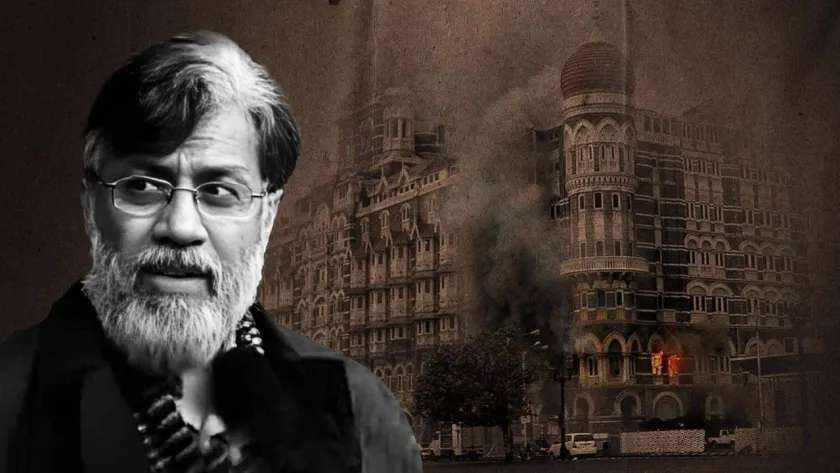
US Supreme Court Rejects 26/11 Accused Tahawwur Rana’s Plea to Block Extradition to India
2025-03-08






















































.png)
 (1).png)