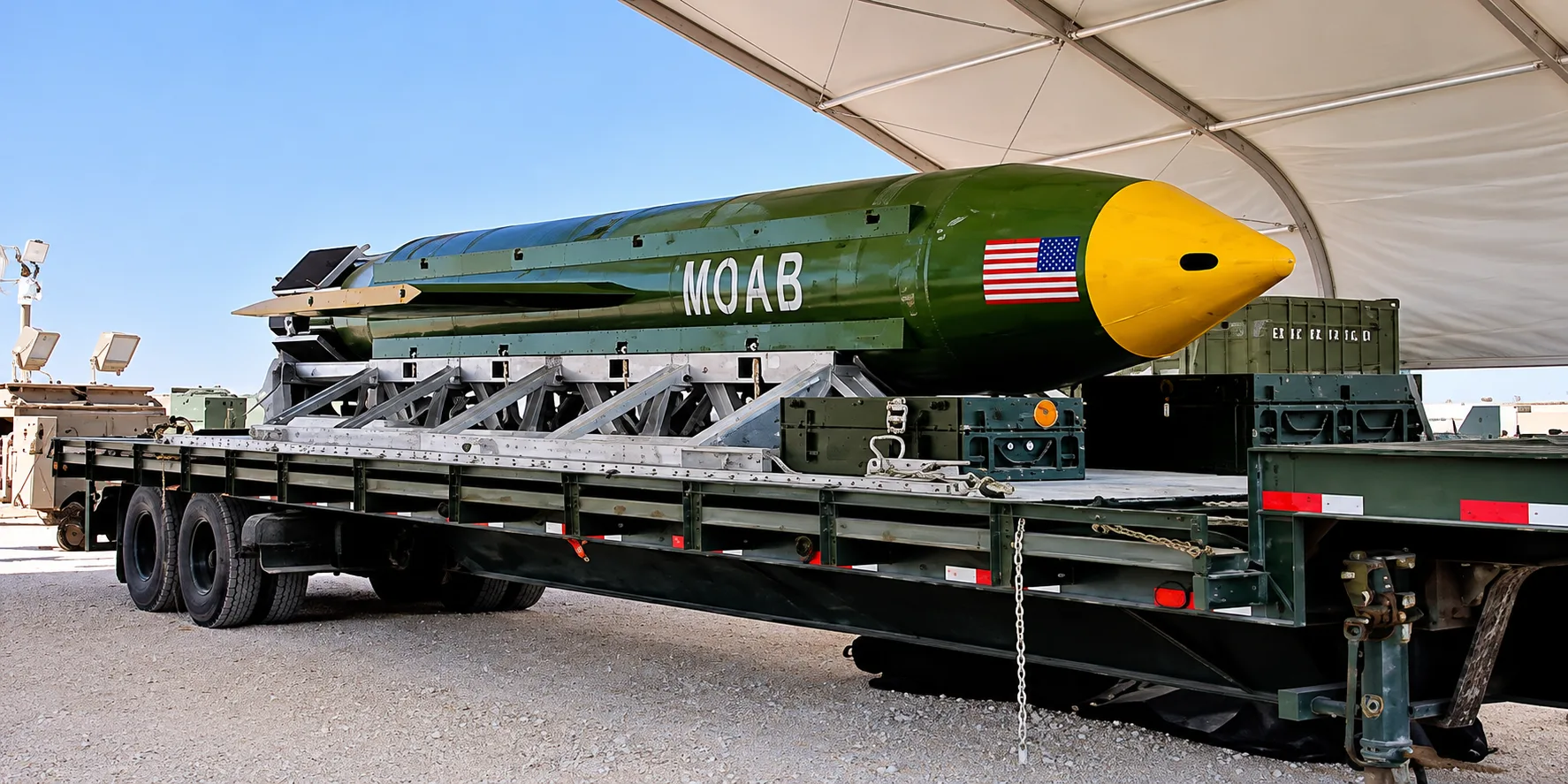
The United States is reportedly exploring military options involving one of its largest conventional bombs as tensions surrounding Iran continue to draw international attention. Known as the GBU-43/B Massive Ordnance Air Blast (MOAB), the weapon has earned the nickname Mother of All Bombs because of its enormous size and destructive power. According to a CNN report published on October 14, 2026, US military planners have developed strike options that could involve the bomb against Iranian energy infrastructure and nuclear-related sites. However, the report also raised questions about whether using such a weapon would help Washington achieve its objectives. There is no confirmed indication that President Donald Trump has ordered a MOAB strike against Iran. The reported discussions have put the spotlight back on a weapon that has been used in combat only once by the United States. But what exactly is the MOAB, how powerful is it, and could it be effective against heavily protected facilities?
What Is the Mother of All Bombs?
The GBU-43/B MOAB is a large, GPS-guided conventional bomb developed by the US Air Force Research Laboratory in 2003. Unlike nuclear weapons, it uses conventional explosives to produce a massive blast. According to the US Air Force Armament Museum Foundation, the bomb weighs approximately 21,600 pounds (9,800 kilograms) and measures around 30 feet (9 metres) in length. Its explosive payload is roughly 18,700 pounds, making it one of the largest conventional bombs in the American arsenal. Its size alone makes it different from the weapons commonly used in airstrikes. The MOAB is designed to attack large surface targets, including exposed positions and certain tunnel complexes. However, its impressive explosive capacity does not mean it can destroy every type of military installation.
How Powerful Is the MOAB?
The bomb's main destructive effect comes from the enormous blast produced when its explosive payload detonates. It is intended to affect a broad area rather than penetrate deep underground before exploding. This distinction becomes particularly important when discussing Iran's nuclear infrastructure. Some facilities associated with nuclear programmes may be protected by reinforced structures or located beneath substantial layers of rock and earth. The MOAB was not primarily designed to penetrate deeply buried targets. Consequently, its ability to damage a particular underground facility would depend on the site's construction, depth and level of protection. Its deployment also requires specialised arrangements because of its considerable size. This makes it a specialised military option rather than a weapon that can be used as easily as smaller bombs.
When Did the US First Use the MOAB?
The United States first used the MOAB in combat on April 13, 2017, during an operation in Afghanistan's Nangarhar province. The target was a tunnel complex associated with the Islamic State Khorasan Province, an extremist group operating in the region. The strike attracted worldwide attention because it marked the weapon's first confirmed combat use by the US military. The operation demonstrated that the MOAB could be deployed against a large target area in challenging terrain. However, its use in Afghanistan does not establish how effective it would be against Iranian facilities, which may have significantly different structures and defensive features.
Why Is the Weapon Being Discussed in Connection With Iran?
The reported US planning has focused on potential targets involving Iranian energy infrastructure and nuclear-related facilities. These targets present different military challenges and may require different approaches. Energy installations can include large industrial structures and exposed equipment, while nuclear-related sites may contain specialised facilities designed with additional physical protection. A weapon capable of producing a massive surface blast may not necessarily be suitable for destroying deeply buried infrastructure. This is one reason the reported discussions have attracted attention. The question is not simply whether the United States possesses a powerful bomb, but whether using it would achieve the intended military and strategic results. According to the CNN report, some officials have questioned the potential benefits of deploying the weapon. That uncertainty suggests the option is being evaluated rather than treated as an established course of action.
Is the Mother of All Bombs a Nuclear Weapon?
Despite its fearsome reputation, the MOAB is not a nuclear bomb. It relies on conventional chemical explosives and does not produce the nuclear reactions associated with atomic weapons. A nuclear detonation can generate extreme heat, a powerful blast and radiation effects that differ fundamentally from those of a conventional explosion. The MOAB can nevertheless cause severe destruction in the area affected by its blast. Any use of such a weapon would also raise concerns about damage to nearby infrastructure and potential risks to civilians, depending on the location and circumstances of the strike.
Has Trump Approved a MOAB Strike on Iran?
As of the information contained in the cited report, there is no confirmation that Trump has authorised the use of the MOAB against Iran. Reports that military planners have considered an option should not be confused with a final decision to carry it out. The situation remains dependent on further political and military decisions. Whether the weapon is ultimately used would involve considerations beyond its explosive power, including the nature of the intended targets and the possible consequences of an attack. For now, the reported discussions highlight the range of military options being examined by Washington, but the possibility of a MOAB strike against Iran remains unconfirmed.