
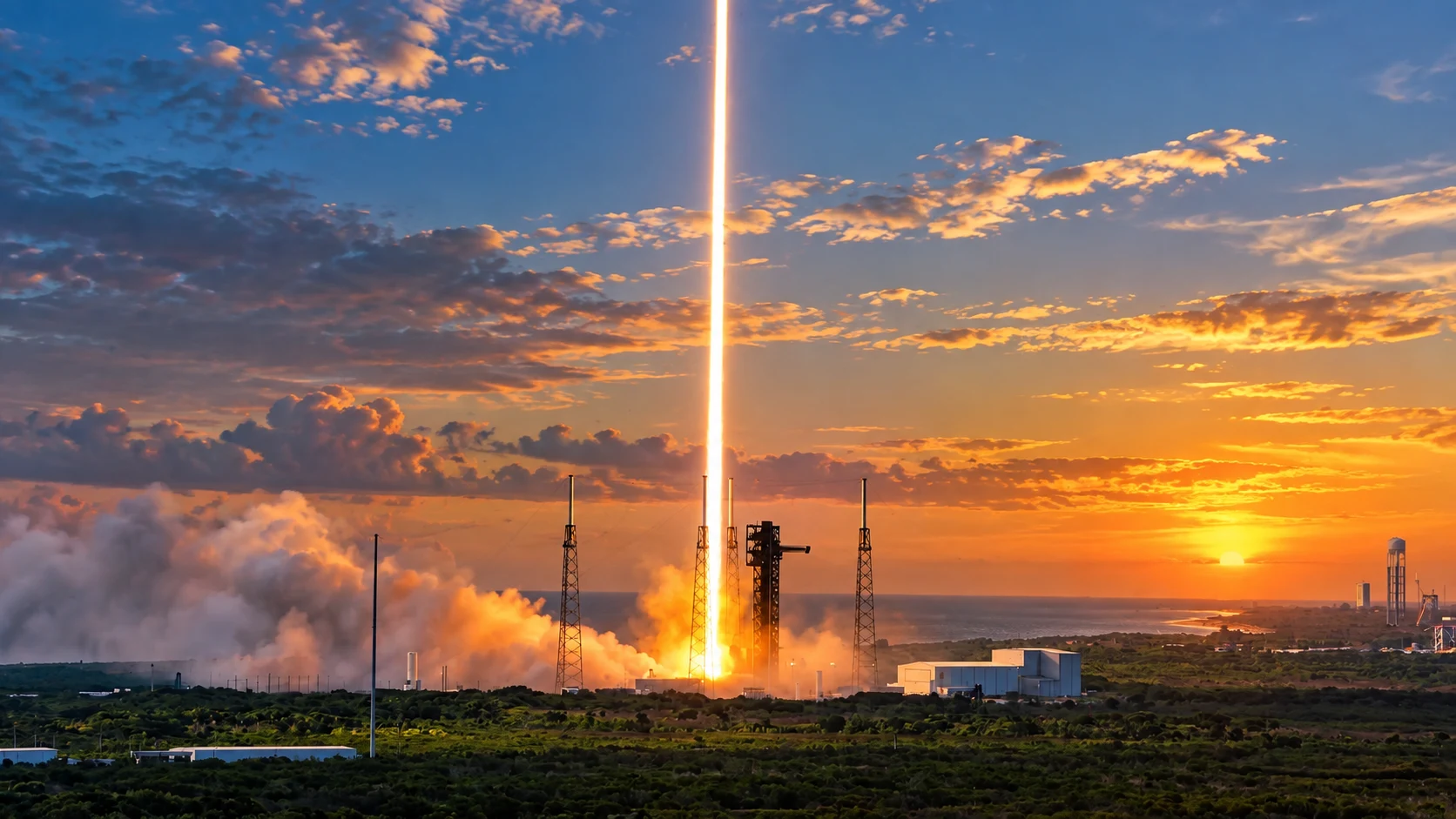
New York: SpaceX shares edged higher in overnight trading on Monday as investors focused on the company's upcoming Starship Flight 14 mission and its potential role in expanding the Starlink satellite internet network. The stock gained around 0.3% ahead of the highly anticipated launch attempt. The move came as SpaceX prepared for what could become an important milestone for Starship: its first planned trip into Earth orbit and the deployment of 26 next-generation Starlink satellites. The mission is being closely watched because the long-term success of Starship could influence how quickly and economically SpaceX expands Starlink's capacity.
Why Investors Are Watching the Starship Launch
Starship is being developed as a fully reusable heavy-lift launch system, but its importance to SpaceX extends beyond deep-space missions. The company intends to use the vehicle to transport much larger payloads into orbit than its existing launch systems. That capability could become particularly important for Starlink, which requires a steady stream of satellite launches to increase network coverage and capacity. Flight 14 is scheduled to carry 26 Starlink V3 satellites, making this mission more than just another test of the giant rocket. It will also provide an early demonstration of Starship's potential role in building the next generation of the Starlink constellation.
Starship Flight 14 Targets First Orbital Mission
The launch is planned from SpaceX's Starbase facility in Texas. The 75-minute launch window is scheduled to open at 8:15 a.m. ET on September 28. The Federal Aviation Administration has authorized the launch and reentry operations for Flight 14, clearing an important regulatory hurdle for the mission. Unlike previous Starship test flights, Flight 14 is designed to attempt a full orbital trajectory. Earlier missions followed suborbital profiles rather than completing a planned orbit around Earth. That makes the upcoming flight a significant technical test for SpaceX as it works toward making Starship a regularly reusable launch vehicle.
26 Starlink V3 Satellites Will Ride Into Orbit
One of the most closely watched elements of Flight 14 will be the deployment of 26 Starlink V3 satellites.The new-generation satellites are designed to provide substantially greater network capacity than earlier Starlink spacecraft. The mission is expected to deploy them at an altitude of roughly 275 kilometres before Starship continues its planned flight profile. The deployment is important for Starlink because additional satellite capacity can allow the network to support more users and higher data demand. According to launch-tracking information, the 26 satellites could collectively add a significant amount of capacity to the constellation, highlighting why the mission is attracting attention from investors as well as space enthusiasts.
How Starship Could Change Starlink Economics
A major part of the investor story is the possibility that Starship could eventually reduce the cost of putting large numbers of satellites into orbit. Starlink currently depends heavily on SpaceX's Falcon 9 rockets. Starship is being designed to carry substantially larger payloads, potentially allowing SpaceX to deploy more satellites on individual missions. If the rocket eventually reaches its intended level of reusability and launch frequency, the economics of satellite deployment could change considerably. That is one reason investors are paying attention to the Starship programme even though the vehicle remains in development.
What Will Happen During Flight 14?
The planned mission profile involves several major objectives. After launch, Starship is expected to enter an orbital trajectory and travel around Earth approximately six times. The spacecraft will then perform a deorbit manoeuvre before attempting a controlled return to the Pacific Ocean west of Chile. The overall mission is expected to last close to 10 hours. The Super Heavy booster will also follow a planned trajectory before splashing down in the Gulf of Mexico. Neither the booster nor the upper stage is planned to be caught and returned to the launch site during this flight.
Why Starlink Capacity Matters to SpaceX
Starlink has become an increasingly important part of SpaceX's broader business strategy. Expanding the constellation requires regular satellite launches and sufficient orbital capacity. The introduction of larger Starlink V3 satellites could help SpaceX increase network capacity without relying solely on increasing the number of individual launches. For investors, the combination of Starship development and Starlink expansion therefore represents a potentially important long-term growth story. However, much of that potential depends on SpaceX successfully demonstrating reliable orbital flights and eventually achieving its planned reusability targets.
SpaceX Stock Performance Remains Mixed
The modest Monday gain follows a weaker period for SpaceX shares. The stock declined about 3% during the previous week, ending a four-week run of gains, according to current market reports. That means Monday's move is relatively small compared with the stock's recent fluctuations. Investors are therefore watching more than just the immediate price movement. The outcome of Flight 14 could provide important information about Starship's technical progress and its future role in SpaceX's launch and Starlink strategies.
What Investors Will Watch Next
The immediate focus will be on whether Starship can achieve orbital insertion, successfully release all 26 Starlink V3 satellites and complete its planned flight sequence. A successful mission would represent another major step in the development of Starship and provide SpaceX with additional operational experience for future satellite deployments. At the same time, the flight remains a test mission, and its outcome will depend on the rocket performing several complex operations in sequence. For now, the slight rise in SpaceX shares reflects investor attention surrounding a potentially important Starship milestone. The bigger question is whether the rocket can eventually deliver on SpaceX's ambition of dramatically increasing launch capacity while lowering the cost of expanding Starlink.