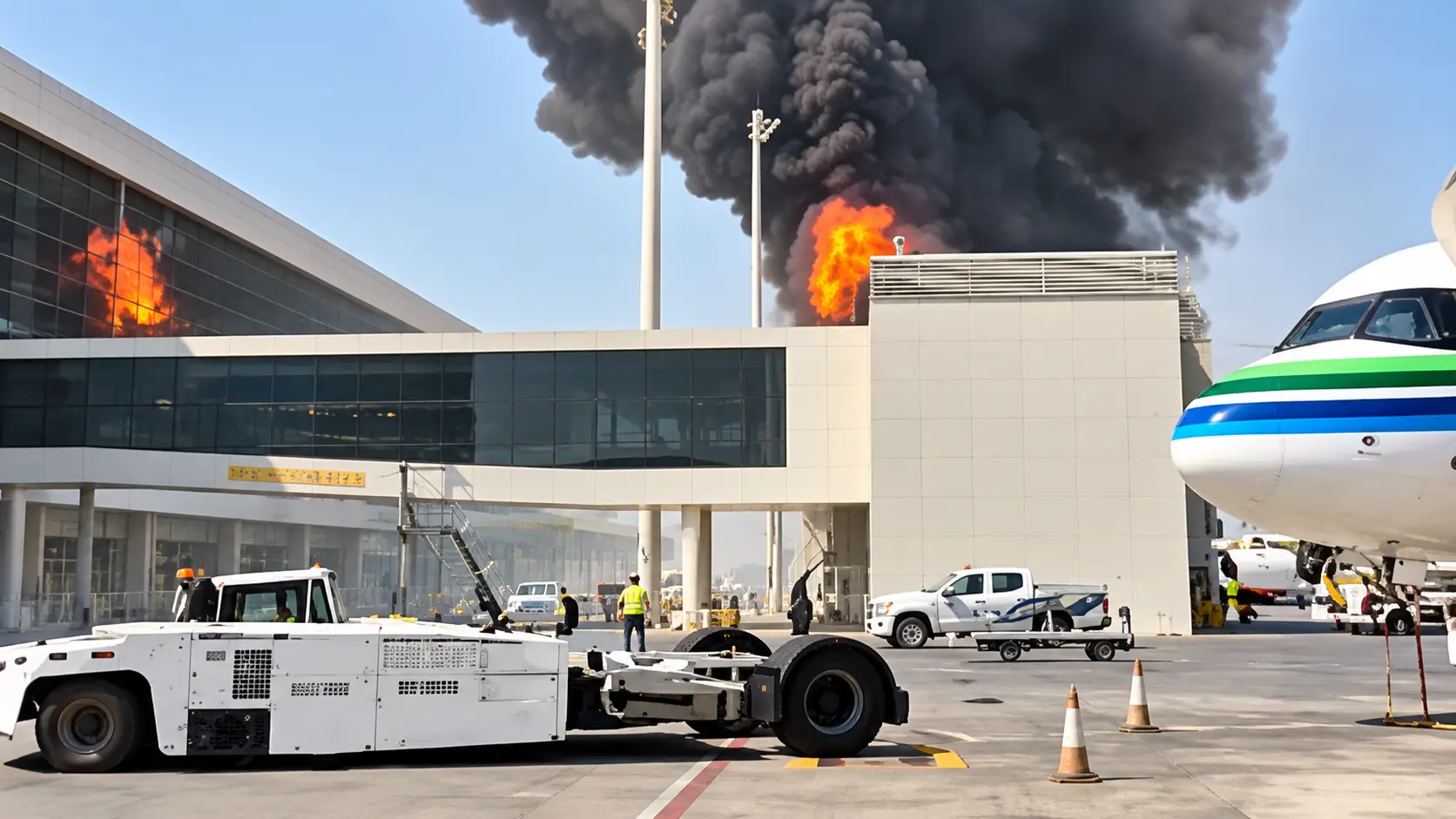
Dammam, Saudi Arabia: A deadly attack targeting Saudi Arabia's King Fahd International Airport in Dammam has left one person dead and eight others injured, raising fresh concerns about aviation security and escalating regional tensions. Saudi authorities confirmed that the injured were transported to hospitals for medical treatment, with their conditions ranging from minor to critical. The incident comes amid a series of reported attacks targeting Saudi Arabia's strategic infrastructure, including airports and oil facilities. The latest developments have heightened security concerns across the kingdom as tensions involving Houthi forces and the internationally recognised Yemeni government continue to intensify.
King Fahd International Airport Attack Leaves One Dead
Saudi Arabia's General Authority of Civil Aviation (GACA) confirmed the casualties following the incident at King Fahd International Airport in Dammam, located in the country's Eastern Province. According to the authority, eight people sustained injuries during the attack. Emergency services responded to the incident, and all injured individuals were taken to hospitals for immediate medical attention. The severity of the injuries varies, with some victims reported to be in critical condition. Authorities have indicated that further updates may be released as additional information becomes available. The incident has placed the spotlight on the security of Saudi Arabia's major transportation hubs, which play an important role in connecting the kingdom with international destinations and supporting its economic activities. Details about the precise circumstances of the airport attack, the weapon involved, and the identity of those responsible were not fully established in the information available at the time of reporting.
Saudi Arabia Reports Deadly Drone Incident at Shaybah Oilfield
The airport incident followed another deadly security development involving Saudi Arabia's energy infrastructure. Earlier on Wednesday, two people were reportedly killed after Saudi air defence systems intercepted a drone attempting to target a facility at the Shaybah oilfield, according to the country's Ministry of Energy. The Shaybah oilfield is an important part of Saudi Arabia's petroleum industry. Any threat to energy facilities can raise concerns about operational security and the stability of regional oil supplies. Saudi Arabia's energy infrastructure holds considerable importance for international markets because the kingdom is one of the world's leading oil producers. Although the reported drone interception and the airport attack occurred on the same day, authorities have not established in the information provided whether the incidents were directly connected. The developments nevertheless underline the growing security challenges facing the kingdom as regional hostilities continue.
Rising Houthi Attacks Raise Security Concerns
The latest Saudi Arabia airport attack comes against the backdrop of intensifying hostilities involving Houthi forces and Yemen's internationally recognised government, which is backed by Saudi Arabia. Saudi airports and other strategic facilities have faced reported attacks during previous periods of regional conflict. The latest incidents have renewed concerns about the potential impact of cross-border hostilities on civilians, transportation networks and critical infrastructure. Airports are particularly sensitive locations because they handle large numbers of passengers, airport employees and airline personnel every day. Security incidents at these facilities can disrupt travel, trigger emergency responses and create uncertainty for passengers. Saudi authorities are expected to assess the security implications of the latest incident and determine whether additional protective measures are necessary. However, responsibility for the Dammam airport incident should not be assumed without an official attribution or independently verified evidence.
Previous Attacks on Riyadh Airport Increased Tensions
The reported attack in Dammam follows earlier incidents involving King Khalid International Airport in Riyadh. According to the information provided in the initial report, a projectile strike on October 11 killed one person and injured 11 others at the Saudi capital's airport. A separate reported attack on October 10 was also associated with significant casualties, with 12 deaths and more than 300 injuries reported. These figures highlight the seriousness of the security situation described by Saudi authorities. However, the circumstances and casualty figures associated with each incident require independent verification before publication. Repeated attacks on major airports can have consequences beyond immediate physical damage. They may affect airline operations, passenger confidence, airport logistics and the broader perception of security across the region. For international travellers, the developments make it particularly important to monitor official airline notifications, airport announcements and government travel advisories.
United States Orders Personnel Departure Amid Security Threats
The deteriorating security situation has also prompted action from the United States. On Wednesday, the US State Department reportedly ordered certain diplomats and their family members to leave US diplomatic missions in Saudi Arabia amid concerns about continuing Houthi attacks.US officials also indicated that family members could be withdrawn from several other American diplomatic missions across the region. Separately, the US Embassy in Riyadh issued a security alert warning about the possibility of further attacks targeting Saudi Arabia. Such precautionary measures reflect concerns about the potential risks facing diplomatic personnel and their families during periods of heightened regional instability. The reported departure order does not, by itself, establish that another attack is imminent. Travellers and residents should rely on official advisories for current security instructions rather than unverified claims circulating on social media.
What the Airport Attack Means for Saudi Arabia
The latest incidents highlight the challenges Saudi Arabia faces in protecting its transportation networks and energy infrastructure amid regional conflict. Airports serve as essential gateways for tourism, business travel, trade, and international connectivity. Meanwhile, oil facilities remain strategically important because disruptions can have consequences for energy production and global supply chains. Any prolonged deterioration in security could increase pressure on authorities to strengthen surveillance, improve emergency preparedness and review protective arrangements around critical facilities. For passengers travelling through Dammam or Riyadh, the practical priority is to check flight status updates and follow instructions issued by airlines and airport authorities. International travellers should also review relevant government travel advisories before making decisions about their journeys.
Authorities Expected to Provide Further Updates
As the situation develops, further information from Saudi Arabia's civil aviation authorities, security agencies and energy officials will be important in establishing the full circumstances of the reported incidents. Key unanswered questions include the precise nature of the Dammam airport attack, the identities of the victims, the condition of those injured, and whether investigators can establish responsibility. Until officials release verified findings, claims about the perpetrators or the methods used in the attack should be treated cautiously. The latest Saudi Arabia airport attack has intensified concerns about regional security, particularly as reports of attacks involving airports and energy infrastructure continue to emerge. For now, the focus remains on medical treatment for the injured, the investigation into the incident, and the steps Saudi authorities may take to protect critical facilities from further threats.