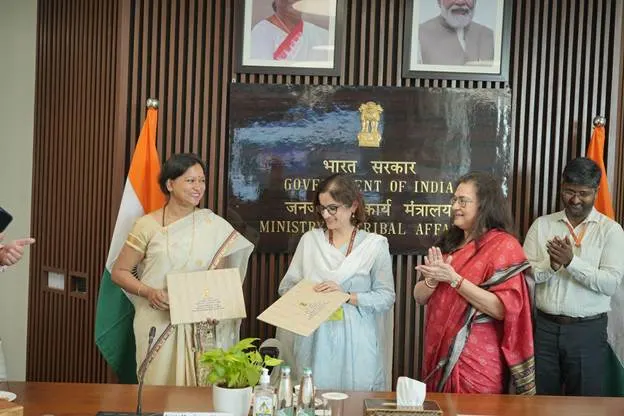
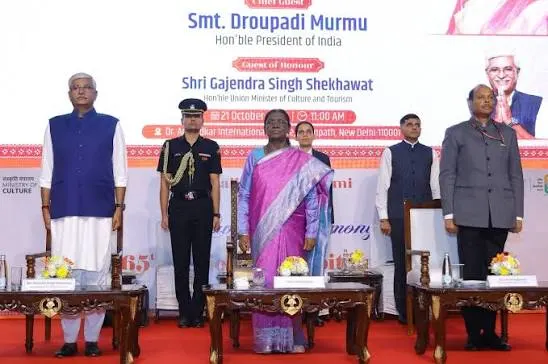
New Delhi: President Droupadi Murmu presented awards to selected artists at the 65th National Exhibition of Art and the 3rd Print Biennale India 2026 in New Delhi on Wednesday. Organised by the Lalit Kala Akademi under the Union Ministry of Culture, the event celebrated artistic excellence while highlighting the importance of preserving India's cultural traditions and creating greater opportunities for artists. The ceremony took place at the Dr Ambedkar International Centre and was attended by Union Minister for Culture and Tourism Gajendra Singh Shekhawat, Culture Ministry Secretary Vivek Aggarwal, senior government officials, artists and members of the country's cultural community. The event brought together artists working across different visual art forms, providing a platform to recognise creative achievements and encourage experimentation in contemporary art and printmaking.
National Exhibition of Art Recognises Outstanding Talent
The 65th National Exhibition of Art remains an important platform for artists seeking national recognition for their creative work. The exhibition allows participants to present their artistic perspectives, explore new techniques and contribute to the evolving landscape of Indian visual arts. During the ceremony, President Murmu presented awards to artists selected for the National Exhibition of Art and the 3rd Print Biennale India 2026. These initiatives help showcase the diversity of artistic expression in India while encouraging established and emerging artists to develop their skills and explore innovative approaches. The programme also featured a film documenting the history of the Lalit Kala Akademi and the National Exhibition of Art. Established in 1955, the exhibition has played a significant role in providing a platform for Indian artists and highlighting developments in the country's visual arts scene.
President Murmu Highlights Art's Role in Preserving Indian Culture
Addressing the gathering, President Droupadi Murmu spoke about the relationship between art, India's cultural identity and its civilisational history. Art has long served as a means of preserving traditions, documenting social experiences and communicating ideas across generations. India's artistic heritage includes diverse regional styles, folk traditions, paintings and other forms of creative expression that reflect the country's cultural richness. Preserving these traditions is essential to ensuring that future generations remain connected to their cultural roots. Traditional artists, particularly those working in rural areas, often carry forward techniques and practices developed over generations. Providing them with recognition, resources and opportunities to showcase their work can help sustain these art forms while introducing them to wider audiences.
Printmaking Gains Recognition as an Important Artistic Medium
Printmaking was another major focus of the programme, with the President highlighting its significance as a form of artistic expression. The medium combines technical precision with creativity, allowing artists to experiment with different processes and visual techniques. It also creates opportunities to explore new ideas while maintaining connections with established artistic traditions. The 3rd Print Biennale India 2026 provides a platform for artists to present their work, exchange knowledge and engage with contemporary developments in printmaking. Events of this nature can encourage artistic experimentation and strengthen professional relationships among practitioners from different backgrounds.
Government Initiatives Aim to Expand Opportunities for Artists
The ceremony also highlighted efforts by the Ministry of Culture to increase opportunities for artists, improve public access to artworks and strengthen the relationship between the arts and the creative economy. Art exhibitions and cultural events can contribute to the development of creative industries by connecting artists with audiences, institutions and potential buyers. For rural artists, improved access to exhibitions and markets can be particularly valuable. Many talented individuals work outside major cultural centres and may have limited opportunities to display their creations before wider audiences. Greater institutional support, effective promotion and access to new markets can help these artists gain recognition and create sustainable livelihoods.
Gajendra Singh Shekhawat Praises Lalit Kala Akademi's Contribution
During the event, Union Culture and Tourism Minister Gajendra Singh Shekhawat presented President Murmu with a Gond painting as a token of appreciation. In his address, Shekhawat highlighted the Lalit Kala Akademi's contribution to promoting Indian visual arts. He described the institution as an important national platform that enables artists to exhibit their work and represent the diversity of India's artistic traditions. The minister also discussed the importance of printmaking, noting its combination of technical expertise and creative experimentation. According to his remarks, the National Exhibition of Art and the Print Biennale help facilitate interaction among artists, encourage international connections and increase the visibility of Indian art.
Why National Art Exhibitions Matter for India's Creative Future
National-level art exhibitions serve purposes beyond recognising individual achievements. They create opportunities for artists to exchange ideas, discover new approaches and connect with institutions that can support their professional development. Such platforms can also help preserve traditional art forms by bringing them to the attention of wider audiences. Greater visibility may encourage public interest, cultural tourism and commercial opportunities for artists and their communities. The participation of rural and emerging artists is particularly important for ensuring that India's artistic landscape continues to reflect a broad range of cultural experiences and creative perspectives. The 65th National Exhibition of Art and the 3rd Print Biennale India 2026 highlighted the importance of recognising artistic talent, preserving cultural heritage and encouraging innovation.