New Delhi: The Ministry of Tribal Affairs has partnered with Karmayogi Bharat to strengthen the delivery of government welfare schemes in tribal communities through digital training. Under the initiative, approximately lakh1.54 Adi Karmayogi Volunteers (AKVs) will be connected to the Centre's Integrated Government Online Training (iGOT) Karmayogi platform. The initiative aims to equip village-level volunteers with the knowledge and skills needed to improve the implementation of tribal development programmes. By providing structured learning resources and standardised training, the government intends to strengthen grassroots leadership and make public services more accessible to tribal communities, particularly those living in remote areas.
Dedicated Digital Platform for Tribal Volunteers
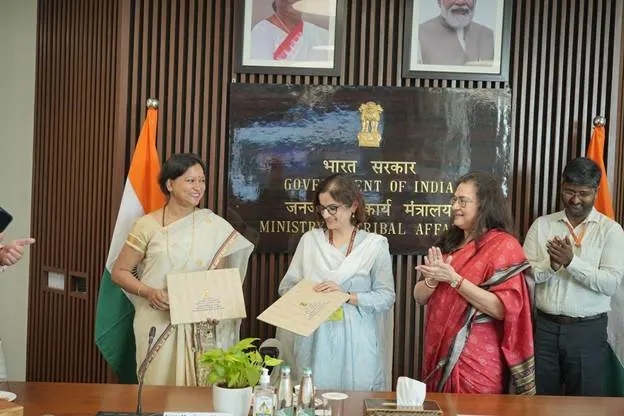
The Ministry of Tribal Affairs and Karmayogi Bharat have signed a Memorandum of Understanding (MoU) to establish a dedicated Tribal Affairs Capacity Building Platform under the iGOT Karmayogi framework. The platform will extend the capacity-building approach of Mission Karmayogi beyond government employees to include community volunteers and local functionaries working directly with tribal populations. A dedicated microsite will be developed on the iGOT platform to provide training materials specifically designed for Adi Karmayogi Volunteers. The digital resources will be accessible through mobile devices, allowing participants to learn at their convenience without having to travel to training centres.
More Than 76,000 Adi Sewa Kendras Planned
The initiative is part of the government's Adi Karmayogi Abhiyan, which seeks to establish a strong network of village-level institutions to support tribal development and public participation. Under the programme, the ministry aims to institutionalise more than 76,000 Adi Sewa Kendras (ASKs) and develop a network of over 1.54 lakh volunteers. According to figures reported by states on the programme's portal, 60,507 Adi Sewa Kendras and 1,22,072 volunteers have been registered so far. These centres are intended to serve as local platforms for citizen engagement, assistance with government welfare schemes and coordination between different public service programmes.
Traing to Cover Government Schemes and Service Deliveryin
The new digital learning platform will offer structured courses covering tribal welfare programmes, the responsibilities of grassroots volunteers and the procedures involved in helping eligible citizens access government benefits. The courses will be designed to improve volunteers' understanding of government initiatives and strengthen their ability to guide community members through administrative processes. The learning programme will also include assessments and certification. This will help evaluate participants' understanding of the course material and encourage the completion of training modules. By making reliable information available through a centralised platform, the initiative aims to reduce knowledge gaps among volunteers working across different states.
Early Participation Indicates Growing Engagement
The Adi Karmayogi microsite has recorded initial participation from volunteers. According to the information shared by the ministry, the platform has registered 646 course enrolments, 235 course completions and 112 volunteers who have successfully completed at least one course. Ranjana Chopra, Secretary of the Ministry of Tribal Affairs, described the initiative as an important step towards expanding access to capacity building and strengthening leadership in tribal regions. She highlighted the role of trained community volunteers in improving awareness of government schemes, strengthening service delivery and promoting citizen-focused governance. As participation increases, the platform is expected to help develop a better-informed and more responsive volunteer network capable of supporting tribal communities at the local level.
Centralised Monitoring to Improve Training Outcomes
The digital platform will allow the ministry to manage training content centrally and distribute updates to volunteers across participating states. Officials will also be able to monitor enrolments and course completion rates on a state-wise basis. This information can help identify areas where participation is low and where additional training or support may be required. Karmayogi Bharat will be responsible for hosting, operating and maintaining the platform. Its responsibilities will also include onboarding learners, providing technical assistance, analysing training data and reporting progress. The Ministry of Tribal Affairs will identify training requirements, determine the competencies volunteers need, develop and approve course content, nominate learners and encourage participation. A joint steering committee will supervise implementation and address operational challenges.
Classroom Training to Complement Digital Learning
Alongside online courses, the initiative will include a three-day in-person training programme for volunteers. State Administrative Training Institutes will design and deliver these sessions in collaboration with state tribal welfare departments. The combination of digital learning and classroom-based training is intended to provide volunteers with both theoretical knowledge and practical guidance for their responsibilities in the field. This blended approach may also help volunteers who require additional support in understanding administrative procedures and applying their training in village-level situations.
Strengthening the Last Mile of Tribal Welfare
Ensuring that welfare benefits reach eligible beneficiaries remains an important challenge in geographically remote and underserved communities. Limited awareness of schemes and difficulties navigating administrative procedures can prevent people from accessing services intended for them. Trained volunteers can help bridge this gap by providing information, guiding residents through application processes and connecting communities with relevant government departments. The expansion of digital training under the Adi Karmayogi Abhiyan represents an effort to strengthen this grassroots support system.If implemented effectively, the initiative could improve the functioning of Adi Sewa Kendras and enhance coordination between tribal communities and public institutions. Its long-term impact will depend on sustained volunteer participation, the quality of training and the ability to translate learning into better service delivery at the village level.