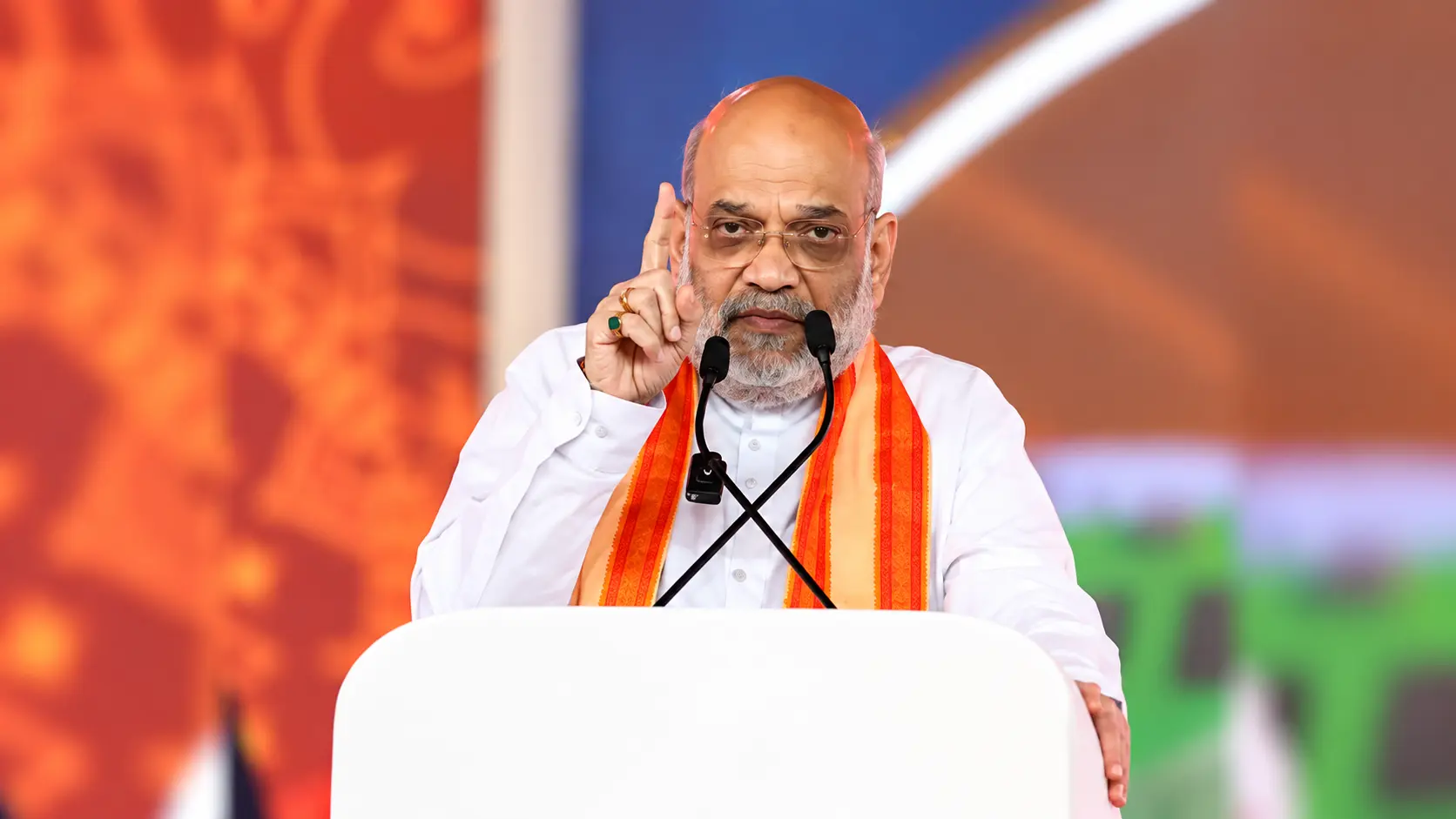
Jalandhar/Chandigarh: The political debate over Punjabs long-running drug problem intensified on Wednesday as Union Home Minister Amit Shah arrived in Jalandhar for the concluding rally of the Bharatiya Janata Partys (BJP) statewide Nasha Mukt Punjab Yatra. The BJPs 13-day campaign, which began on September 18, travelled through all 117 Assembly constituencies and covered nearly 4,000 kilometres through four routes. The concluding event in Jalandhar has emerged as a major political gathering ahead of the 2027 Punjab Assembly elections.
BJP Makes Drug Crisis a Major Punjab Issue
The BJP has increasingly placed the drug problem at the centre of its political campaign in Punjab. The partys statewide yatra was launched with the stated objective of mobilising public support against drug abuse, while also highlighting issues such as law and order and corruption. The campaign has been conducted under the slogan Bhajpa da naara, nasha mukauna saara, with BJP leaders travelling across the state and meeting people during the 13-day programme. The Jalandhar rally is being seen as the culmination of this campaign, with Amit Shah scheduled to address supporters at the Paragpur area along NH-44. According to reports, the BJP made extensive arrangements for the event, including a large gathering area and parking facilities, while party workers were mobilised from different parts of Punjab.
AAP Questions Centres Role
The BJP campaign has also triggered a political response from Punjabs ruling Aam Aadmi Party (AAP). AAP leaders have questioned the Centres responsibility in tackling the supply side of the drug trade, particularly given the role of central agencies and border security in dealing with trafficking networks. AAP leader Neel Garg questioned what steps had been taken by central agencies to disrupt interstate drug networks. He also raised questions concerning the responsibilities of the Border Security Force (BSF) and the Narcotics Control Bureau (NCB), arguing that the drug problem cannot be treated solely as a state government responsibility. The AAPs broader argument is that Punjabs fight against drugs involves both state and central agencies and therefore requires coordinated action. Garg has also argued that Punjab needs concrete action and measurable results rather than political exchanges over the issue.
BJP Promises Action Within Two Years
The BJP, meanwhile, has strongly criticised the Punjab governments handling of the drug problem. Punjab BJP president Kewal Singh Dhillon has said that if the BJP forms the government in Punjab, the party would work towards eliminating the drug menace within two years. He has compared the challenge with other law-and-order problems that BJP governments have claimed to have tackled in different states. Dhillon has also argued that tackling drugs would require action against organised networks along with rehabilitation and support for people affected by addiction. The BJP has sought to portray the campaign as more than an electoral exercise, describing the yatra as a public movement focused on the concerns of families affected by drug abuse.
Families Affected by Drugs Share Their Experiences
Ahead of Shahs rally, the Punjab BJP also brought several families affected by drug abuse before the media in Jalandhar. Some families spoke publicly about losing relatives to addiction, highlighting the human cost of the drug problem. The BJP used these accounts to underline the urgency of its campaign and to put pressure on the state government over its handling of the issue. The move has added an emotional dimension to the political debate, with both parties seeking to present their approach to the drug crisis as the more effective response.
Drug Crisis Becomes Key Political Flashpoint
With the Punjab Assembly elections due in 2027, the drug issue is increasingly becoming a major part of the political discourse in the state. The BJP is using its statewide campaign to build pressure on the AAP government, while the AAP is questioning the Centres role in controlling trafficking routes and the activities of central agencies. The confrontation reflects a larger debate over how responsibility for Punjabs drug problem should be shared between state and central authorities. For Punjab, however, the political contest is taking place against the backdrop of families continuing to deal with addiction and its social consequences. The coming months are likely to see greater focus on enforcement, rehabilitation, prevention and the disruption of drug supply networks as parties prepare for the 2027 election campaign.