
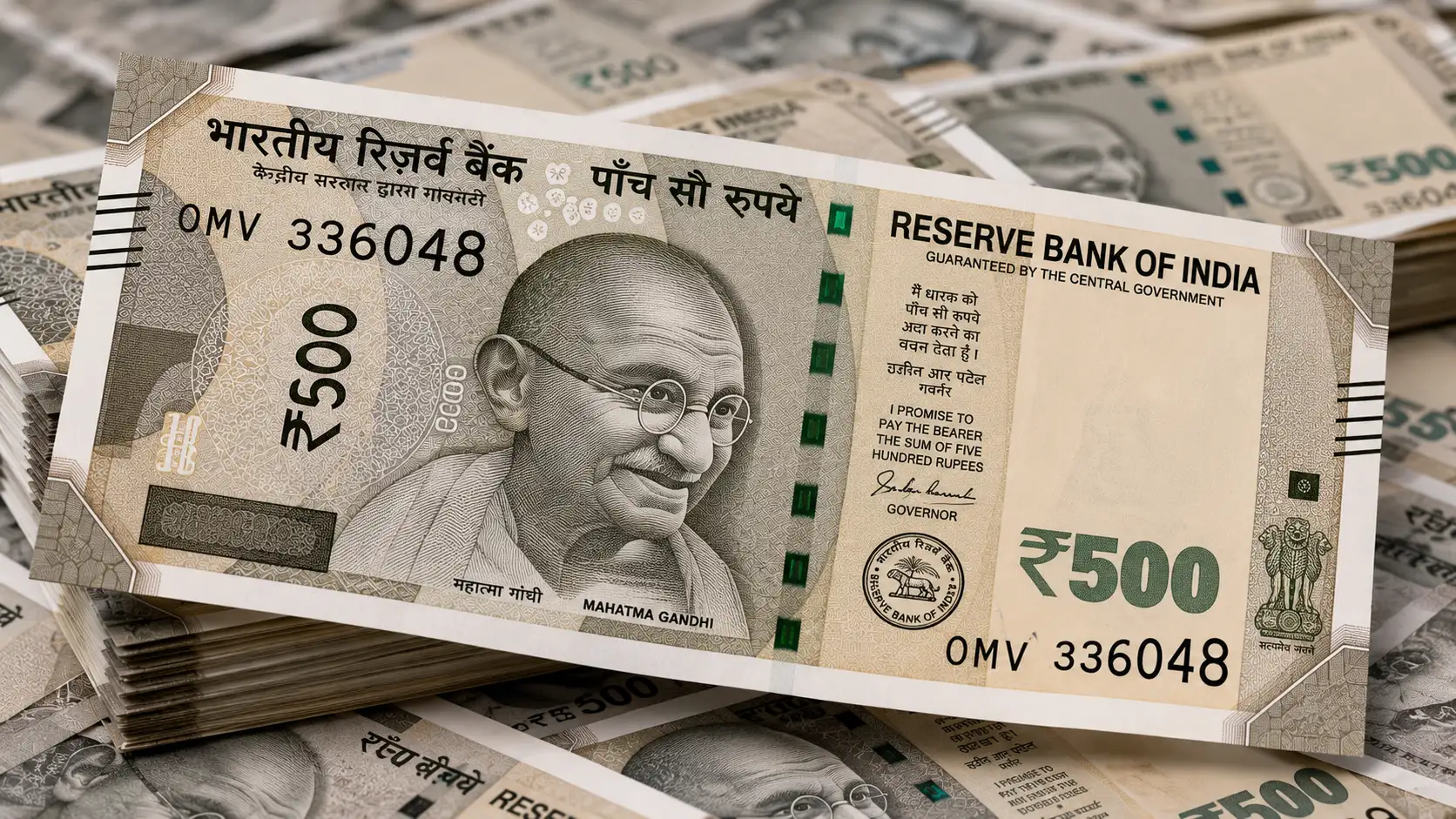
Mumbai: The Indian rupee came under fresh pressure on Monday, September 28, weakening to its lowest level in more than a week as a sharp rise in crude oil prices increased concerns about India's import bill and the wider economic impact of continuing geopolitical uncertainty. The rupee ended the session at ₹95.9825 against the US dollar, down around 0.2% from its previous close. The currency's decline was moderated by dollar selling from state-run banks, which market participants believed was likely linked to intervention by the Reserve Bank of India (RBI). The latest movement has once again put the spotlight on the Indian rupee today, particularly its sensitivity to international crude prices and developments in the Middle East.
Crude Oil Surge Puts Pressure on Rupee
One of the biggest factors behind Monday's movement was the sharp increase in global oil prices. Brent crude rose by nearly 4% to around $108.20 per barrel, adding pressure to currencies of oil-importing economies. For India, movements in crude prices are particularly important because the country depends heavily on overseas supplies to meet its energy requirements. When international oil prices rise, Indian refiners generally need more dollars to pay for imported crude. Increased demand for dollars can place pressure on the rupee and contribute to a wider trade deficit. The latest oil-price jump therefore came at a difficult time for the domestic currency, which was already trading close to the psychologically important ₹96-per-dollar level.
Why Oil Prices Matter for the Indian Economy
India's dependence on imported crude makes global energy markets an important factor for the country's external finances. Higher crude prices can increase the country's overall import bill and put pressure on the current account. They can also increase domestic fuel and transportation costs, potentially adding to inflationary pressures. This makes the rupee vs dollar movement more than a currency-market story. A prolonged period of expensive crude could affect businesses, consumers, and government finances through higher energy and transportation costs. The impact can be particularly significant when oil prices rise rapidly because companies and importers need to adjust to higher dollar-denominated costs.
RBI Intervention Limits the Rupee's Fall
The RBI's role has once again attracted attention as the rupee approached ₹96 per dollar. Market participants said dollar sales by state-run banks helped prevent a sharper decline in the currency. Reuters reported that traders widely viewed those sales as likely intervention on behalf of the central bank. The RBI generally does not publicly announce every foreign-exchange operation in real time. Its broader approach in currency markets has historically focused on managing excessive volatility rather than defending a permanently fixed exchange-rate level. Monday's trading, however, showed that intervention can influence the pace of movements when pressure on the rupee becomes intense. Analysts cited by Reuters said the central bank has the ability to manage the currency within a broad range, although the effectiveness of such intervention depends on how long external pressures remain elevated.
Investors Watch the ₹96 Level
The ₹96 mark has become an important psychological level for traders. Market participants have been closely watching whether the rupee can remain below that threshold or whether sustained pressure from oil prices, global risk aversion and dollar demand could push the currency weaker. A foreign-bank trader quoted by Reuters said ₹96 was currently acting as a floor for the currency, while Goldman Sachs analysts said the RBI could potentially manage the rupee within a broader 94-97 range. These are market assessments rather than official RBI targets. That distinction is important because the USD/INR exchange rate is influenced by several factors simultaneously, including global dollar demand, capital flows, oil prices, interest-rate expectations and geopolitical developments.
Middle East Tensions Add to Market Uncertainty
Oil prices have also been responding to developments involving the United States and Iran. Brent crude's Monday rally followed renewed uncertainty surrounding diplomatic efforts between Washington and Tehran. US President Donald Trump rejected an Iranian peace proposal but indicated that American negotiators could hold further discussions during the week.For financial markets, the situation creates uncertainty over future oil supplies and shipping conditions.Any disruption involving major energy routes can quickly affect crude prices because traders factor potential supply shortages into futures markets.For India, such developments are particularly important because an extended period of elevated crude prices could increase the cost of importing energy.
Asian Markets Also Face Pressure
The pressure was not limited to the Indian currency. Asian equities and several regional currencies also weakened as investors assessed the implications of higher energy prices and geopolitical risks. Reuters reported that MSCI's Asian stock gauge fell almost 1%, while Indian equities also declined sharply during Monday's session. The movement indicates that investors were responding to a broader global risk-off environment rather than treating the rupee's decline as an isolated domestic event. Higher oil prices can be particularly challenging for emerging-market economies that rely heavily on imported energy.
India's Oil-Sourcing Pattern Is Also Changing
India's energy trade has been undergoing changes as refiners respond to geopolitical developments and shifting supply conditions. Recent trade data reported by Reuters showed that India's imports of Russian crude declined in August, while purchases from other suppliers, including Iraq, the UAE and Saudi Arabia, adjusted in response to market conditions. Overall Indian oil imports fell 8.8% in August to about 4.44 million barrels per day. Russia remained India's largest crude supplier during August, but its share declined from the previous month. Preliminary data also suggested that Russian supplies could fall further in September. These changes highlight the importance of maintaining diversified energy supplies when global oil markets face disruption.
What Could Happen to the Rupee Next?
The near-term direction of the rupee is likely to remain closely linked to crude oil prices and developments in global financial markets. If oil prices remain above $100 for an extended period, pressure on the currency could continue because of the impact on India's import bill and demand for dollars. On the other hand, a sustained decline in crude prices or improvement in geopolitical conditions could reduce some of the pressure. Foreign investment flows will also remain important. Stronger capital inflows can increase the supply of dollars in the domestic market, while large-scale outflows can have the opposite effect. Recent RBI measures have also increased foreign-currency liquidity in the financial system. Reuters reported that measures between June 8 and September 18 generated around $143.6 billion in forex inflows, giving the central bank additional resources to manage market conditions.
Rupee at 96 Becomes Key Market Focus
The latest rupee at 96 development has placed the currency at another closely watched point in its ongoing 2026 journey. For consumers, businesses and investors, the consequences extend beyond the currency market. A weaker rupee can increase the domestic cost of imported goods, particularly crude oil and other commodities priced in dollars. For exporters, however, currency depreciation can improve the rupee value of overseas earnings, although the final impact varies by industry and by how much a company depends on imported inputs. For the government and RBI, the challenge is to manage excessive volatility while allowing the foreign-exchange market to respond to underlying economic conditions. For now, traders remain focused on three major factors: crude oil prices, Middle East developments and RBI intervention. With Brent crude near $108 a barrel and the rupee close to ₹96 per dollar, the coming sessions could provide further clues about whether the recent pressure is temporary or part of a longer period of currency volatility.
This article is based on market information available on September 28, 2026. Currency and crude prices can change rapidly during trading sessions, and comments from market participants represent their assessments rather than official forecasts.