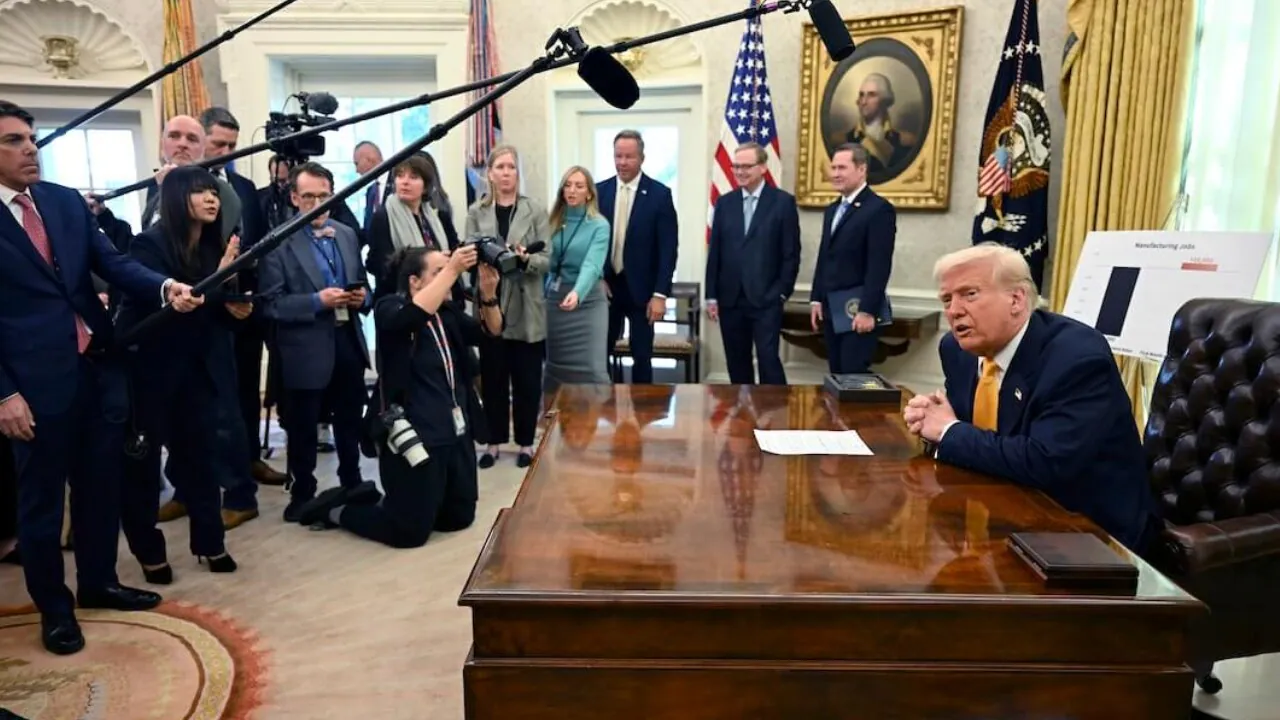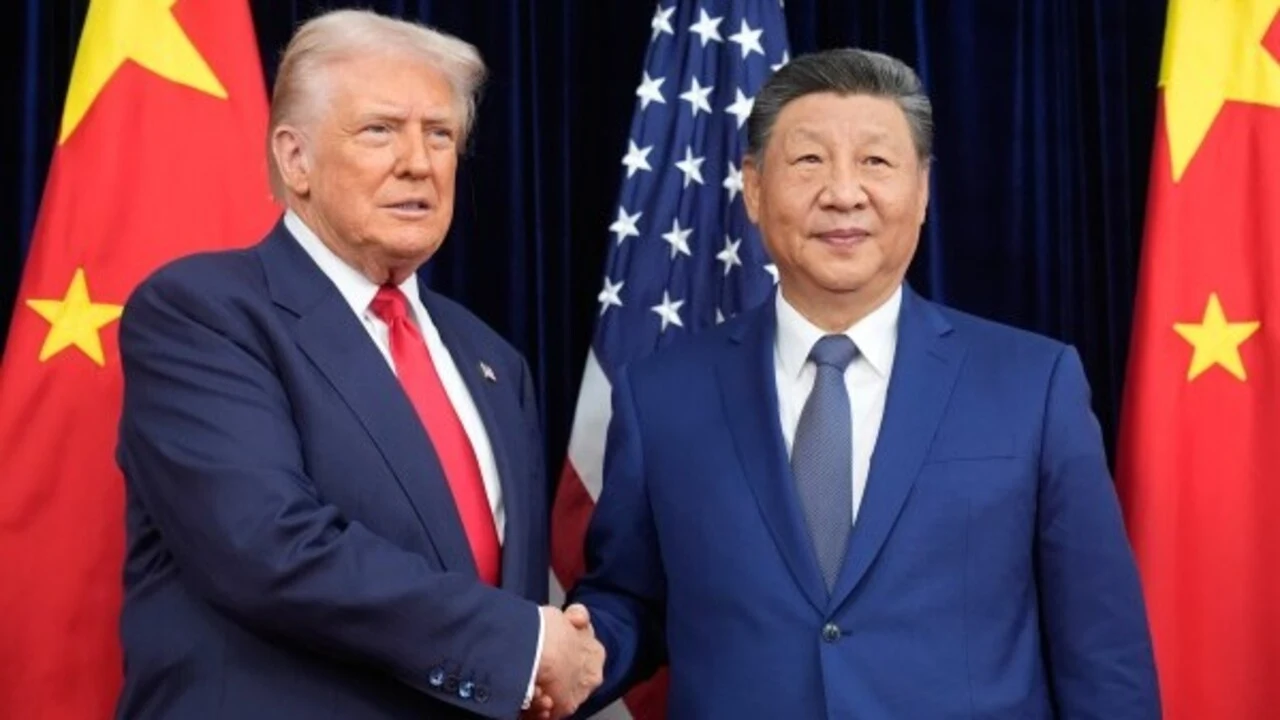
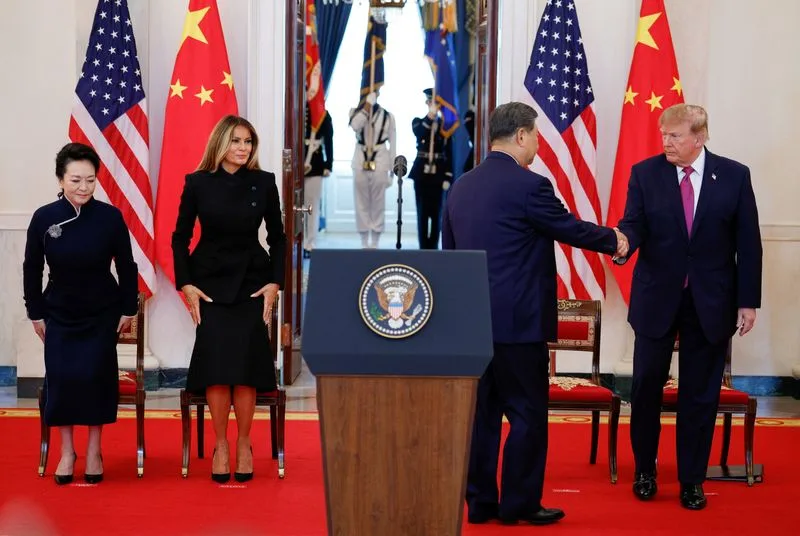
Washington, DC: US President Donald Trump and Chinese President Xi Jinping have held a closely watched meeting at the White House as Washington and Beijing attempt to stabilize relations despite continuing disagreements over trade, Taiwan, artificial intelligence and the conflict involving Iran. Xis visit comes at a sensitive moment for the worlds two largest economies. After years of tariffs, technology restrictions, and geopolitical tensions, both governments have an interest in preventing their relationship from sliding into a broader confrontation. Trump described his meeting with Xi positively, while Xi emphasized the importance of managing competition between the two countries and avoiding a direct confrontation. However, the meeting did not eliminate the major differences between Washington and Beijing. Here are five important takeaways from the Trump-Xi summit.
1. Both sides are signaling a desire for more stable relations
One of the clearest messages from the summit was the emphasis on maintaining communication. Relations between the United States and China have deteriorated over several years because of disputes involving tariffs, technology, Taiwan, trade restrictions, and national security. Trump and Xi have nevertheless continued to maintain direct communication, reflecting the importance of the relationship to the global economy. Xi stressed that competition between the two countries should not automatically lead to confrontation. He argued that the US and China can compete while keeping their differences under control. The approach reflects a broader effort by both governments to prevent disagreements from escalating into a crisis. For businesses and financial markets, greater stability between Washington and Beijing could reduce uncertainty. However, the underlying strategic competition between the two countries remains.
2. The US-China trade truce gets more breathing room
Trade was another major issue surrounding the Trump-Xi meeting. The United States and China have spent years imposing tariffs and restrictions on each other's products and technologies. The resulting US-China trade war has affected companies, manufacturers and supply chains around the world. The latest discussions have provided additional breathing room for negotiations, with the existing trade truce being extended. The extension gives both sides more time to work through disagreements involving tariffs, Chinese purchases, market access and critical minerals. However, the development should not be interpreted as a permanent end to the trade dispute. The two economies remain deeply connected, but both governments are also trying to reduce vulnerabilities in strategically important industries. Critical minerals, including rare earth elements, have become particularly important because they are essential for electronics, electric vehicles, renewable energy equipment, and advanced military technologies. China remains a major player in global rare-earth supply chains, making the issue an important part of the broader US-China economic relationship.
3. Taiwan remains one of the biggest unresolved issues
Taiwan continues to be among the most sensitive subjects in US-China relations. Beijing considers Taiwan part of China and opposes moves toward formal Taiwanese independence. Washington, meanwhile, maintains unofficial relations with Taiwan and has long emphasized the importance of peace and stability across the Taiwan Strait. During the summit, Taiwan remained an important issue, but there was no indication of a fundamental change in the US position. For Beijing, the Taiwan question is closely linked to national sovereignty and territorial claims. For Washington, the issue is connected to regional security and its wider relationships in the Indo-Pacific. The absence of a major breakthrough means Taiwan will continue to be a potential source of tension between the two countries. The issue also has an important economic dimension. Taiwan is central to the global semiconductor industry, making stability around the island particularly significant for technology companies and international supply chains.
4. Artificial intelligence is becoming a new US-China battleground
Artificial intelligence has emerged as another major area of competition between Washington and Beijing. Both countries want to maintain leadership in advanced AI, but their governments are taking different approaches to technology, regulation and national security. The AI competition goes beyond software. It also involves advanced semiconductor chips, computing infrastructure, data centres and access to cutting-edge technologies. The United States has introduced restrictions affecting the export of certain advanced technologies to China, while Beijing is investing heavily in domestic technological capabilities. Xi has emphasized the need for international cooperation and responsible development of AI. Washington, meanwhile, continues to focus on maintaining American leadership in advanced technology. The issue is likely to become increasingly important because AI is expected to influence everything from business and healthcare to defence and national security. For that reason, US-China AI competition could become one of the defining aspects of the relationship over the coming years.
5. Iran remains a difficult area for cooperation
The conflict involving Iran has added another layer of complexity to the Trump-Xi relationship. The United States has been seeking greater international pressure on Tehran, while China maintains important economic and diplomatic ties with Iran. The situation around the Strait of Hormuz has also increased concerns about global energy supplies and oil prices. Any prolonged disruption in the region could have consequences far beyond the Middle East. China has called for diplomatic efforts to resolve tensions and has supported negotiations rather than a wider escalation. However, Washington and Beijing do not have identical interests regarding Iran. The summit therefore did not produce a major breakthrough on the issue. Instead, Iran highlighted the different foreign-policy priorities of the two countries.
Mixed reaction in Washington
Xi's visit also generated different reactions among US lawmakers. Some lawmakers argued that direct engagement between the American and Chinese leaders is necessary because the relationship carries significant economic and security consequences. Others criticized the high-profile welcome given to Xi, arguing that Washington should take a tougher approach toward Beijing. The contrasting reactions underline the political difficulty surrounding US-China relations inside the United States. While there is disagreement over how Washington should deal with Beijing, the importance of maintaining communication between the two governments is widely recognized.
What does the Trump-Xi summit mean for the global economy?
The consequences of the summit extend well beyond the United States and China. The two countries are major players in global trade, manufacturing, technology, and financial markets. Any significant escalation between them could affect international businesses and supply chains. A period of relative stability could give companies more certainty when making investment and production decisions. However, businesses should not assume that the structural competition between Washington and Beijing has disappeared. Trade restrictions, semiconductor controls, AI development, rare-earth supplies and geopolitical disagreements are likely to remain important issues.
The Trump-Xi Summit 2026 has provided another opportunity for Washington and Beijing to keep diplomatic channels open and prevent their relationship from becoming more confrontational. The extension of the trade truce offers both countries additional time to negotiate, while discussions surrounding AI, Taiwan and critical minerals demonstrate how broad the relationship has become. At the same time, the lack of major breakthroughs on several sensitive issues shows that the fundamental disagreements between the United States and China remain. The coming months will therefore be important. The key question will be whether the latest diplomatic engagement can develop into longer-term agreements on trade and technology, or whether the two countries eventually return to a more confrontational approach. For the global economy, the stability of US-China relations will remain an important factor to watch.