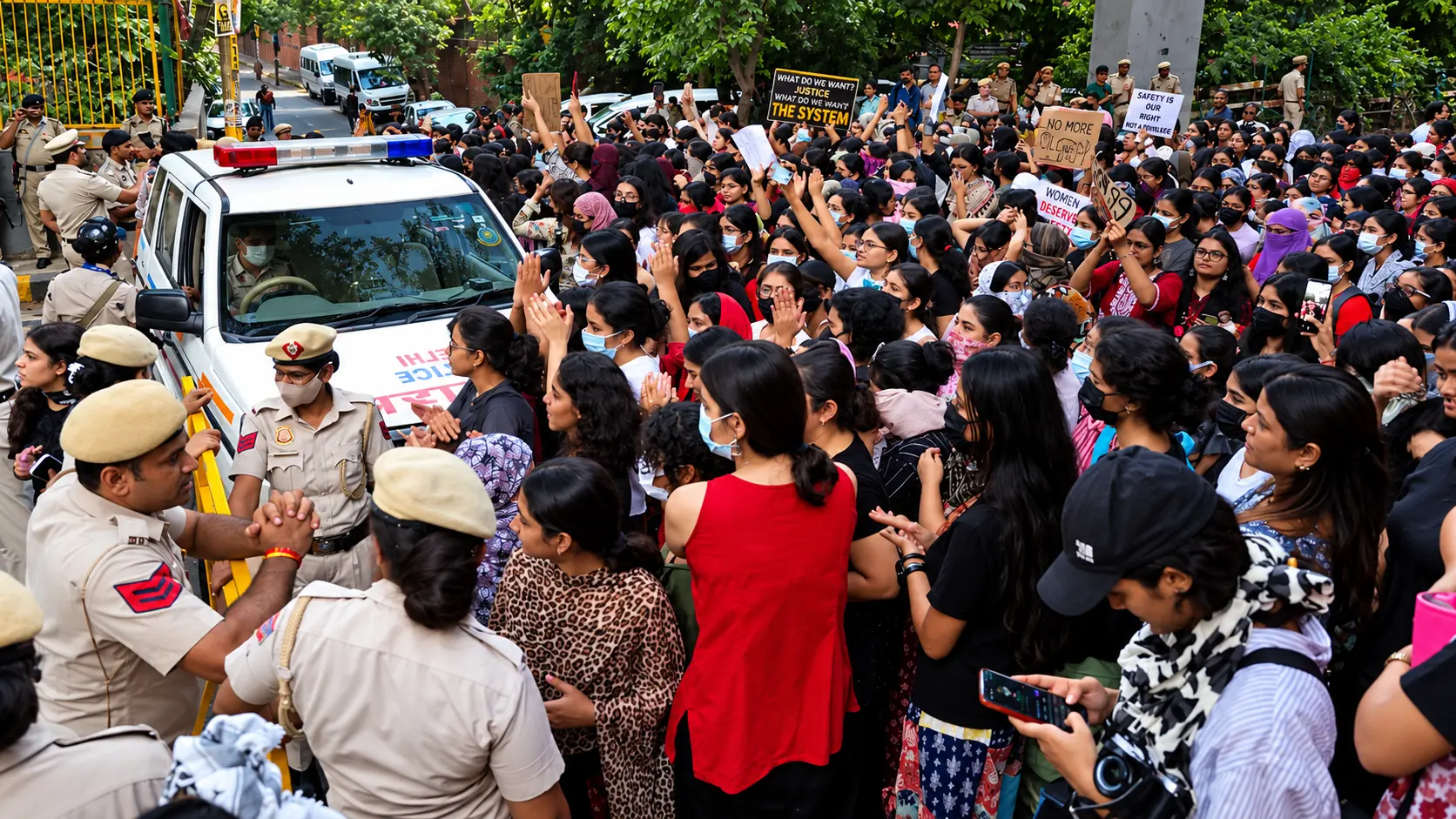
New Delhi: The Supreme Court on Monday, September 28, took suo motu cognisance of a series of recent sexual assault cases involving women and minors in Delhi-NCR, placing renewed focus on the safety of people using public spaces. A Bench comprising Justices JB Pardiwala and K Vinod Chandran took note of reports concerning several recent incidents, including the alleged sexual assault of a 17-year-old girl at Aastha Kunj Park near Lady Shri Ram College, an alleged gang rape involving a minor in Swaroop Nagar and another reported sexual assault involving a minor on a bus travelling from Greater Noida towards Delhi. The court's intervention comes amid growing public concern about whether existing policing, surveillance and preventive-security arrangements are sufficient to protect women and children in places used by the public.
Supreme Court Raises Concern Over Public Safety
During the proceedings, the Supreme Court emphasised that public areas such as parks, roads, buses, Metro stations and subways should not effectively become unsafe zones because of inadequate policing or surveillance. The Bench specifically referred to concerns surrounding patrolling and other preventable administrative shortcomings. The court's observations put the spotlight not only on the individual criminal cases but also on the preventive responsibilities of authorities responsible for public safety. The intervention is significant because the incidents being considered by the court reportedly occurred in different types of public spaces. This has raised questions about whether security measures need to be strengthened across locations rather than being concentrated only in traditionally sensitive areas.
Aastha Kunj Incident Draws Attention
One of the incidents taken into consideration by the Supreme Court involved the alleged gang rape of a 17-year-old girl at Aastha Kunj Park near Lady Shri Ram College in Delhi. The case has generated particular concern because of the location and previous complaints reportedly raised by students regarding sexual harassment in the surrounding area. According to reports considered by the court, concerns about safety had been brought to the attention of authorities before the latest incident. The Supreme Court therefore also examined whether earlier complaints should have prompted stronger preventive measures, including improved surveillance and security arrangements. The development has intensified the discussion around Delhi women safety and the responsibility of authorities to respond to warning signs before serious crimes occur.
Court Draws Reference to 2012 Nirbhaya Case
The Supreme Court also referred to the painful memories associated with the 2012 Nirbhaya case while discussing the latest incidents. The Bench questioned whether sufficient lessons had been learned from the tragedy and subsequent efforts to improve women's safety. The reference does not concern one individual case alone. Instead, it places the latest incidents within the wider history of public debate over women's security in the national capital. The court linked the right to live with dignity and without violence to the constitutional protection guaranteed under Article 21.
Focus on Patrolling and Surveillance
A central issue raised during the proceedings was the role of preventive policing. The court's observations indicate that responding after a crime has occurred is not sufficient by itself. Authorities also have a responsibility to create security systems designed to identify risks and deter criminal activity. Effective patrolling, functioning surveillance systems, adequate lighting and timely response to complaints are among the measures that have come under scrutiny in the broader discussion surrounding the recent cases. Reports concerning Aastha Kunj have also raised questions about physical security arrangements at the park, adding to concerns about whether vulnerable public areas receive adequate attention from enforcement agencies.
Delhi Police Asked to Respond
The Supreme Court has sought a response from the Delhi Police regarding the recent incidents and the concerns arising from them. The proceedings could bring greater scrutiny to how complaints of harassment are recorded, investigated and followed up, particularly when residents or students raise concerns about unsafe public locations. The court's intervention also places attention on coordination between police authorities and civic agencies. Public safety in parks, roads, public transport facilities and other shared spaces can depend on multiple factors, including lighting, surveillance infrastructure, access control and emergency response.
Why the Supreme Court's Intervention Matters
The latest Supreme Court Delhi rape cases proceedings are significant because the court is examining the broader public-safety environment rather than limiting its attention to the facts of one reported crime. Recent cases involving minors and women have once again raised questions about how effectively authorities can prevent sexual violence in locations where people should be able to travel, study, work and move freely. The court's observations also underline the importance of accountability. Expressions of concern following serious crimes, the Bench indicated, need to be accompanied by measurable action and responsibility within the institutions charged with maintaining public safety.
Public Safety Remains Under Scrutiny
The Supreme Court's suo motu proceedings come at a time when concerns over women's and children's safety remain a major public issue in Delhi-NCR.The cases before the court involve different circumstances and locations, but they have a common public-safety dimension: the reported incidents occurred in environments regularly used by ordinary citizens. As the proceedings continue, attention is likely to remain focused on the Delhi Police response, the adequacy of existing surveillance and patrolling arrangements, and the steps authorities can take to prevent similar incidents. For residents, the issue extends beyond the outcome of individual criminal investigations. It also concerns whether public spaces can be made safer through consistent policing, responsive administration and effective preventive infrastructure. The Supreme Court's intervention has therefore brought Delhi-NCR women's safety and the effectiveness of public-security measures back into sharp national focus.
This report is based on court-related reporting and information available on September 28, 2026. Allegations in ongoing criminal cases should not be treated as established facts unless determined through the appropriate legal process.