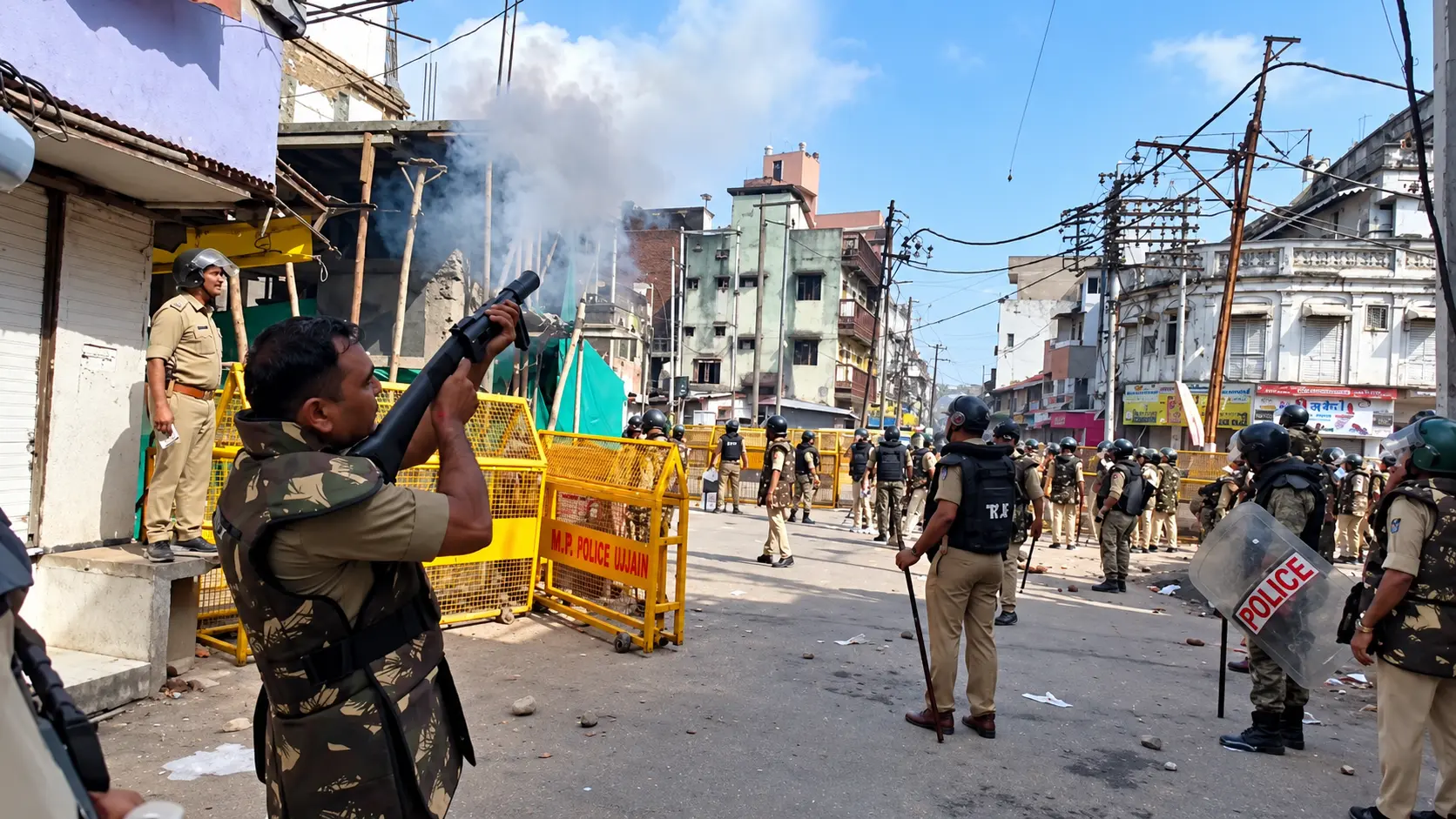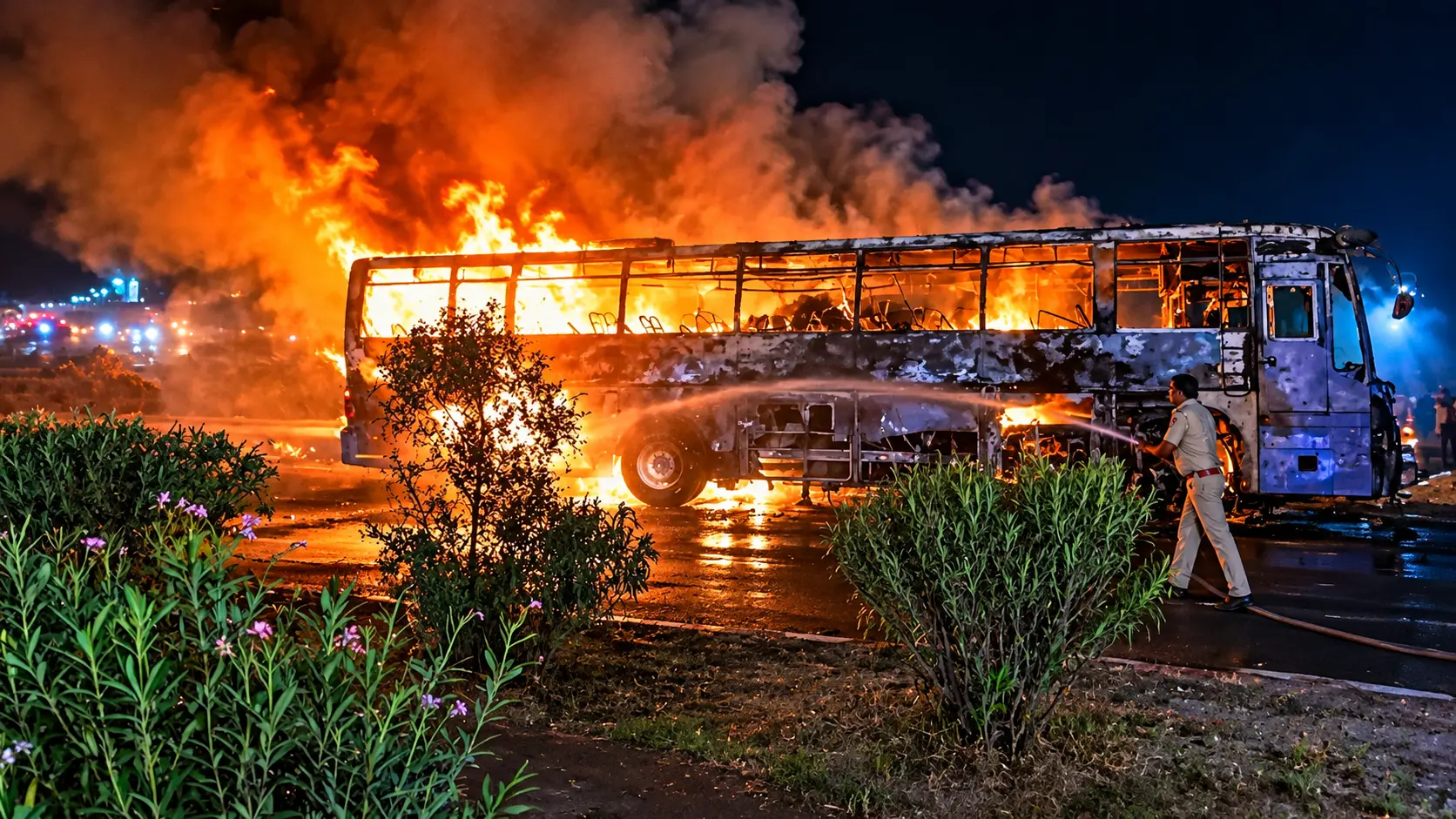
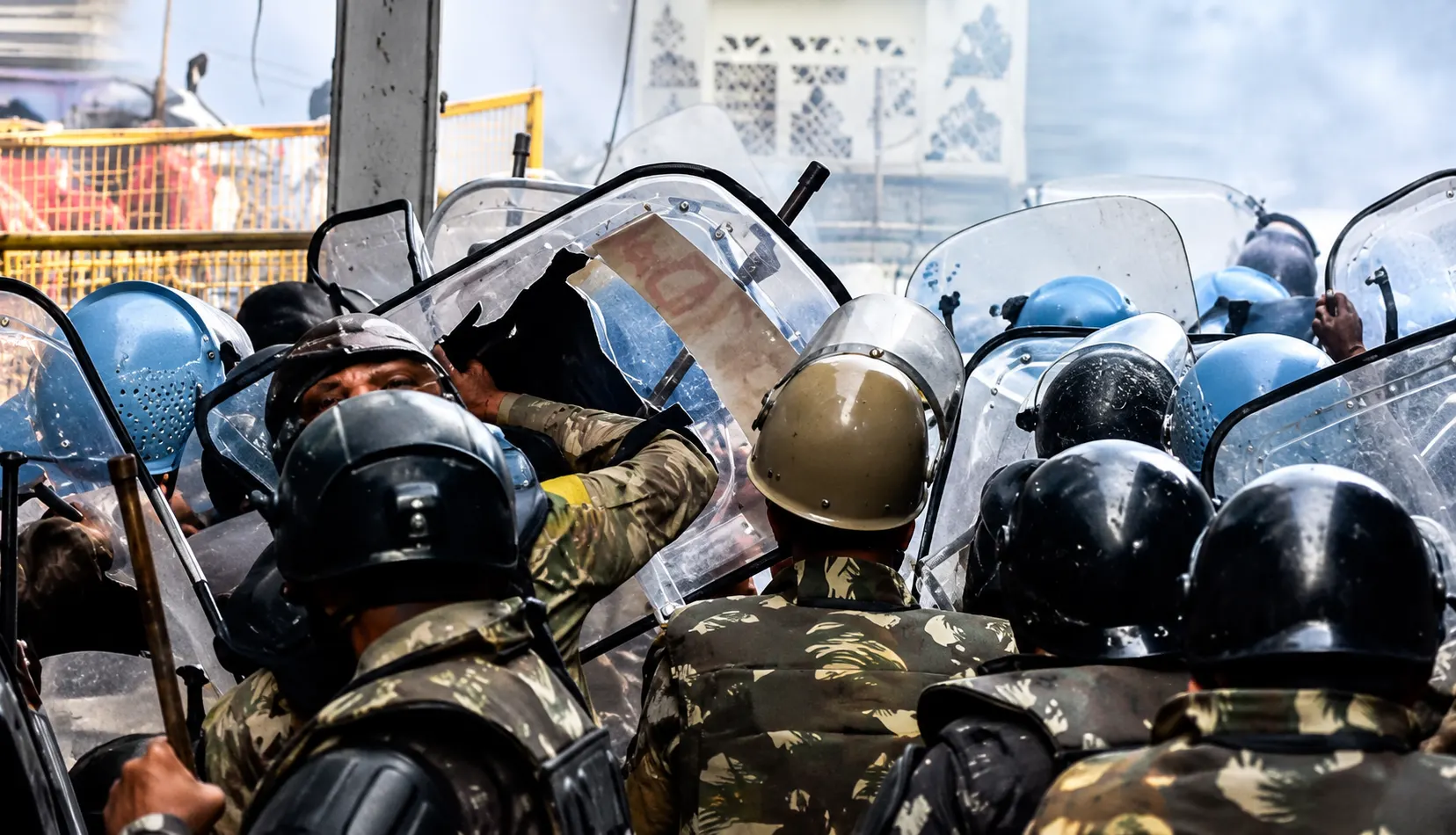
Ujjain: Tension escalated in Madhya Pradeshs Ujjain on Monday after a protest over the proposed removal of part of the Shahi Masjid turned confrontational. Police used tear gas to disperse a crowd after stones were reportedly thrown at security personnel near the mosque. A heavy police presence remains in the area as authorities attempt to prevent the situation from escalating further. The dispute is linked to a road-widening project being carried out ahead of the Simhastha 2028 religious gathering in Ujjain.
What Triggered the Protest in Ujjain?
The immediate dispute concerns a portion of the Shahi Masjid complex that falls within the proposed alignment of a road-widening project. The Ujjain Municipal Corporation has been widening roads in parts of the city as part of preparations for the massive influx of visitors expected during Simhastha 2028. The road in question is an important route connecting the Gopal Mandir area with the Mahakaleshwar Temple and the Kshipra River. According to the Madhya Pradesh High Court's September 9 order, authorities proposed widening the road to 15 metres. The corporation argued that the work was necessary to improve traffic movement and reduce congestion during major religious events.
Protesters Gather Near the Mosque
The situation had already become tense over the weekend, with hundreds of people gathering around the Shahi Masjid to oppose the proposed removal of the structure's portion. Security forces, including local police and specialised units, were deployed in the area. A large security presence was maintained as authorities prepared to proceed with the road-widening work. According to reports from Monday, protesters attempted to move through the surrounding lanes while police tried to control the crowd. The situation eventually became volatile, with stone-pelting reported near the site. Police subsequently fired tear-gas shells to disperse the gathering.
Why Is the Shahi Masjid Being Affected?
The mosque is located along a road that authorities have identified as important for traffic management in central Ujjain. The administration has linked the road-widening exercise to the city's long-term infrastructure requirements as well as preparations for Simhastha 2028, when Ujjain is expected to receive a very large number of pilgrims. The High Court order records the administration's argument that the road passes through a key route used during events such as the Shahi Sawari and Peshwai. Officials said additional road space would be required to facilitate the movement of large crowds and vehicles.
What Did the Madhya Pradesh High Court Say?
The legal dispute over the proposed removal had already reached the Madhya Pradesh High Court. On September 9, the Indore bench of the High Court dismissed two petitions challenging notices issued by the Ujjain Municipal Corporation. The petitions had been filed by groups associated with the management of the Shahi Masjid, which is registered as a Waqf property. The petitioners argued that the proposed action would affect part of the prayer hall, a minaret and another structure associated with the complex. They also challenged the action on constitutional and property-rights grounds. The court, however, declined to interfere with the corporation's action. It accepted the administration's position that the road-widening work was connected to public safety, traffic management and preparations for Simhastha 2028.
Administration Says Road Work Is Part of Wider Development
The municipal authorities have maintained that the road-widening exercise is not targeted specifically at the mosque. According to the High Court record, the administration told the court that several structures along the approximately 1.5-kilometre stretch had already been removed as part of the road project. The corporation also argued that the road needs adequate width because millions of visitors are expected in Ujjain during Simhastha 2028. Officials said better road capacity would help with crowd movement and reduce the possibility of congestion during major religious processions.
Mosque Management Opposes the Removal
Representatives associated with the Shahi Masjid have opposed the proposed removal, arguing that the structure has historical and religious significance. The petitioners told the High Court that the mosque is an old religious structure and challenged the decision to remove part of it. They also argued that the action would affect their rights concerning the religious property. The dispute has therefore developed on two fronts: the administration's infrastructure and crowd-management plans on one side, and objections from mosque representatives and local protesters on the other.
Political Reactions to the Ujjain Dispute
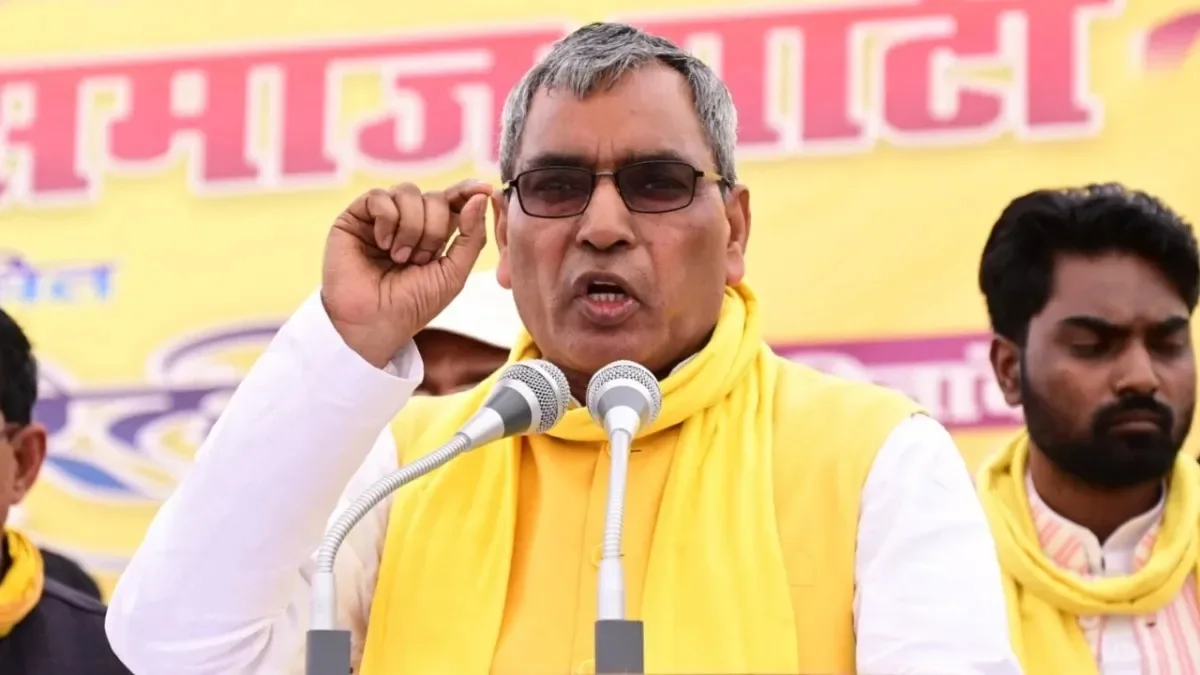
The controversy has also attracted political attention. Opposition leaders have questioned the administration's approach to the mosque and called for sensitivity while carrying out development work around religious structures. Other political voices have backed the broader road-development rationale and the need to prepare Ujjain for Simhastha 2028. These political reactions come as the matter remains sensitive on the ground, with authorities focusing on maintaining law and order.
Heavy Security Remains in Place
Following Monday's confrontation, security has been strengthened around the Shahi Masjid area. Police and other security personnel have been deployed to prevent further clashes and maintain public order. Authorities are closely watching the situation as the road-widening dispute continues. The immediate focus remains on preventing further violence while dealing with the implementation of the road project through the legal process.
What Happens Next?
The Ujjain Shahi Masjid dispute is likely to remain closely watched as the authorities move ahead with the road-widening project and the mosque management considers its legal options. For now, the key issue is the balance between infrastructure work planned for Simhastha 2028 and objections from those who oppose changes to the mosque complex. Monday's stone-pelting and use of tear gas have added a new layer of tension to a dispute that had already moved from the municipal level to the courts. The administration's next steps, along with any further legal proceedings, will determine how the situation develops in the coming days.