
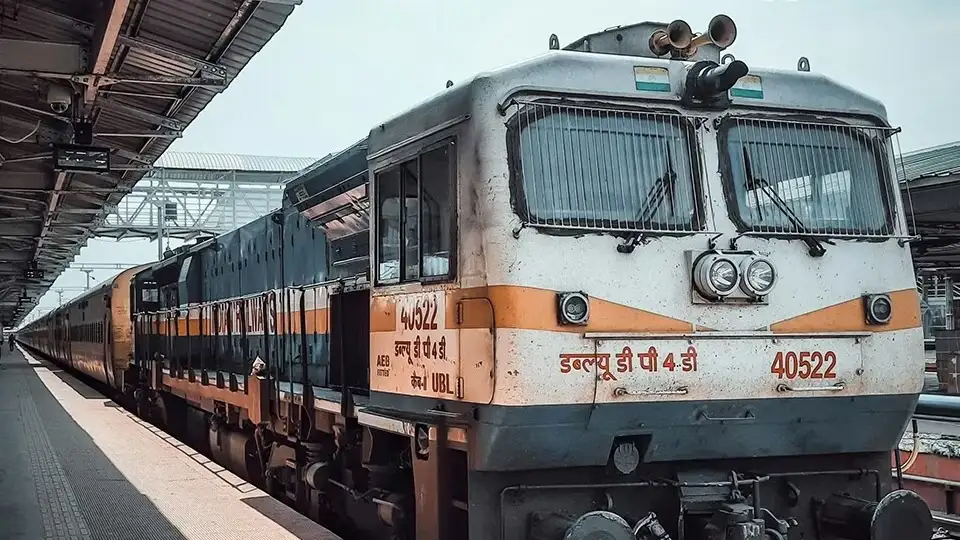
Indian Railways is one of the biggest and busiest railway networks in the world, carrying millions of passengers every day. Few people pay attention to the distinctive five-digit number provided to each train, while the majority concentrate on verifying their platform number, coach position, or seat details before to boarding. Although these figures might seem arbitrary at first, they actually follow a carefully thought-out framework created by Indian Railways. Every digit has a specific purpose, helping railway officials, ticketing systems, and passengers identify the type, route, and category of a train with ease. The five-digit numbering system, introduced by Indian Railways in 2010, has made train identification far more organized and efficient than the earlier four-digit system.
Why Did Indian Railways Introduce a Five-Digit Numbering System?
Before 2010, Indian Railways used a four-digit numbering format. However, the older system was unable to support thousands of services operating throughout the nation due to the quick growth of the railway network and the introduction of additional train classifications. To address this challenge, Indian Railways introduced a five-digit train numbering system. The new format created additional numbering combinations, making it easier to classify trains, avoid duplication, and improve railway operations. These days, reservation systems, train stations, and operational control centers all recognize the distinct five-digit identity that each scheduled passenger train carries.
What Does the First Digit Indicate?
The first digit of a train number is one of the most important because it reveals the broad category under which the train operates. For instance, Indian Railways typically assigns certain numbering ranges to premium services like Rajdhani, Shatabdi, Duronto, Vande Bharat, Tejas, Jan Shatabdi, Garib Rath, and other high-priority passenger trains. Similarly, suburban trains, MEMU, DEMU, passenger services, and special trains are allotted different number series. This categorization helps railway officials quickly identify the nature of a train without examining its complete schedule.
Why Are the Remaining Digits Important?
The remaining four digits uniquely identify a particular train service. Together, they distinguish one train from another, even if several trains operate between similar destinations. The train's route, schedule, operating zone, stoppages, reservation information, and maintenance schedules are all included in railway databases that are connected to these numbers. Whether passengers book tickets online through IRCTC or inquire at railway counters, this unique number acts as the primary reference for identifying the correct train.
More Than Just a Number
For passengers, a train number is much more than a booking reference. It plays an important role throughout the travel experience. Train numbers are used while checking ticket availability, booking reservations, tracking live running status, locating platforms, verifying coach positions, viewing schedules, and receiving operational updates. Without these numbers, managing one of the world's largest railway systems would become significantly more difficult. Even railway employees rely heavily on train numbers for signaling, route planning, maintenance coordination, and operational control across multiple railway zones.
How the Numbering System Improves Railway Operations
India operates thousands of passenger, freight, suburban, and special trains every day. A structured numbering system ensures that every service has a distinct identity, reducing confusion and improving operational efficiency. The numbering system also helps digital platforms such as IRCTC, NTES, and railway inquiry services process passenger information accurately. Since every train has a unique code, reservation systems can instantly retrieve schedules, fares, seat availability, and route information. This standardized approach has become increasingly important as Indian Railways continues introducing new train categories and expanding its network.
Why Passengers Should Know Their Train Number
Many travellers remember only the train's name, but experts recommend noting the train number as well. Multiple trains often have similar names or operate between the same cities, making the train number the most reliable way to avoid confusion. Entering the correct train number while booking tickets or checking live status ensures passengers receive accurate information regarding arrival time, platform details, coach composition, delays, and cancellations. During busy travel seasons, when several special trains are introduced, the train number becomes even more useful for distinguishing between regular and temporary services.
The Future of Train Identification
As Indian Railways moves towards greater digitalisation, high-speed corridors, and advanced passenger services, the importance of train numbering is expected to grow further. Modern technologies such as AI-based scheduling, real-time train tracking, automated announcements, and smart ticketing systems all depend on accurate train identification. The five-digit numbering system has become an essential part of this transformation, ensuring smooth coordination across India's vast railway network.