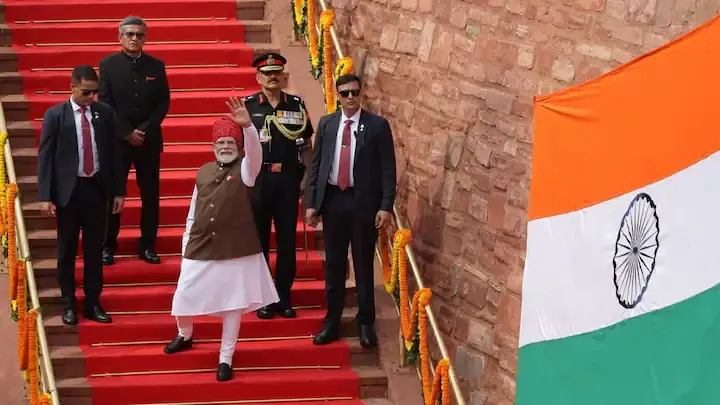
The education community has strongly supported Prime Minister Narendra Modi's announcement of free online coaching for pupils getting ready for competitive exams. PM Modi discussed increasing the availability of online tutoring for students in need of financial aid during his Independence Day speech from the Red Fort. Alakh Pandey, the creator of Physics Wallah, praised the decision shortly after it was made and declared that he was prepared to assist the government in seeing the project thru to completion. His response has brought fresh attention to the potential of digital education in reaching students beyond major cities.
Alakh Pandey Welcomes PM Modis Announcement
Reacting to the Prime Ministers announcement, Alakh Pandey expressed his appreciation for the proposed free online coaching initiative. Pandey has long promoted the use of technology to ensure that all students, regardless of location or socioeconomic situation, have access to high-quality education. He claims that connecting students from smaller towns and villages with knowledgeable instructors and top-notch study materials can be greatly aided by online learning. However, he also highlighted an important point: announcing a scheme is only the beginning. Its real impact will depend on how effectively it is implemented on the ground.
Why Free Online Coaching Could Be a Major Step
Competitive examinations such as UPSC, SSC, banking, railway, JEE and NEET attract millions of aspirants every year. Students in smaller towns and rural areas might not have the same chances as those in larger cities, where they frequently have access to several coaching facilities. For many families, private coaching can also represent a significant financial burden. Students who relocate to major educational centers frequently have to pay for housing, food, and transportation in addition to tuition. A well-thought-out free online coaching program could save a number of these costs and enable students to get ready at home.
Digital Education Can Reach Remote Areas
One of the biggest advantages of online education is its ability to cross geographical boundaries. A student living in a village does not necessarily need to travel hundreds of kilometres to access a good teacher if quality classes are available online. Recorded lectures, live classes, digital study material, mock tests and doubt-solving sessions could make competitive exam preparation more accessible. This could be particularly valuable for students who have talent and determination but lack access to established coaching centres in their locality.
Alakh Pandey Offers Support to the Government
Pandey also offered his unconditional support for the initiative and indicated that he was not seeking profits in return for helping the government. His position reflects a broader argument that quality education should not become an opportunity available only to students who can afford expensive coaching. As the founder of Physics Wallah, Pandey has built a major education platform around affordable and digital learning. His support could potentially contribute experience from the online education sector if the government seeks collaboration with education companies and experts.
Implementation Will Be the Biggest Challenge
While the announcement has generated optimism, the success of the initiative will ultimately depend on its execution. The government will need to determine which examinations and subjects will be covered, how students will qualify for free coaching and what kind of learning resources will be provided. Technology access is another important consideration. Students in remote areas may still struggle with poor internet connectivity, limited access to smartphones or computers and unreliable electricity. Therefore, simply putting classes online may not be enough. The programme would need to consider the digital divide while designing its delivery system.
More Than Just Online Classes
For free coaching to genuinely help aspirants, students may need more than video lectures. A comprehensive system could include structured courses, updated study material, regular mock examinations, performance tracking, doubt resolution and career guidance. Language accessibility could also be important. Providing educational content in multiple Indian languages may help students who are more comfortable studying in their regional language. If these elements are incorporated effectively, online coaching could become a powerful tool for expanding educational opportunities.
A Potential Opportunity for Rural Students
For students from villages and smaller towns, the biggest benefit could be greater equality of opportunity. A talented student should not have to abandon a competitive examination simply because a quality coaching centre is unavailable nearby. Free digital education could help bridge this gap by bringing teachers, study material and examination preparation resources directly to students. At the same time, the programme will need strong monitoring to ensure that the intended beneficiaries actually receive the promised support.