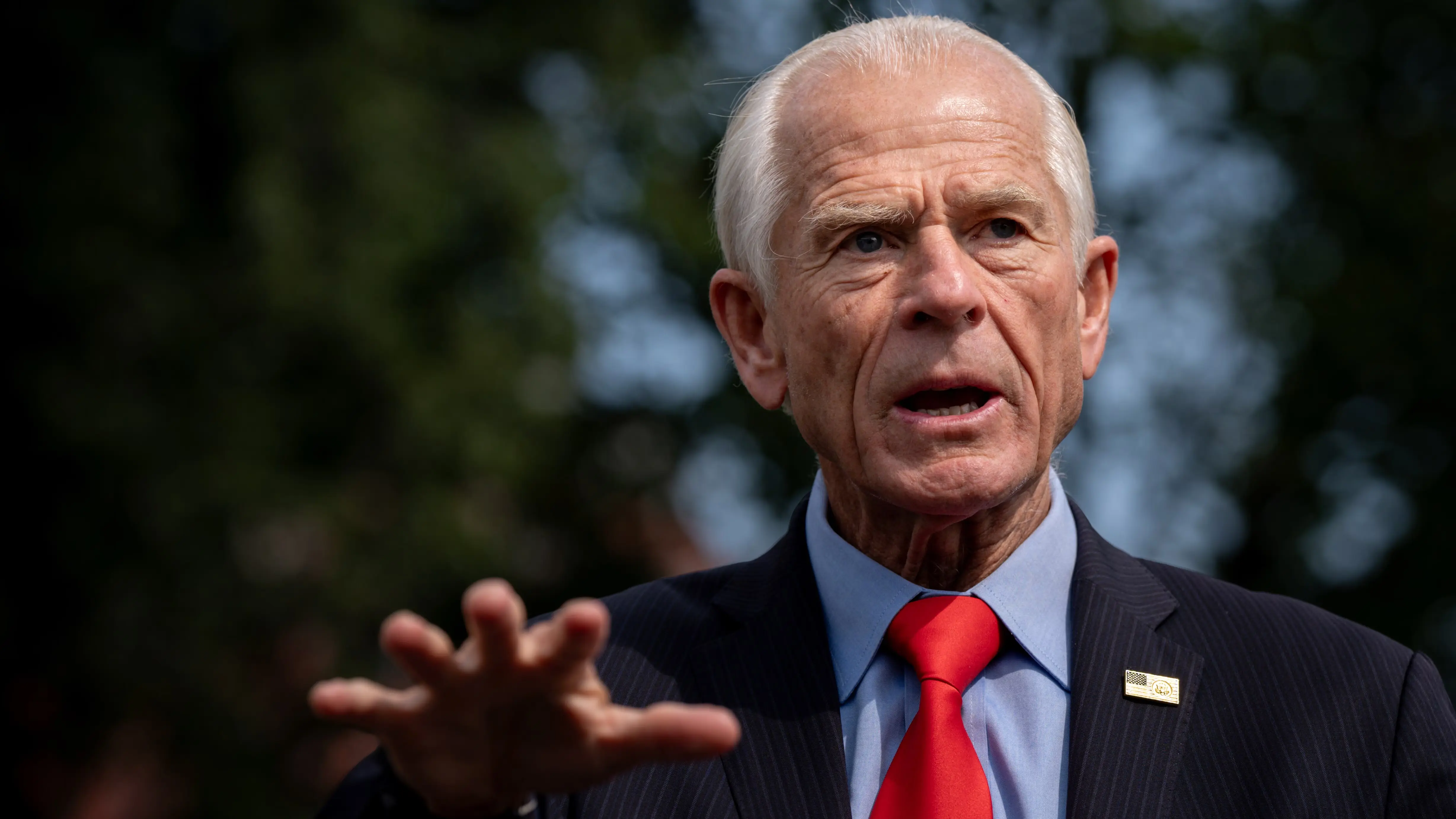
White House trade adviser Peter Navarro has accused Indian critics of launching a fierce online backlash against him after his repeated criticism of New Delhis Russian oil purchases.
His most recent remarks coincide with the ongoing strain on US-India relations caused by trade, tariffs, and India-Russia energy connections. Peter Navarro, the White House trade adviser, is once again at the center of a contentious argument on India's acquisition of Russian crude oil. Speaking to reporters at the White House on Tuesday, Navarro claimed that after making comments regarding New Delhi's trade policies and its ongoing ties to Moscow, he had been "firebombed" online by Indian critics.Navarro urged his detractors to cease targeting him directly, saying, "I actually got firebombed by the Indian continent on the internet with all sorts of nasty little attacks."His remarks come at a particularly delicate time in US-India relations, as Washington is still putting pressure on New Delhi over its energy purchases from Russia and the prospect of significantly higher tariffs is still a big worry.
Why is Peter Navarro angry with India?
Navarro has been one of the most outspoken members of the Trump administration on Indias Russian oil purchases. He has repeatedly argued that money spent by India on Russian crude indirectly supports Moscows ability to continue its war in Ukraine. He has also criticised Indias tariff policies and trade barriers, portraying the two issues as part of a wider imbalance in the US-India economic relationship. In his most recent comments, Navarro asserted that with Russia's invasion of Ukraine in 2022, India's participation in the Russian oil market increased significantly. He claims that when the conflict started, India became a significant consumer of Russian crude and that its refining sector started processing petroleum products that came from Russian suppliers. In the past, Navarro has spoken harshly about India, calling it a "Maharaja of tariffs" and accusing it of assisting Moscow in making money by oil exports.
Russian oil becomes the centre of US-India tensions
Indias purchases of Russian crude have become one of the most complicated issues in the relationship between Washington and New Delhi. Following the outbreak of the Russia-Ukraine war, Russian oil became more attractive to Indian refiners because it was available at discounted prices. India, which imports a large portion of the crude required for its domestic energy needs, has maintained that purchasing oil is primarily an economic and energy-security decision. The issue has nevertheless become a major point of disagreement with Washington. The Trump administration has linked pressure on India to its Russian energy purchases with broader efforts to reduce Moscows oil revenues. Earlier US measures imposed additional tariffs on Indian goods because of New Delhis purchases of Russian crude. The dispute has now entered another phase, with discussions around the possibility of tariffs of up to 100% on major buyers of Russian energy. The issue has created fresh uncertainty for Indian exporters and businesses that depend on access to the American market.
Navarro claims his criticism had an impact
Navarro also suggested that his campaign against Indias Russian oil purchases may have contributed to a change in New Delhis buying behaviour. He pointed to an opinion article he wrote for the Financial Times, saying that he may have played a little bit of a role in reducing Indias Russian oil trade. However, the broader picture is more complicated. India has adjusted its Russian crude purchases at different points because of market conditions, sanctions, shipping risks, refinery economics and diplomatic considerations. Indian refiners have also changed their buying strategies depending on crude prices and the wider international energy market. Therefore, Navarros claim that his comments alone drove changes in Indian oil purchases should be viewed as his own assessment rather than an independently established fact.
India has rejected Navarros accusations
New Delhi has previously pushed back strongly against Navarros criticism. Indian officials have rejected claims that the countrys Russian oil purchases should be portrayed as direct support for the war in Ukraine. India has repeatedly argued that its energy policy is driven by national interest, economic considerations and the need to secure affordable supplies for its population and industries. External Affairs Ministry spokesperson Randhir Jaiswal had earlier described Navarros statements regarding Indias Russian oil purchases as inaccurate and misleading. Indian officials have also highlighted what they see as inconsistencies in Western energy policy, particularly because several countries have continued to maintain significant economic links with Russia despite sanctions. External Affairs Minister S. Jaishankar has previously questioned the changing Western position on Russian crude, noting that India had been encouraged at one stage to purchase Russian oil to help stabilise global energy markets before facing criticism for doing so.
Trump and Modi still expected to manage the dispute
Despite Navarros aggressive rhetoric, the Trump administration has indicated that the disagreement does not necessarily mean a permanent breakdown in relations between Washington and New Delhi. Navarro himself said that US President Donald Trump and Prime Minister Narendra Modi have a very good working relationship and expressed confidence that the two leaders could find a way forward on the tariff dispute. That distinction is important. While trade officials may use strong language during negotiations, India and the United States remain strategically important partners in areas including defence, technology, investment, supply chains and Indo-Pacific security. The Russian oil dispute is therefore not simply an argument over crude imports. It is also part of a much larger conversation about Indias strategic autonomy, Americas sanctions policy and the future direction of bilateral trade.
What happens next?
The immediate question is whether Washington will increase economic pressure on India or seek a negotiated settlement. For India, the challenge is balancing affordable energy imports with access to major Western markets. For the United States, the challenge is pressuring Russia without damaging a strategically important relationship with New Delhi. Navarros latest firebombed remark is likely to generate another wave of debate in India, but the bigger issue remains unresolved: how far can the US push India over Russian oil without creating a deeper rift between two countries that increasingly depend on each other strategically? As discussions over US tariffs on India, Russian crude oil, Trump Modi relations and India-US trade tensions continue, the coming weeks could prove crucial for the future of the bilateral economic relationship.