
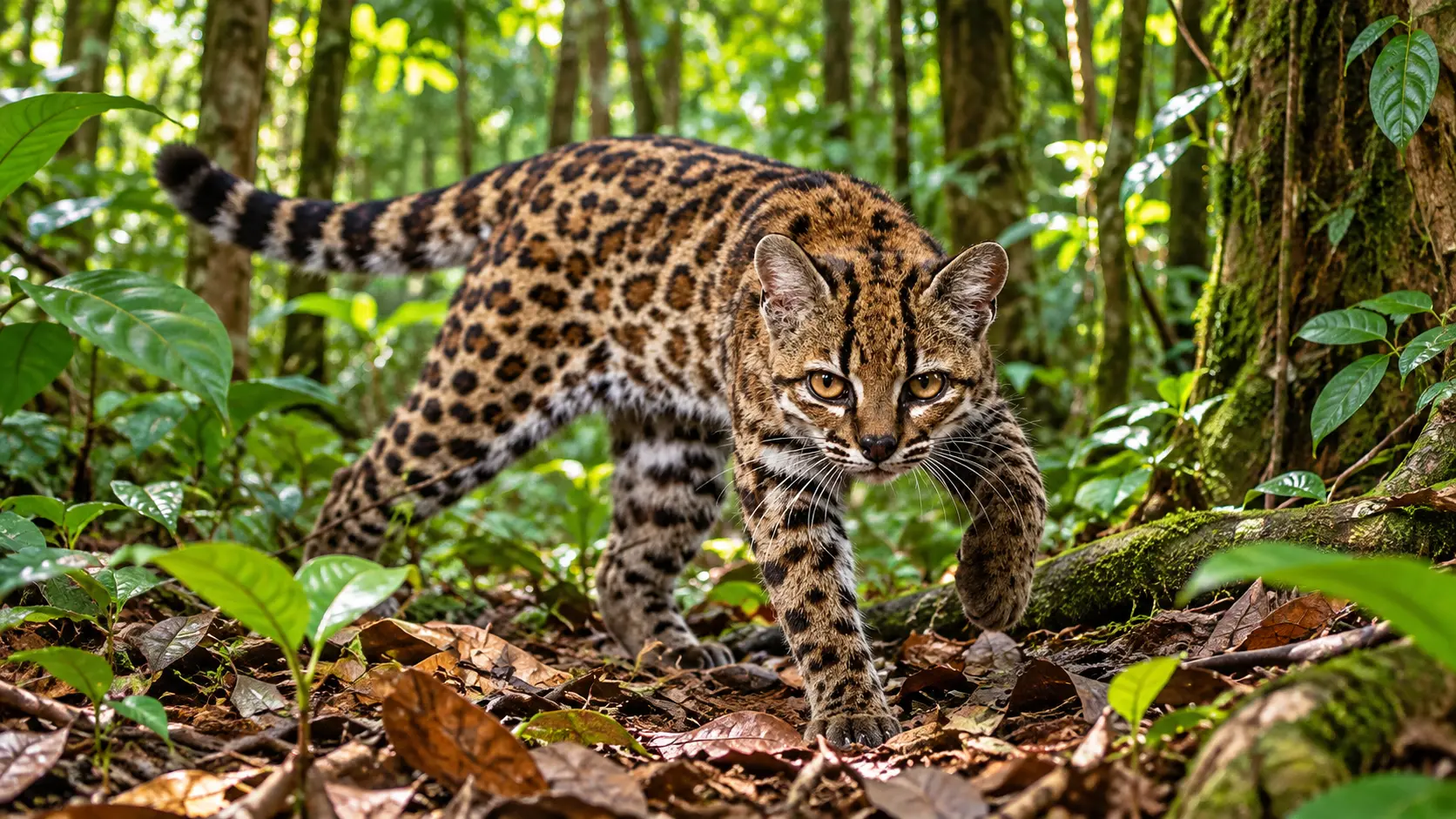
Scientists have identified a previously unknown wild cat species in Bolivias Yungas cloud forests, marking the first formal description of a new living feline species in more than 100 years.
A remarkable discovery in the forests of Bolivia has added a new member to the worlds feline family. Scientists have formally identified a small wild cat as Leopardus tilcayo, a previously unrecognised species belonging to the tiger cat group. The discovery is particularly significant because researchers say it is the first time in more than a century that a new living cat species has been formally named and described. The findings were published in the scientific journal Current Biology in September 2026.
A Small Cat Hidden in Bolivias Cloud Forests
The newly recognised tilcayo tiger cat lives in Bolivias Yungas region, an environmentally rich mountainous area where the eastern Andes meet the Amazon basin. Much of the landscape is covered by humid cloud forests, creating an ecosystem capable of supporting a remarkable range of wildlife. The animal is relatively small. Researchers estimate that it measures roughly 46 centimetres in body length and weighs about 1.4 kilograms. Its compact size means it can be smaller than many ordinary domestic cats. Its appearance is striking. The cat has a light brown coat covered with irregular dark rosettes, along with rounded ears and a slender body. These markings give it a distinctly leopard-like appearance despite its much smaller size. Local communities had already been familiar with the animal and called it tilcayo. Researchers retained that local name when giving the species its scientific designation, Leopardus tilcayo.
Genetic Evidence Revealed the New Species
Identifying the animal as a separate species was not possible simply by looking at its appearance. Tiger cats are considered a group of cryptic species, meaning closely related animals can look remarkably similar even when they are genetically different. To investigate the mystery, scientists examined genetic material from 38 tiger cats collected from different parts of South America, including specimens preserved in museums. The analysis showed that what had traditionally been treated as tiger cats contained several genetically distinct lineages. The genetic evidence established that the Bolivian animal represents a distinct evolutionary lineage. Researchers estimate that its lineage separated from other tiger cats roughly 1.4 million years ago. That finding transformed what initially appeared to be a familiar small wild cat into an entirely new species recognised by science.
Scientists Still Know Very Little About Its Lifestyle
Although the species has now been formally described, many questions remain unanswered. Researchers have only limited information about the tilcayos population, behaviour, reproduction and habitat requirements. Camera-trap observations indicate that the animal may be particularly active during nighttime hours. Evidence from scat samples has also provided an early clue about its diet. Small rodents appear to be among the animals it may hunt, although scientists need considerably more field research to understand its feeding habits fully. The limited number of known animals makes the discovery even more important from a conservation perspective. Scientists need to determine how widely the species is distributed and whether additional populations exist elsewhere in the Andes.
A Discovery That Changes the Tiger Cat Family Tree
The study did more than identify one new Bolivian species. Researchers concluded that the South American tiger cat group contains five genetically distinct species, revealing considerably more diversity than previously recognised. The research also identified a previously unrecognised tiger cat subspecies in Perus Yungas region. It has been named Leopardus tigrinus antisuyo, using the name Antisuyo associated with the historical Inca Empire region that included its habitat. Scientists say these findings demonstrate why genetic research can be crucial for understanding wildlife. Animals that look almost identical can have separate evolutionary histories and may require different conservation approaches.
Why the Discovery Matters for Conservation
The discovery of Leopardus tilcayo also raises concerns about the future of the species. The Yungas is an important biodiversity hotspot, but its forests face pressure from activities including deforestation, agriculture and mining. If the tilcayo occupies a small geographic range, damage to its habitat could have a disproportionate effect on its population. Researchers have shared information about the newly recognised species with conservation authorities, including the International Union for Conservation of Nature (IUCN), to help determine how its conservation status should be assessed. Recognising a species is more than simply giving an animal a new scientific name. It allows researchers and conservation organisations to study its population separately, identify threats and develop protection measures specifically suited to its habitat.
A Reminder That Nature Still Holds Surprises
The discovery of the tilcayo tiger cat is a striking reminder that scientists have not yet documented every species living on Earth. Even in well-studied animal groups such as cats, genetic research can reveal hidden diversity. For decades, the Bolivian tiger cat could be mistaken for another member of the Leopardus group because of its similar appearance. Modern genomic techniques have now provided the evidence needed to distinguish it. For the Yungas forests of Bolivia, the discovery brings international attention to an ecosystem that remains biologically rich and scientifically important. The tiny Leopardus tilcayo may be new to science, but its story has likely been developing for millions of years. Now that researchers know it exists, the next challenge is understanding how many of these cats remain in the wild, where they live, and what must be done to ensure that this newly recognised species survives for generations to come.