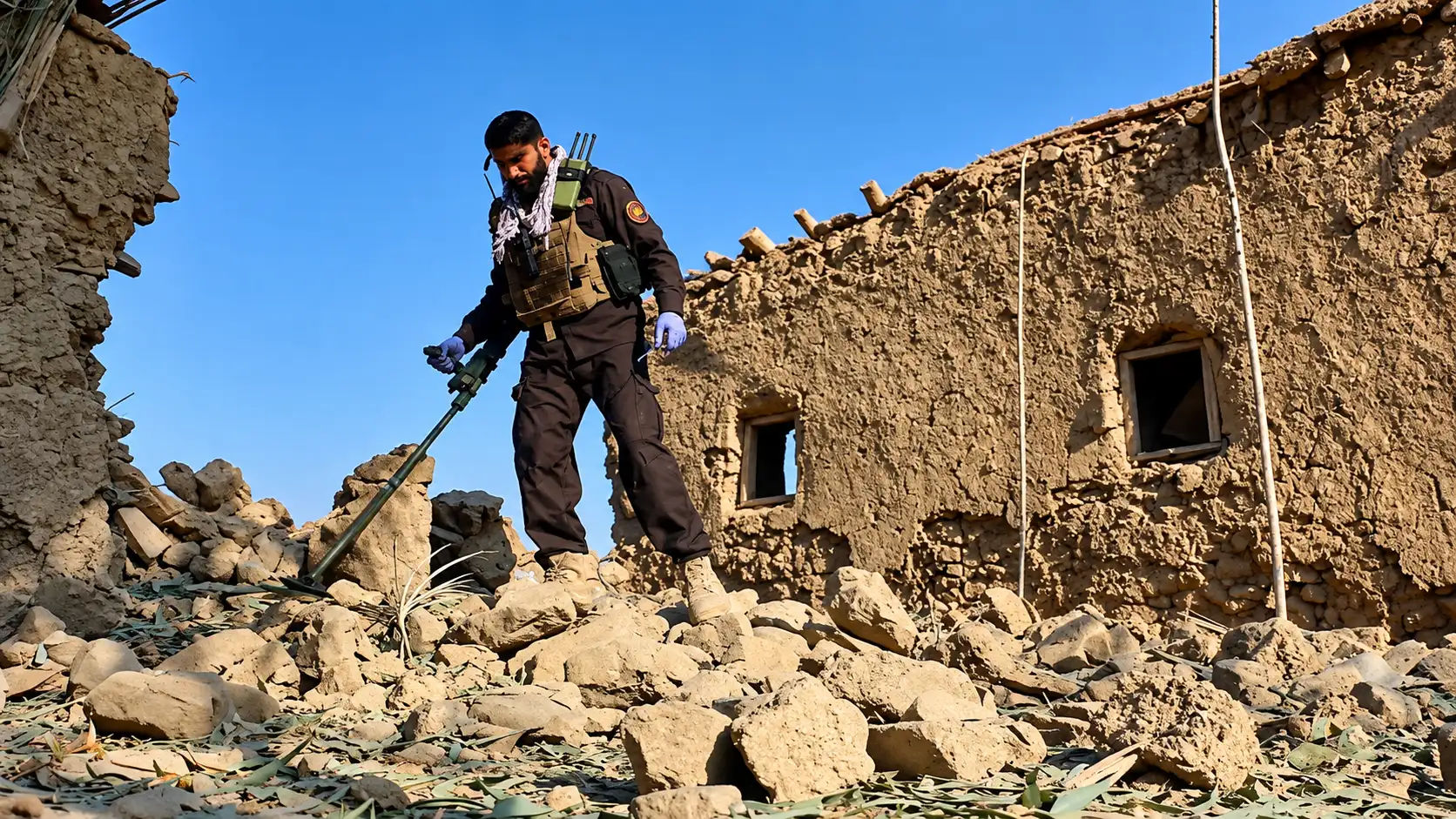
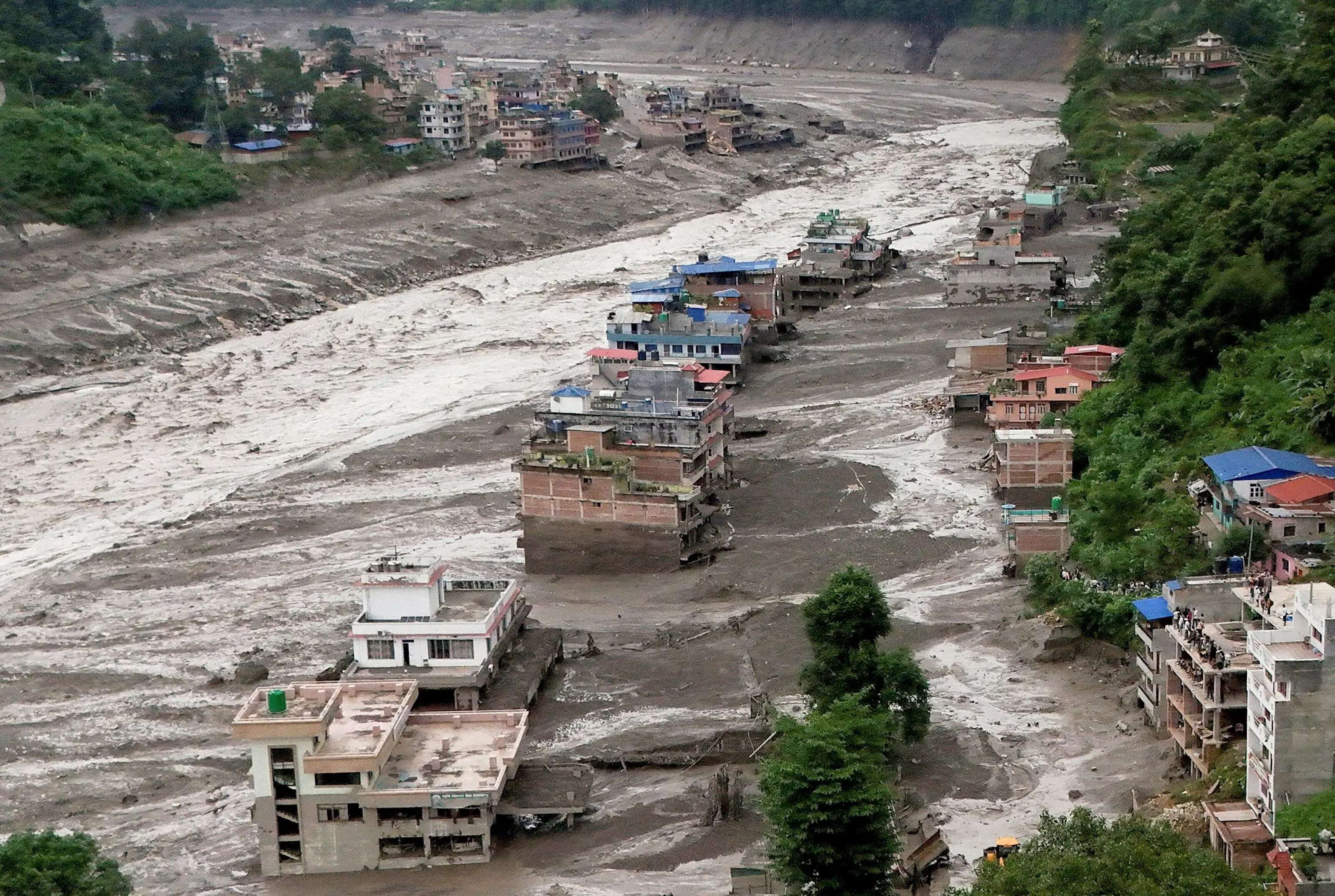
Kathmandu: The scale of devastation caused by the deadly flash floods in Nepal has become clearer through aerial footage emerging from rescue operations. Entire settlements have been buried under thick layers of mud, while homes, vehicles, roads and bridges have been swept away by powerful floodwaters. At least 165 people have been killed in the disaster, while hundreds of others remain unaccounted for. The number of missing people has continued to change as rescue teams gain access to areas that were previously cut off by floodwater and debris. The disaster has affected areas along the Nepal-Tibet border and caused widespread damage downstream, particularly around the Bhote Koshi and Trishuli river systems.
Aerial Footage Shows Extent of Destruction
Videos recorded from the air show villages covered with mud and debris following the sudden flooding. Several houses appear to have been badly damaged or completely destroyed, while vehicles and other structures have been buried beneath layers of sediment. In some areas, roads have disappeared under mud, leaving communities isolated from the rest of the country. Bridges have also been damaged or washed away, making it difficult for rescue teams to reach people who may still be trapped or waiting for help. The visuals provide a clearer picture of the destruction caused by the rapidly moving water and debris. However, the authenticity of individual social media videos should be independently verified before they are treated as confirmed evidence.
Bhote Koshi and Trishuli Rivers Bore the Brunt
The flooding hit areas connected to the Bhote Koshi and Trishuli rivers, with the surge moving downstream through mountainous settlements. The initial flood entered Nepal from the Tibetan side before travelling through the Bhote Koshi and into the Trishuli river system. The water and debris then moved towards lower areas, affecting communities and infrastructure along the riverbanks. The force of the water was strong enough to destroy bridges, roads, houses and hydropower infrastructure. Reports have described entire sections of settlements being overwhelmed within a short period.
Death Toll Climbs as Search Operations Continue
Nepalese authorities have recovered at least 165 bodies so far, with identification of some victims still underway. A significant number of people remain missing, including local residents, tourists and security personnel. According to Nepal's National Disaster Risk Reduction and Management Authority, dozens of security personnel working in the affected region are also unaccounted for. The Nepal Tourism Board has separately reported hundreds of travellers missing from affected areas. Rescue officials expect the situation to become clearer as teams reach remote locations and communication is restored.
Foreign Tourists and Indian Nationals Among Those Missing
The disaster has also raised concerns about foreign nationals who were travelling through the region. Reports indicate that Indian citizens are among those missing, including people travelling towards the Kailash Mansarovar pilgrimage route. Other foreign nationals from countries including the United States, Australia, Britain, Canada and South Korea have also been reported missing. Authorities and foreign governments are working to establish the whereabouts of their citizens as rescue operations continue.
Rescue Teams Using Helicopters and Drones
Nepal's security forces have launched a large-scale search and rescue operation in the affected areas. Helicopters are being used to evacuate survivors from locations that remain inaccessible by road. Rescue teams are also using drones and other equipment to assess damage and locate people who may be stranded. However, damaged infrastructure, high water levels, and heavy deposits of mud are making the operation extremely difficult. Hundreds of survivors have already been moved to safer areas, while injured people are being transported to medical facilities.
Uttar Pradesh and Bihar Remain on Alert
The impact of the disaster is also being closely watched in India because the affected river system eventually flows towards the country. Authorities in Uttar Pradesh and Bihar have been placed on alert amid concerns about rising water levels and possible downstream effects. Officials in vulnerable areas have been instructed to monitor river conditions and take precautionary measures where necessary. The Trishuli eventually connects with the Narayani system, which enters India as the Gandak River, making developments in Nepal important for communities downstream in India.
What Triggered the Sudden Flood?
The exact chain of events behind the disaster is still being examined. Initial reports raised the possibility of seismic activity, but subsequent analysis indicated that the seismic signal was linked to a large landslide or collapse involving ice and rock rather than a conventional earthquake. Experts have suggested that a glacier-related collapse may have triggered a powerful surge of water, mud and debris into the river system. The sudden release then travelled downstream with enormous force. Scientists are also examining the possible role of changing Himalayan conditions and glacier instability, although it is too early to establish a direct link between climate change and this particular event.
Nepal Faces a Long Recovery Ahead
For communities hit by the floods, the immediate priority remains finding missing people and providing shelter, food and medical assistance to survivors. The aerial images emerging from the affected region underline the enormous scale of the challenge. Roads and bridges will need to be rebuilt, damaged homes assessed and essential infrastructure restored. As rescue teams continue their search, families across Nepal and several other countries are waiting for news about missing relatives. With the number of casualties and missing people still being assessed, the full human cost of the disaster may become known only after rescue operations reach the worst-hit areas.