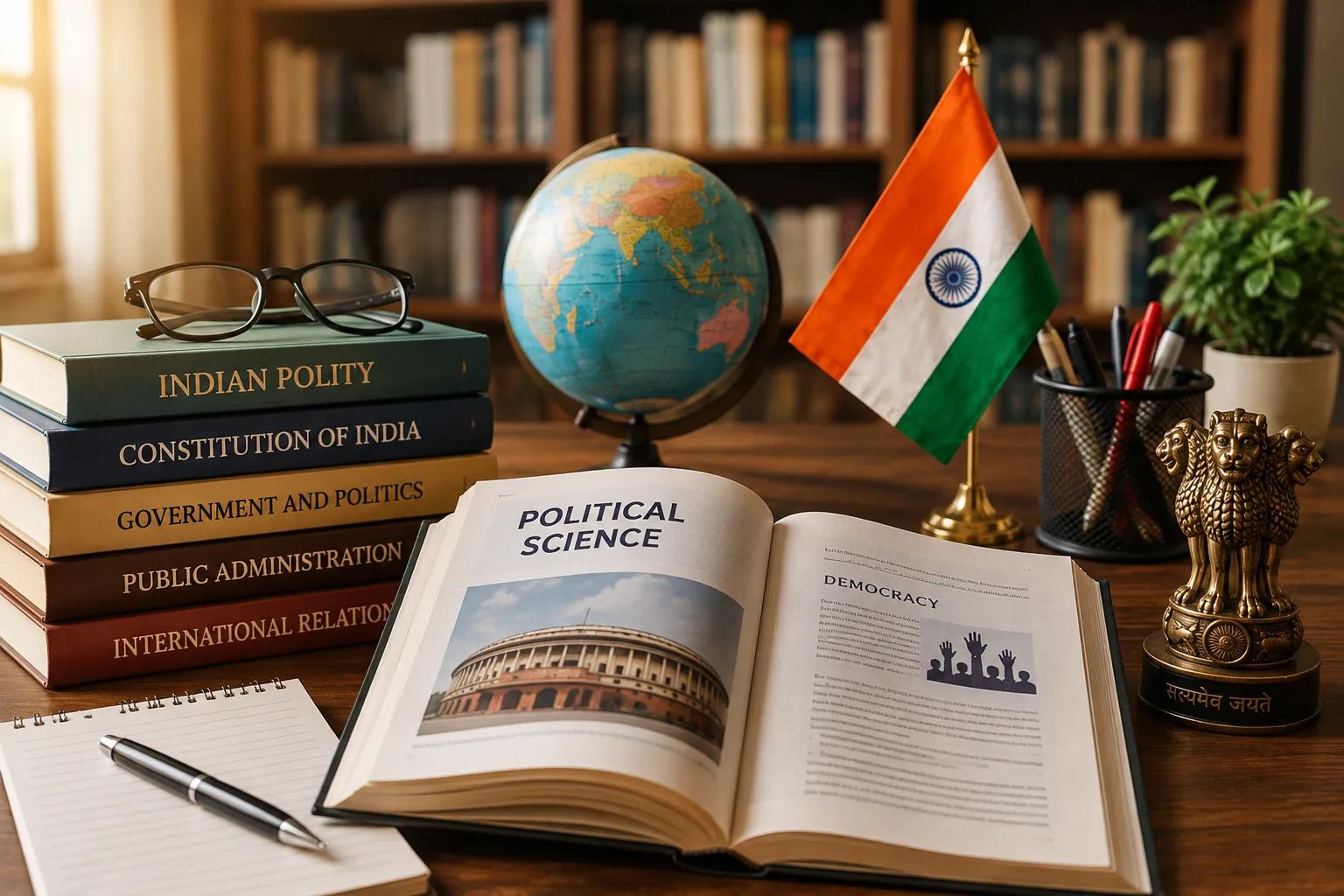
The National Council of Educational Research and Training (NCERT) has reconstituted a 20-member Textbook Development Team (TDT) to prepare new Political Science textbooks for Classes 11 and 12. The new team has been assigned the responsibility of incorporating themes such as cultural rootedness, Indian Knowledge Systems (IKS), equity and inclusion, value education, and educational technology into the textbooks. However, the constitution of the team has drawn attention because at least four members are reported to have links with the Rashtriya Swayamsevak Sangh (RSS), its student wing Akhil Bharatiya Vidyarthi Parishad (ABVP), or organisations associated with the Sangh.
20-Member Team Given Key Responsibility
The NCERT announcement from August 14 states that the newly formed Textbook Development Team has twenty members. The team will work on developing new Political Science textbooks for Classes 11 and 12, along with related teaching-learning material. NCERT said the team has been constituted with the objective of further strengthening and streamlining the textbook development process. The team will be headed by academic and political analyst Sandeep Shastri, who is the Vice-President of Nitte (deemed to be a university) in Bengaluru.
Focus on Indian Knowledge and Cultural Roots
The National Curriculum Framework for School Education (NCF-SE) 2023 will guide the development of the new textbooks. The framework emphasizes tying education to the cultural and knowledge traditions of India. As part of the new exercise, the textbook team has been asked to consider areas such as cultural rootedness, Indian Knowledge Systems, equity, inclusion, value-based education and the use of educational technology. The goal is to give students educational materials that address current educational demands and make connections between academic ideas and the social and cultural context of India.
RSS and ABVP Links Become a Point of Discussion
The background of some members has become one of the major points of discussion following the announcement. According to available reports, at least four members of the team have documented associations with the RSS, ABVP or organisations linked to the Sangh. The development has triggered a debate in educational and political circles about the possible direction of the new Political Science textbooks and how different political and social issues may be presented. However, the organisational or ideological background of individual members alone cannot determine what the final textbooks will contain. The actual approach of the new books will become clearer only after their chapters, content and review process are completed. The final material will therefore be closely watched by educators, academics and other stakeholders.
Class 11 Textbook Targeted for November 2026
NCERT has also established deadlines for the completion of the new textbooks. The Class 11 Political Science textbook is expected to be completed by November 30, 2026, while the Class 12 textbook has been given a deadline of July 30, 2027. Both textbooks are expected to follow the broader recommendations and framework outlined under NCF-SE 2023. The timelines indicate that the new textbooks could bring significant changes to the way Political Science is taught to senior secondary students. The extent of these changes, however, will only become clear once the revised material is formally prepared and released.
Why Changes in Political Science Textbooks Matter
Political Science at the school level introduces students to important concepts such as democracy, the Constitution, citizenship, rights, equality, justice, political institutions and the functioning of the state. Changes to textbooks in this subject can therefore have a wider impact on how students understand India's political system and democratic institutions. The issue becomes particularly significant when the composition of the textbook development team itself becomes a subject of public discussion. The inclusion of Indian knowledge traditions and cultural perspectives may influence how certain topics are approached, while questions about representation and ideological balance are also likely to remain part of the wider debate.
Attention Now Shifts to the Final Content
For now, the newly constituted team has been tasked with completing the two textbooks within the deadlines set by NCERT. The Class 11 textbook is scheduled to be completed by November 2026, followed by the Class 12 textbook by July 2027. The actual nature of the changes will become clearer once the new chapters and learning material are made available. The inclusion of Indian Knowledge Systems, cultural rootedness, value education and inclusion suggests that the revised textbooks may place greater emphasis on Indian perspectives alongside existing Political Science concepts. At the same time, the reported RSS and ABVP links of some team members are likely to keep the debate around academic independence, representation and ideological balance alive until the final textbooks are released.