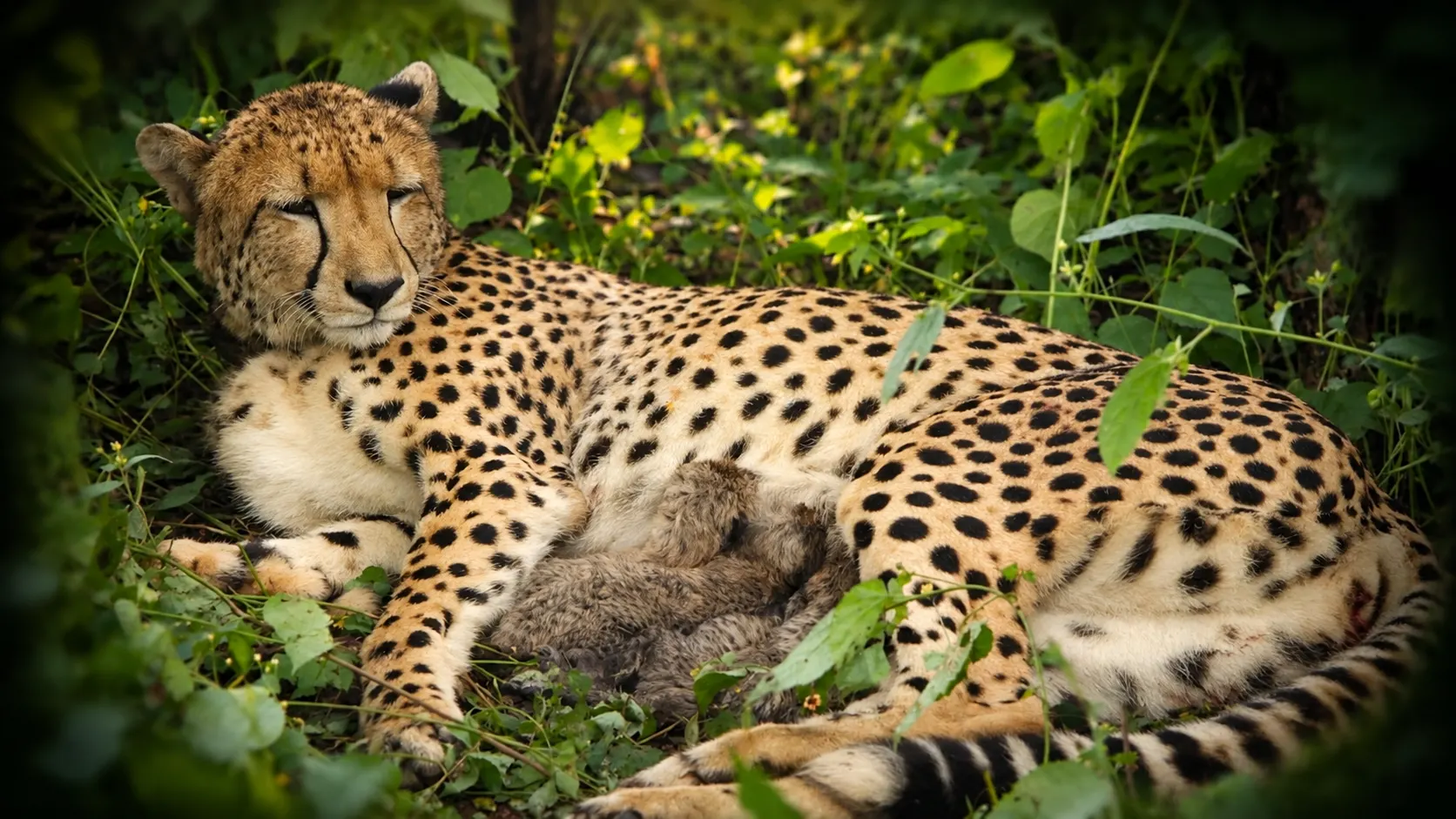
Sheopur, Madhya Pradesh: Indias cheetah conservation programme has reached another significant milestone with the birth of four cubs at Kuno National Park (KNP) in Madhya Pradeshs Sheopur district. The cubs were born to KGP12, a female cheetah born in India, marking another encouraging development in the countrys efforts to establish a sustainable cheetah population. The four new arrivals have taken Indias total cheetah population to 36. Forest officials spotted the newborn cubs during routine monitoring and are keeping a close watch on the mother and her young from a safe distance to avoid disturbing them during their early days.
Four New Cubs Bring Fresh Hope for Cheetah Conservation
The birth of four cubs is being viewed as an important development for Project Cheetah, particularly because KGP12 herself was born in India. The successful birth demonstrates that cheetahs that are part of the Indian population are reproducing naturally within their habitat. Wildlife officials are maintaining a cautious approach while monitoring the new family. Since newborn cubs are vulnerable during their initial weeks, forest personnel are observing them without unnecessary intervention. The latest development also adds to a series of breeding successes recorded at Kuno National Park since cheetahs were reintroduced to India.
KGP12 Becomes Second India-Born Female to Give Birth at Kuno
According to Kuno National Park field director Uttam Sharma, the cubs were spotted by forest staff on Friday. He said KGP12 is the second female cheetah born in India to give birth at Kuno, following Mukhi. The development is particularly significant because successful reproduction by India-born cheetahs indicates that the animals are becoming established within the parks environment. For wildlife managers, natural breeding is an important part of building a viable cheetah population rather than relying solely on the continued introduction of animals from other countries.
Project Cheetah Reaches Another Milestone
The latest birth comes nearly four years after Indias cheetah reintroduction programme began at Kuno National Park. The initiative was launched on September 17, 2022, when the first batch of cheetahs was brought to India. Since then, Kuno has become the centre of India's efforts to restore the cheetah to the country after the species was declared extinct in India decades ago. The programme has involved bringing cheetahs from Africa and managing their gradual transition into the Indian environment. Alongside population management, authorities have focused on monitoring the animals, protecting their habitat and supporting natural breeding.
Environment Minister Calls Birth a Historic Moment
Union Environment Minister Bhupendra Yadav welcomed the arrival of the four cubs and described it as a major moment for Project Cheetah. Yadav highlighted the fact that KGP12 was born in India and has now produced four cubs. According to the minister, the development reflects progress in cheetah conservation and natural breeding efforts in the country. The minister also pointed to the four-year journey of Project Cheetah, describing the latest births as another milestone in India's efforts to establish the species in the wild.
Forest Officials Keeping Their Distance
While the arrival of the cubs has generated excitement, authorities are taking precautions to protect the animals during this sensitive period. Forest personnel are monitoring KGP12 and her cubs from a distance rather than approaching them frequently. Such monitoring allows officials to keep track of the family's condition while minimising human interference. The first few weeks are particularly important for newborn cheetah cubs. Their survival can depend on the mothers ability to protect and care for them within the natural environment. Officials are therefore expected to continue observing the family closely and recording their development as part of the parks wildlife monitoring programme.
Indias Cheetah Population Now Stands at 36
With the four new cubs, the number of cheetahs in India has increased to 36. The latest addition is another indication of the population growth being pursued under Project Cheetah. The increase also highlights the importance of natural reproduction for the long-term future of the species in India. Every successful litter can contribute to the development of a self-sustaining population if the cubs survive to adulthood and eventually reproduce themselves.
Kuno Emerges as Centre of Cheetah Reintroduction Efforts
Kuno National Park has played a central role in India's cheetah restoration programme since its launch in 2022. The park provides a protected landscape where authorities can monitor the animals, study their behaviour and track their adaptation to Indian conditions. The birth of four cubs to an India-born female adds a new chapter to that effort. It also provides wildlife researchers with an opportunity to study natural breeding and the development of cheetahs born within India's protected landscape.
A New Chapter for Indias Cheetah Journey
The arrival of KGP12s four cubs marks another important moment in Indias ongoing cheetah conservation efforts. From the reintroduction of the species in 2022 to the birth of animals within the Indian population, the programme has entered a new phase focused increasingly on reproduction and population establishment. For now, forest officials will continue to monitor KGP12 and her four cubs from a safe distance. Their survival and growth will remain closely watched as India works towards establishing a stable and naturally breeding cheetah population at Kuno National Park.