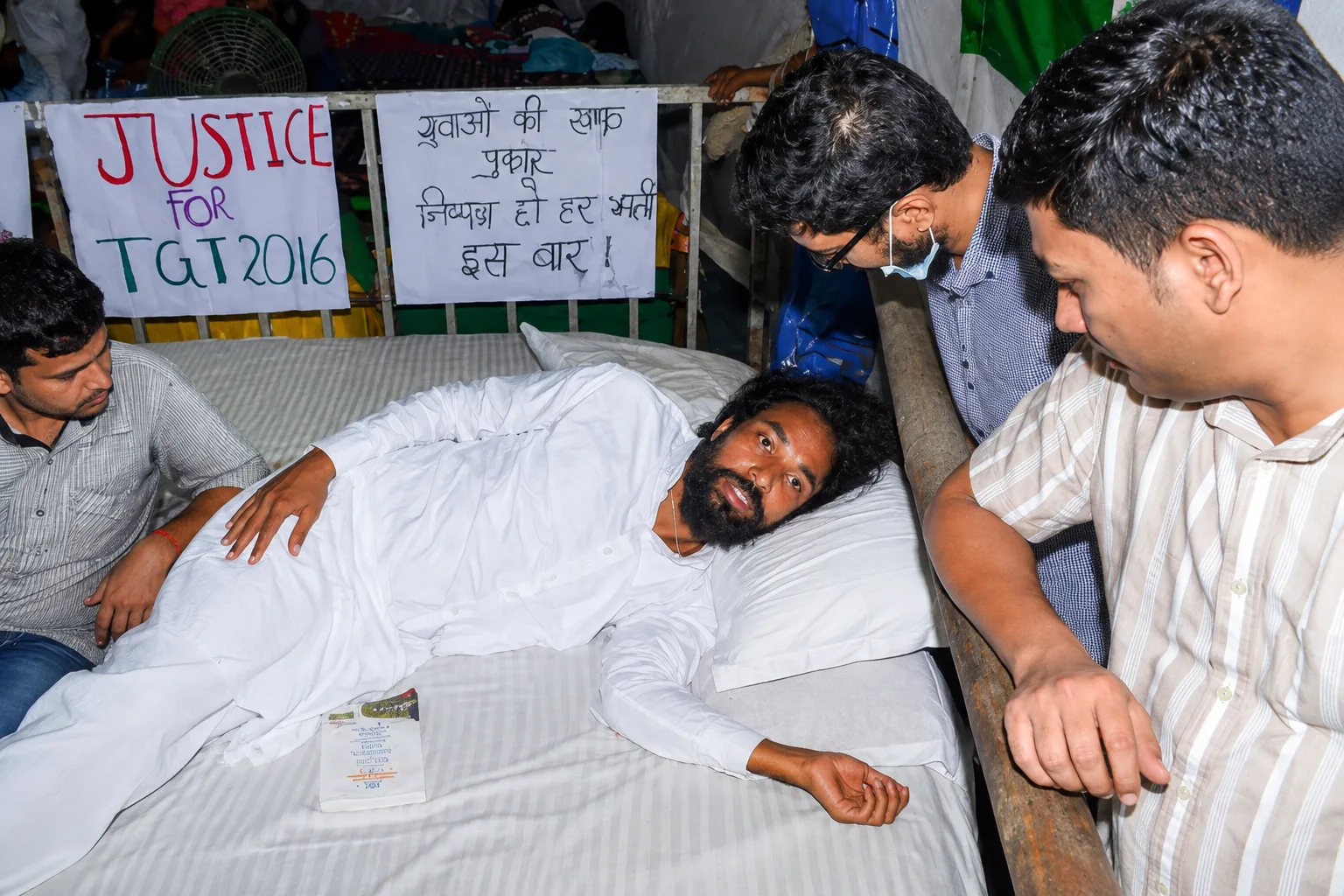
Jharkhand is witnessing an intensifying student movement as job aspirants continue their protest against alleged irregularities in state recruitment examinations. The agitation, which has been underway for several days at Jaipal Singh Munda Stadium in Ranchi, has now entered a critical phase with several protesters launching an indefinite hunger strike. The students claim that repeated controversies surrounding recruitment examinations have shattered the confidence of thousands of candidates who have spent years preparing for government jobs. Political figures, social groups, and student organizations have all expressed support for the protesters, garnering a lot of public attention. The state government is under increasing pressure to address the demands of the agitated students as the protest gains traction.
Students Demand Transparent Investigation Into Recruitment Process
The Jharkhand Public Service Commission (JPSC) and Jharkhand Staff Selection Commission (JSSC) recruitment exams are the main source of concern for the demonstrators. The students claim that there have been accusations of procedural errors, a lack of openness, and potential irregularities surrounding a number of exams. The agitating candidates have demanded that an independent central investigating agency conduct a comprehensive inquiry into the recruitment process. They contend that only an unbiased inquiry can rebuild confidence among the millions of candidates who have dedicated years of effort, money, and emotional energy to getting ready for competitive exams. In order to give worthy applicants equal opportunity, the students also want the government to guarantee that future hiring procedures are carried out with total transparency, accountability, and stringent oversight.
Hunger Strike Intensifies the Protest
The agitation took a more serious turn when Jharkhand Krantikari Loktantrik Morcha (JKLM) leader Devendranath Mahto began an indefinite hunger strike in support of the students. Soon after, several student protesters joined the fast, increasing pressure on the administration. The demonstrators have insisted that they will keep up their agitation until significant action is taken, despite the health hazards connected to a protracted hunger strike. Medical teams have reportedly been monitoring the condition of those participating in the fast as the number of protesters continues to grow. Student representatives have stated that peaceful democratic protests remain their preferred method of raising concerns, but they insist that repeated delays in addressing recruitment-related issues have left them with no alternative.
Abhijeet Dipke Extends Support to Protesting Students
The ongoing protest received additional attention after Campaign for Justice and Peace (CJP) founder Abhijeet Dipke visited the protest site and expressed support for the agitating students. Dipke interacted with the protesters and emphasized the importance of protecting the rights of students and job aspirants. He urged the authorities to listen to the concerns of the candidates and take timely action to restore confidence in the recruitment system. His visit has brought national visibility to the protest, with discussions around the issue expanding beyond Jharkhand and attracting attention from various social and political groups.
Vidhan Sabha March Planned to Increase Pressure
To further strengthen their movement, student organizations have announced plans to organize a Vidhan Sabha March in Ranchi. The proposed march is intended to place greater pressure on the state government by demonstrating the scale of dissatisfaction among unemployed youth. Organizers have appealed to participants to maintain peace and discipline during the demonstration while continuing to raise their demands through democratic means. They believe a larger public participation will encourage authorities to initiate constructive dialogue.
Recruitment Controversies Continue to Trouble Aspirants
Recruitment examinations have become a sensitive issue in several states over the past few years, with repeated allegations relating to paper leaks, delayed results, irregular selection procedures, and administrative lapses. Such controversies have significantly affected the morale of candidates who often spend years preparing for competitive examinations. In Jharkhand, students argue that repeated uncertainties have not only delayed employment opportunities but have also created financial and mental stress for thousands of families. Many aspirants believe that transparent recruitment is essential for maintaining public trust in government institutions. Experts have also emphasized that timely examinations, transparent evaluation systems, digital monitoring, and strict action against malpractice are necessary to ensure credibility in the recruitment process.
Government Yet to Announce Major Decision
The Jharkhand government has maintained that the concerns raised by students are being examined. However, protesters believe that assurances alone are insufficient and are demanding concrete decisions backed by official action. With the hunger strike continuing and the proposed Vidhan Sabha March expected to attract larger participation, the coming days could prove crucial for both the students and the state administration. For thousands of unemployed youth across Jharkhand, the movement has become more than a protestit represents a demand for fairness, transparency, and equal opportunity in government recruitment. Whether the government initiates dialogue or announces fresh measures in response to the agitation will determine the future course of this rapidly growing student movement.