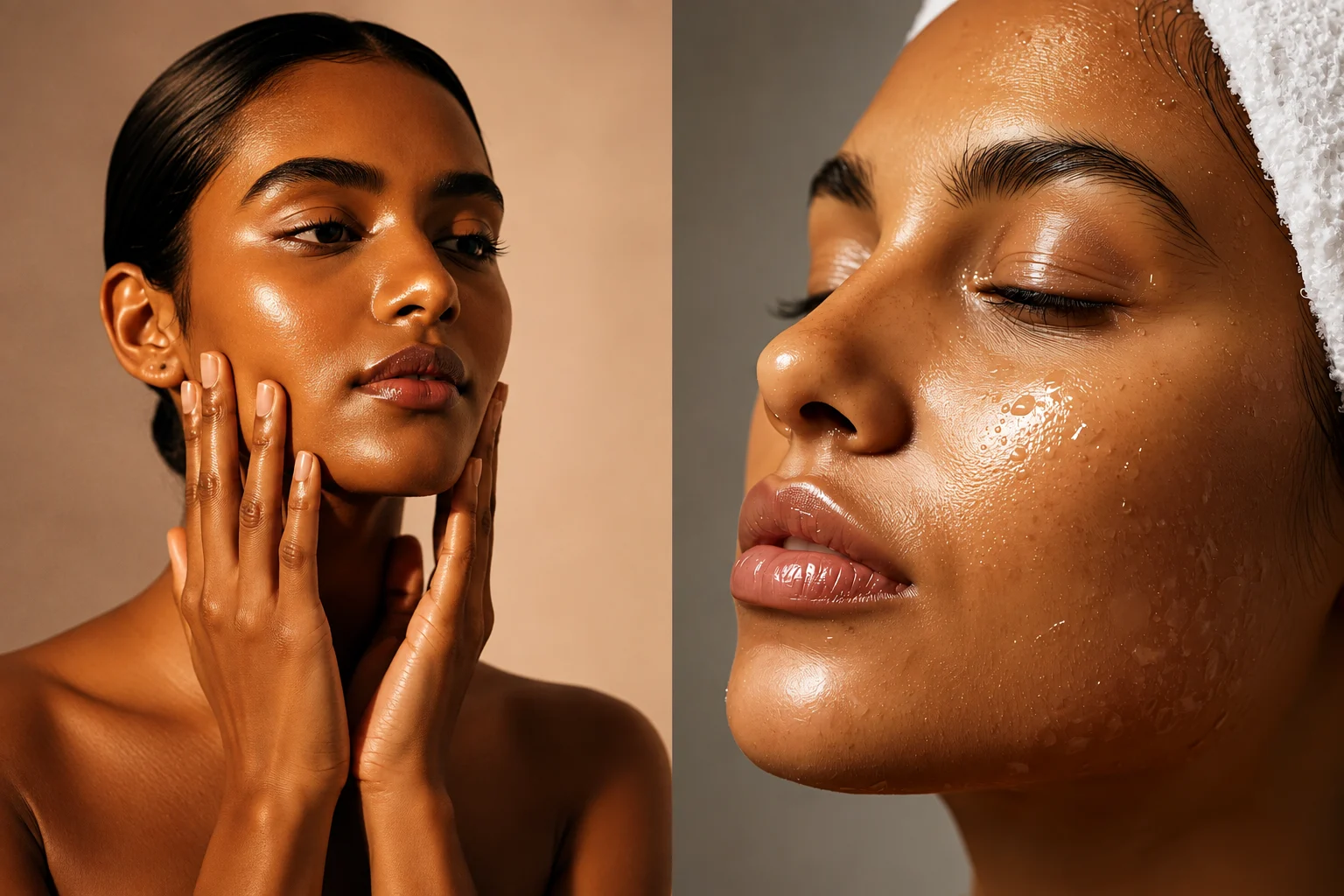
Social media platforms have transformed the way people think about skincare and beauty. A quick scroll through Instagram can bring up countless posts promising smooth, shiny, and almost poreless skin. This look, popularly known as glass skin, has become one of the biggest beauty trends in recent years. The term is generally used for a complexion that looks extremely hydrated, smooth, clear and reflective. However, skincare experts point out that the appearance promoted online does not necessarily represent what genuinely healthy skin looks like.
What Is Glass Skin?
Glass skin is primarily a beauty ideal rather than a medical definition of healthy skin. The trend focuses on achieving a complexion that appears exceptionally smooth, hydrated, and radiant. Skincare routines associated with the trend often include several products designed to improve hydration, exfoliate dead skin cells, and enhance the skin's overall appearance. While these practices may help some people achieve a temporary glow, naturally healthy skin does not need to have a completely flawless or reflective finish. Real human skin has texture. Pores are visible, fine lines develop with age, and pigmentation can vary from one area of the face to another. Occasional pimples, blackheads, acne marks, and small rough patches can also occur even when a person follows a good skincare routine. These characteristics are not automatically signs that something is wrong with the skin.
Healthy Skin Does Not Mean Flawless Skin
One of the biggest misconceptions created by the glass-skin trend is the belief that healthy skin should look perfect at all times. In reality, there is no single appearance that defines healthy skin. Two people can have very different skin textures, tones and levels of pigmentation while both having healthy skin. Healthy skin is better understood by how it functions rather than simply by how it looks in a photograph. Skin that is properly hydrated, comfortable and able to maintain its protective barrier can be considered healthy even when pores and other natural features remain visible. A few blemishes or uneven areas do not necessarily indicate poor skin health.
Why Social Media Can Be Misleading
The images people see online are rarely a perfect representation of someone's everyday skin. Lighting, makeup, camera angles, filters and editing can dramatically change the appearance of a complexion. Even when an image does not obviously appear edited, professional lighting and carefully chosen angles can make skin look significantly smoother. Constantly comparing natural skin with highly curated online photographs can create unrealistic expectations. A person may begin to believe that normal pores, fine lines or minor pigmentation need to be corrected. This can eventually lead to excessive use of skincare products in an attempt to recreate the appearance seen online.
Too Many Products Can Backfire
The desire to achieve glass-like skin can sometimes encourage people to use multiple active ingredients and exfoliating products at the same time. While ingredients such as exfoliating acids and other skincare actives can have benefits when used appropriately, using too many products or applying them too frequently may irritate the skin. Over-exfoliation can leave the skin feeling dry, tight or sensitive. Some people may also experience redness, flaking or a burning sensation. Instead of making the complexion healthier, an overly complicated routine can weaken the skin's protective barrier and make it more vulnerable to irritation. This is why skincare should not be treated as a race to achieve the smoothest possible appearance. What works for one person may not necessarily work for another, and introducing several strong products at once can make it difficult to identify what is actually helping or causing irritation.
What Does Healthy Skin Actually Look Like?
Healthy skin can look very different from person to person. Some people may naturally have visible pores, freckles or pigmentation, while others may have a more even complexion. Neither appearance automatically tells us whether the skin is healthy. A healthy complexion is generally associated with skin that feels comfortable, retains moisture and has a functioning protective barrier. It does not need to look completely poreless or have a mirror-like shine. The occasional breakout or small change in texture is part of having real skin and should not always be treated as a problem that needs immediate correction. A natural glow can often be associated with good hydration and proper skincare, but glow alone should not be considered a measurement of skin health. Skin can be healthy without appearing exceptionally shiny or smooth.
Simple Skincare Can Be More Effective
Rather than constantly changing products to follow the latest beauty trend, maintaining a consistent and practical skincare routine can be more beneficial. Gentle cleansing, adequate moisturisation and regular sun protection are basic steps that can help support the skin over time. People dealing with persistent acne, unusual irritation, significant pigmentation or other ongoing skin concerns should consider speaking with a qualified dermatologist rather than attempting increasingly aggressive treatments on their own. Professional guidance can help identify the underlying concern and determine an appropriate skincare approach.
The Difference Between Glow and Healthy Skin
The glass-skin trend is largely about achieving a particular visual appearance, while healthy skin is about maintaining the skin's normal structure and protective functions. Someone can have glowing skin and still experience irritation if they are using unsuitable products. Similarly, someone with visible pores or occasional blemishes can have perfectly healthy skin. The important thing is not to judge skin health solely by how smooth or reflective the face appears. Real skin naturally has texture, and that texture does not need to be erased to make the skin healthy.