
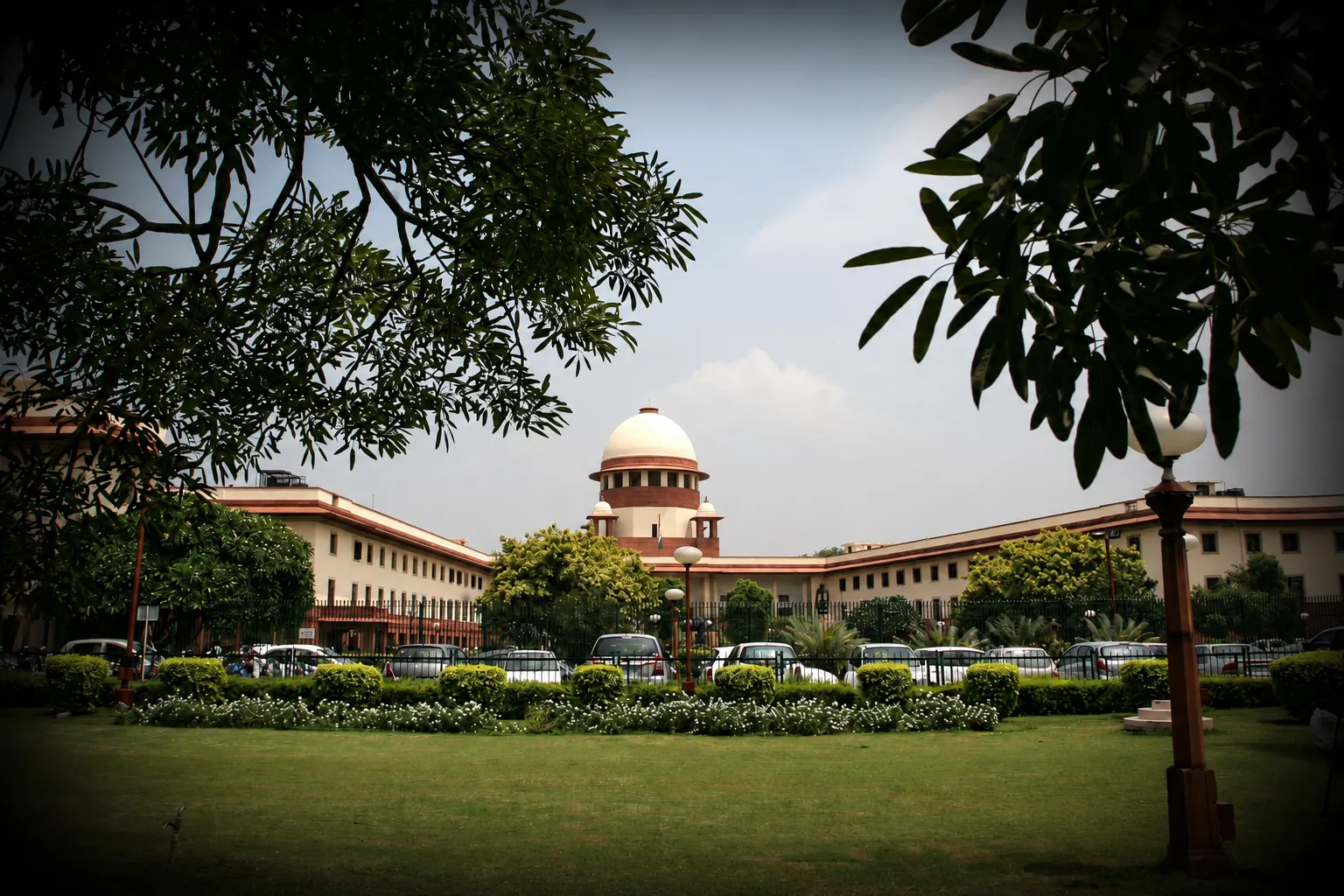
New Delhi: The Supreme Court has clarified that employees cannot demand equal pay simply because they perform duties that appear similar to those carried out by another group of workers. The court said that while the principle of equal pay for equal work remains an important part of service law, establishing pay parity requires a much broader comparison between the employees concerned. A bench comprising Justices Dipankar Datta and Sheel Nagu observed that functional similarity by itself is not sufficient to establish a legal right to the same salary and allowances. According to the court, several other factors, including recruitment method, qualifications, experience, responsibilities and accountability, must also be examined.
Supreme Court Explains What Counts for Pay Parity
The court said that an employee seeking the benefit of equal pay must establish that the two categories of employees are broadly comparable in all relevant aspects. The factors that may be considered include the source of recruitment, educational qualifications, professional experience, method of appointment and the nature of duties and responsibilities attached to the respective posts. The bench stressed that simply demonstrating that two employees perform similar functions does not automatically establish that they are equal in every material respect. The court observed that the legal understanding of equal pay has developed over several decades. Earlier decisions had given the principle a wider interpretation, particularly in the context of preventing exploitation and ensuring equality. Over time, however, the courts have adopted a more detailed approach by examining the applicable service rules and the circumstances under which different categories of employees were appointed.
Difference in Recruitment Can Affect Salary Structure
One of the important aspects highlighted by the Supreme Court was the manner in which employees enter a particular service or cadre. According to the judgment, two employees may hold similar positions and perform comparable duties but still fall under different pay structures if there are legitimate and material differences in their recruitment, qualifications or experience. The court said that such distinctions cannot be rejected merely because the employees perform similar day-to-day functions. What matters is whether the difference in treatment has a reasonable basis under the applicable rules. This approach means that claims for pay parity require a comprehensive assessment rather than a simple comparison of job duties.
Kerala Teachers' Dispute Led to the Ruling
The Supreme Court's observations came while deciding a dispute involving higher secondary school teachers (junior) working in government-aided schools in Kerala. The teachers involved in the case had been directly recruited under a government order issued in 1998. They sought the full-time pay scale and allowances available to teachers in the same cadre who had entered higher secondary schools through transfer or promotion. The directly recruited teachers argued that there was no meaningful difference between their work and that of teachers who had reached the cadre through transfer or promotion. They pointed to similarities in their qualifications, duties and responsibilities and argued that they should therefore receive the same pay and benefits. However, the Supreme Court did not accept the argument that these similarities alone established complete equivalence between the two categories.
Experience Was a Key Point in the Case
The court found that the two groups could not be treated as equivalent in every material respect, particularly when their experience and routes of appointment were considered. The judgment therefore upheld the distinction in pay between the groups. The ruling makes clear that a comparison based only on the work performed at present may not be sufficient. Courts can also examine the circumstances through which employees entered service and the experience and responsibilities associated with their respective positions.
Equal Pay Principle Has Evolved Over Time
The bench also discussed the development of the doctrine of equal pay for equal work under the Constitution. The principle has traditionally been linked with Articles 14 and 39(d), which deal with equality before the law and the principle of equal pay for equal work. Earlier Supreme Court judgments had treated the doctrine as an important safeguard against discriminatory or exploitative wage practices. However, subsequent decisions have made it clear that the principle cannot be applied mechanically. The court noted that differences in pay may be legally sustainable when they arise from genuine distinctions between employee groups and are supported by a reasonable classification.
Same Post Does Not Always Guarantee Identical Pay
The judgment also highlighted that even employees holding the same designation may sometimes receive different remuneration when there are legitimate differences in their level of responsibility, reliability or confidentiality involved in their work. Such distinctions, the court said, must not be arbitrary. They should be based on a bona fide and reasonable classification and must have a rational connection with the objective sought to be achieved. In other words, the law does not treat every difference in salary as discrimination. What matters is whether the distinction has a valid and legally sustainable basis.
What the Supreme Court's Ruling Means
The latest ruling reinforces the need for courts and authorities to conduct a detailed comparison before granting equal pay. Employees seeking salary parity cannot rely solely on the fact that they perform similar or identical duties. They must also establish substantial similarity in matters such as recruitment, qualifications, experience, appointment procedure and responsibility. The decision therefore adds another layer of clarity to the long-standing principle of equal pay for equal work. While employees performing comparable work may raise a claim for pay parity, the final determination depends on whether the two categories are equal in all material respects under the applicable service rules. The Supreme Court's observations are particularly relevant to disputes involving government departments, public-sector institutions and other organisations where employees may enter the same cadre through different recruitment or promotion channels.