.webp)
Home / Technology / NVIDIA’s Viral Mini AI Data Center Claim: Will the Company Really Pay Your Electricity Bill?
NVIDIA’s Viral Mini AI Data Center Claim: Will the Company Really Pay Your Electricity Bill?
By: My India Times
4 minutes read 17Updated At: 2026-06-12
The world is changing at an astounding rate due to artificial intelligence, and this change is driving up the need for computing power. Amid this rapid technological evolution, a viral social media post has grabbed the attention of millions by claiming that NVIDIA wants to pay homeowners’ electricity bills in exchange for hosting a mini AI data center at their homes. The claim has sparked excitement, curiosity, and plenty of questions about whether such an initiative could actually become a reality.
A Viral Claim That Has Everyone Talking
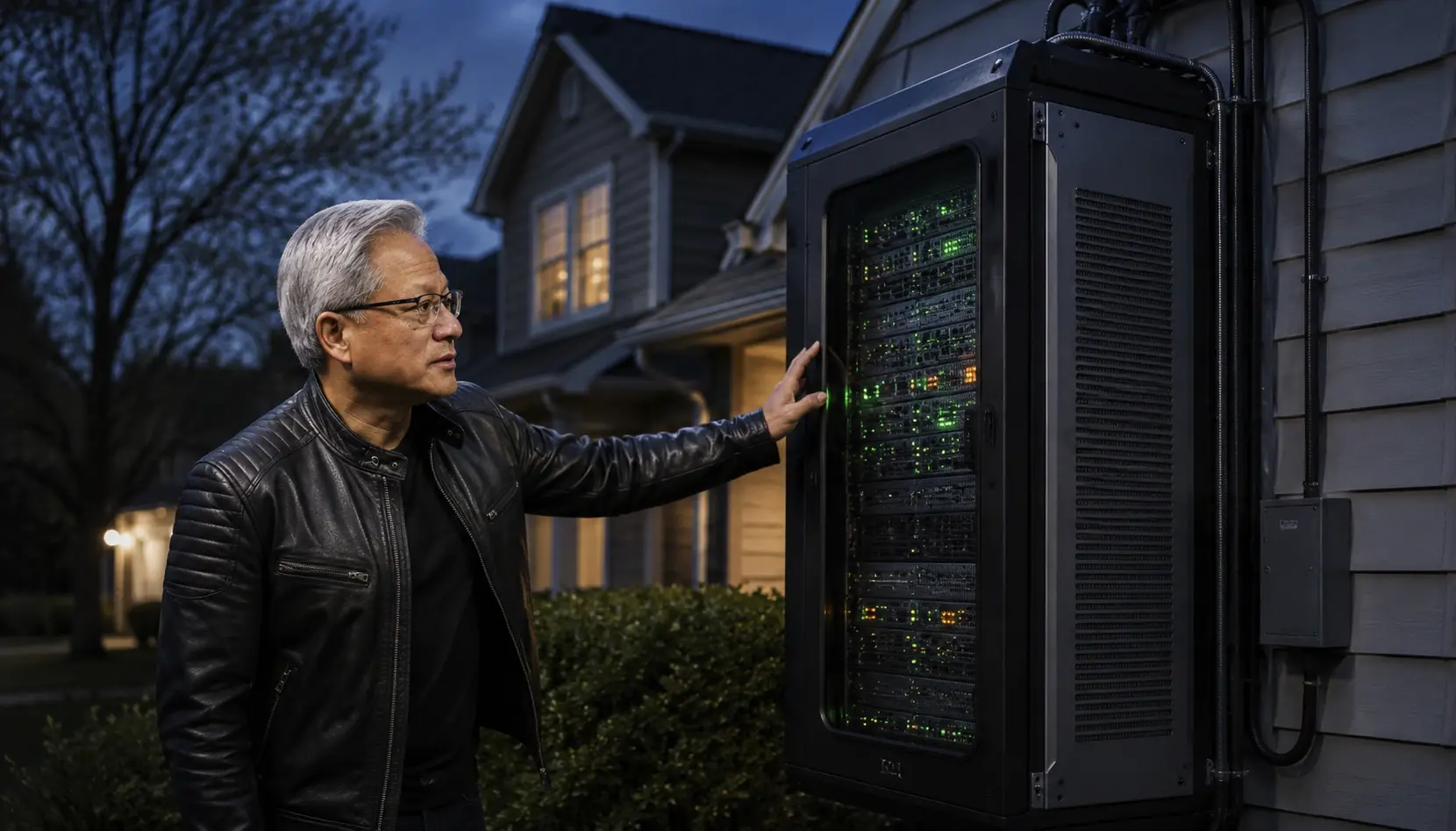
The image circulating on social media features NVIDIA CEO Jensen Huang standing beside what appears to be a server cabinet, accompanied by the statement that the company is willing to cover electricity costs for people who agree to host a mini AI data center. Technology aficionados were quickly captivated by the concept since it envisions a time when regular families could participate in the global AI infrastructure and earn financial rewards. Many feel businesses may someday need creative ways to boost processing capacity as AI applications continue to grow across industries. This has made the viral claim appear believable to a large section of internet users.
Is NVIDIA Really Planning Such a Program?
Despite the extensive debate, NVIDIA has not yet formally stated that it plans to start a residential micro AI data center program or reimburse homeowners for their electricity usage. The company has not announced any initiative that matches the claims made in the viral post. The material should be regarded as conjecture rather than reality in the absence of an official announcement, press release, or validated evidence from NVIDIA. Social media often amplifies futuristic concepts that may not necessarily reflect actual business plans.
Why the Idea Sounds Realistic
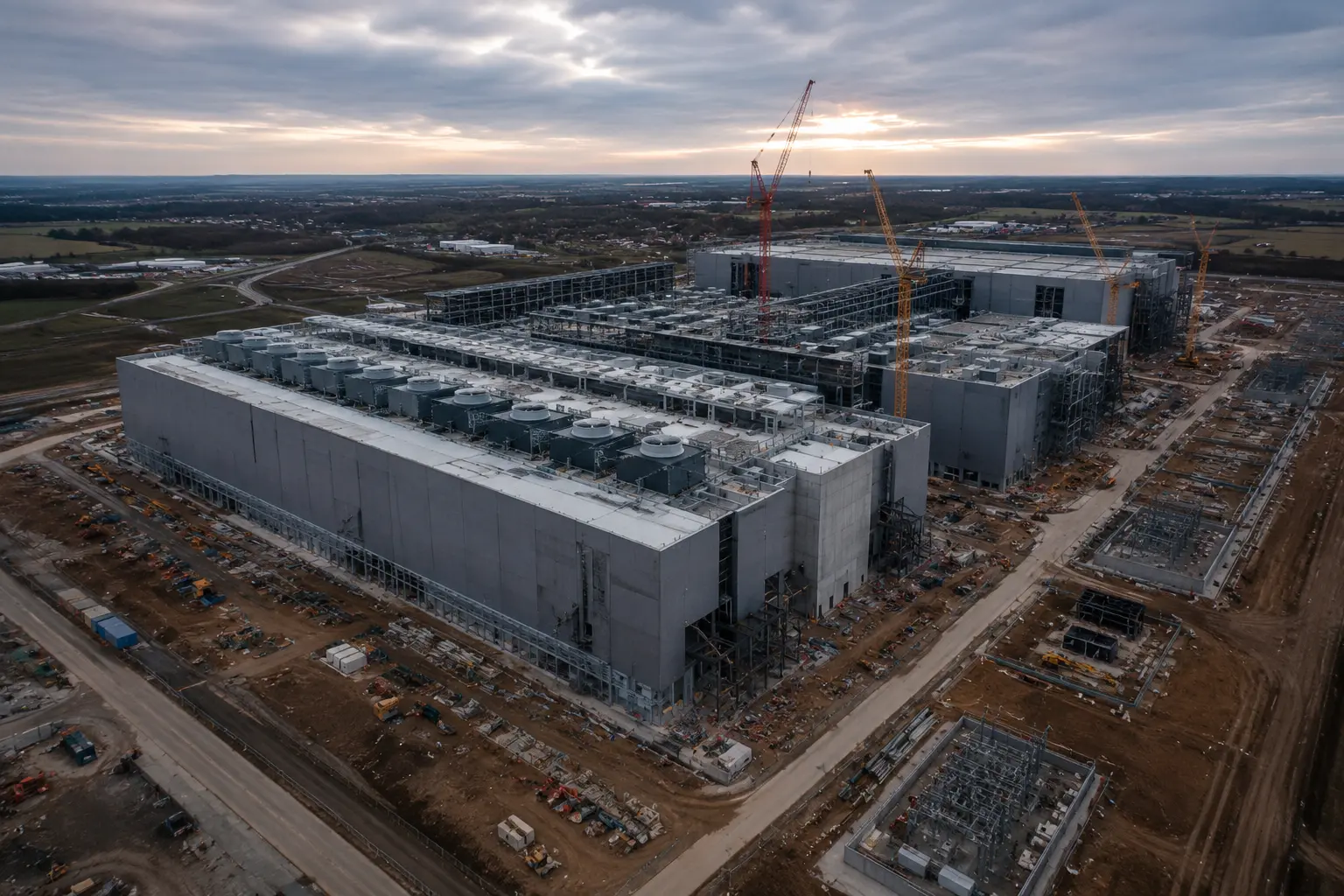
Although the specific claim remains unverified, the concept itself is not entirely impossible. Artificial intelligence requires enormous computing resources, and companies worldwide are investing billions of dollars to build larger and more efficient data centers. The explosive growth of AI models has increased demand for GPUs and cloud infrastructure at an unprecedented rate. Decentralized computing, in which processing power is dispersed over several sites rather than concentrated in a small number of enormous facilities, has long been a topic of discussion among technology experts. Similar approaches already exist in cloud computing, edge computing, and distributed networks. Because of these developments, many people believe that small AI servers installed in residential or commercial properties could eventually become part of future infrastructure.
How a Mini AI Data Center Could Work
If such a system were ever introduced, homeowners could potentially allow a compact server unit to operate from their property while remaining connected to a larger computing network. The equipment would process AI-related tasks remotely, contributing computing power whenever needed. In return, the hosting individual might receive compensation for electricity usage, monthly payments, or other financial incentives. However, this remains purely hypothetical, and there is no indication that NVIDIA has committed to implementing such a model.
The Challenges Behind the Concept
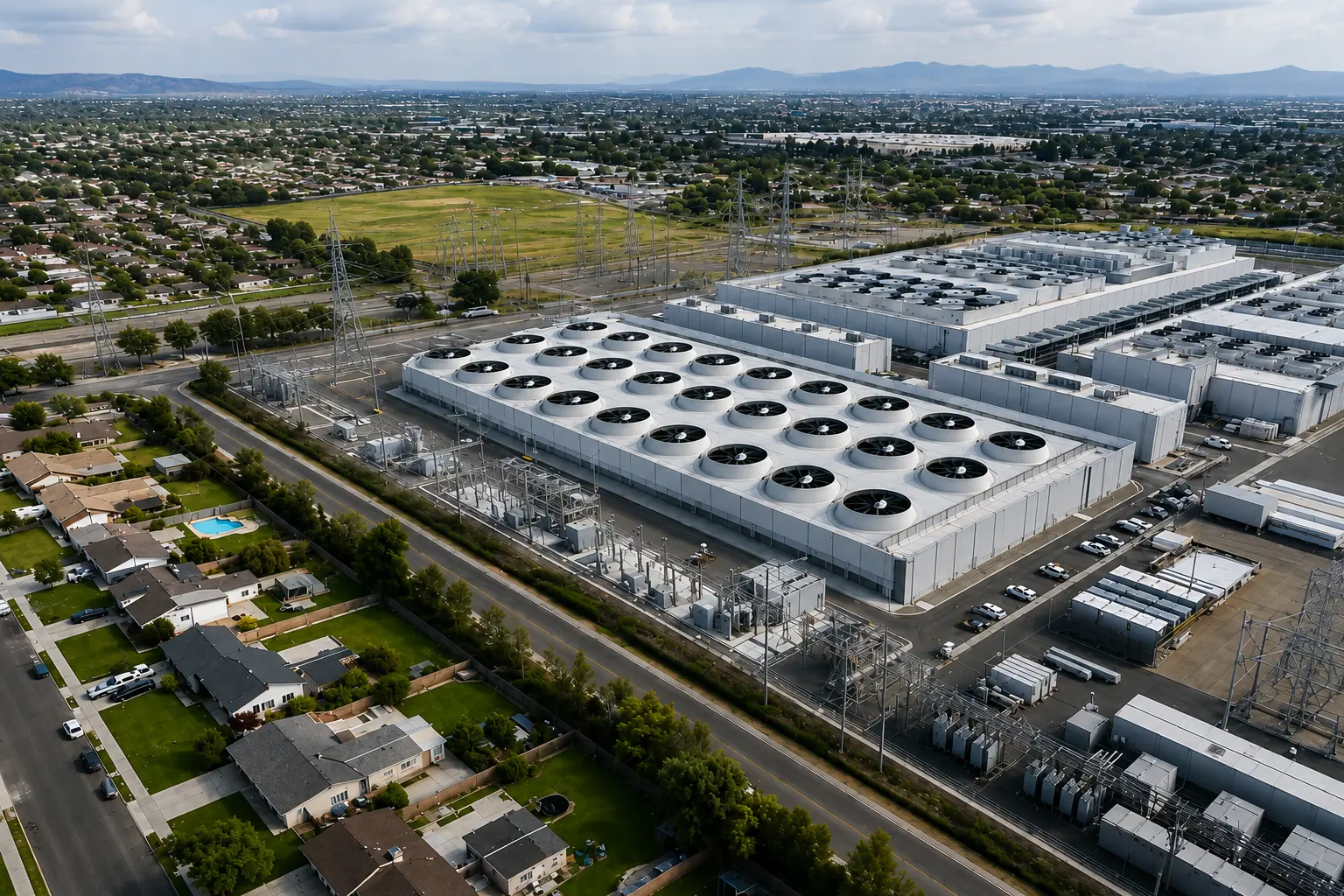
While the idea sounds attractive, running AI hardware inside residential areas would present several practical challenges. High-performance servers consume significant amounts of electricity and generate substantial heat, requiring efficient cooling systems to maintain stable operation. Noise levels, maintenance requirements, internet reliability, and hardware security would also need careful consideration. In addition, governments and local authorities may impose regulations regarding power usage, zoning, and safety standards before allowing such installations in residential neighborhoods. These factors could make large-scale deployment far more complicated than social media posts suggest.
Why the Story Has Become So Popular
The popularity of the claim reflects growing public interest in artificial intelligence and emerging technologies. People are fascinated by the possibility of earning passive income while participating in cutting-edge innovation. With AI becoming a central part of business, healthcare, education, entertainment, and scientific research, many users believe unconventional infrastructure solutions could emerge in the future. The combination of a recognizable company like NVIDIA and a financially attractive proposal has made the story highly shareable, even without official verification.
Industry Trends Supporting the Discussion
Although the specific electricity bill claim lacks confirmation, the broader trend toward distributed computing is real. Companies are constantly searching for ways to reduce latency, improve processing efficiency, and expand computing capacity closer to end users. Edge computing has already become an important strategy in industries that require fast data processing, such as autonomous vehicles, smart cities, and industrial automation. As AI adoption continues to accelerate, experts expect infrastructure models to evolve significantly over the next decade. Whether residential AI hosting becomes part of that future remains uncertain, but the discussion highlights how rapidly technology is changing.
What Should Readers Believe?
At present, there is no verified evidence that NVIDIA plans to pay homeowners’ electricity bills in exchange for hosting mini AI data centers. The claim appears to have originated from viral social media content rather than an official company announcement. While the concept may be technologically interesting and theoretically possible, it should not be considered an active program or confirmed business strategy. Anyone interested in such developments should rely on official statements from NVIDIA and trusted industry sources rather than unverified online posts.
....
By: My India Times
Updated At: 2026-06-12
Tags: Technology News | My India Times News | Trending News | Travel News
Join our WhatsApp Channel




























.jpg)









































































































.png)
 (1).png)