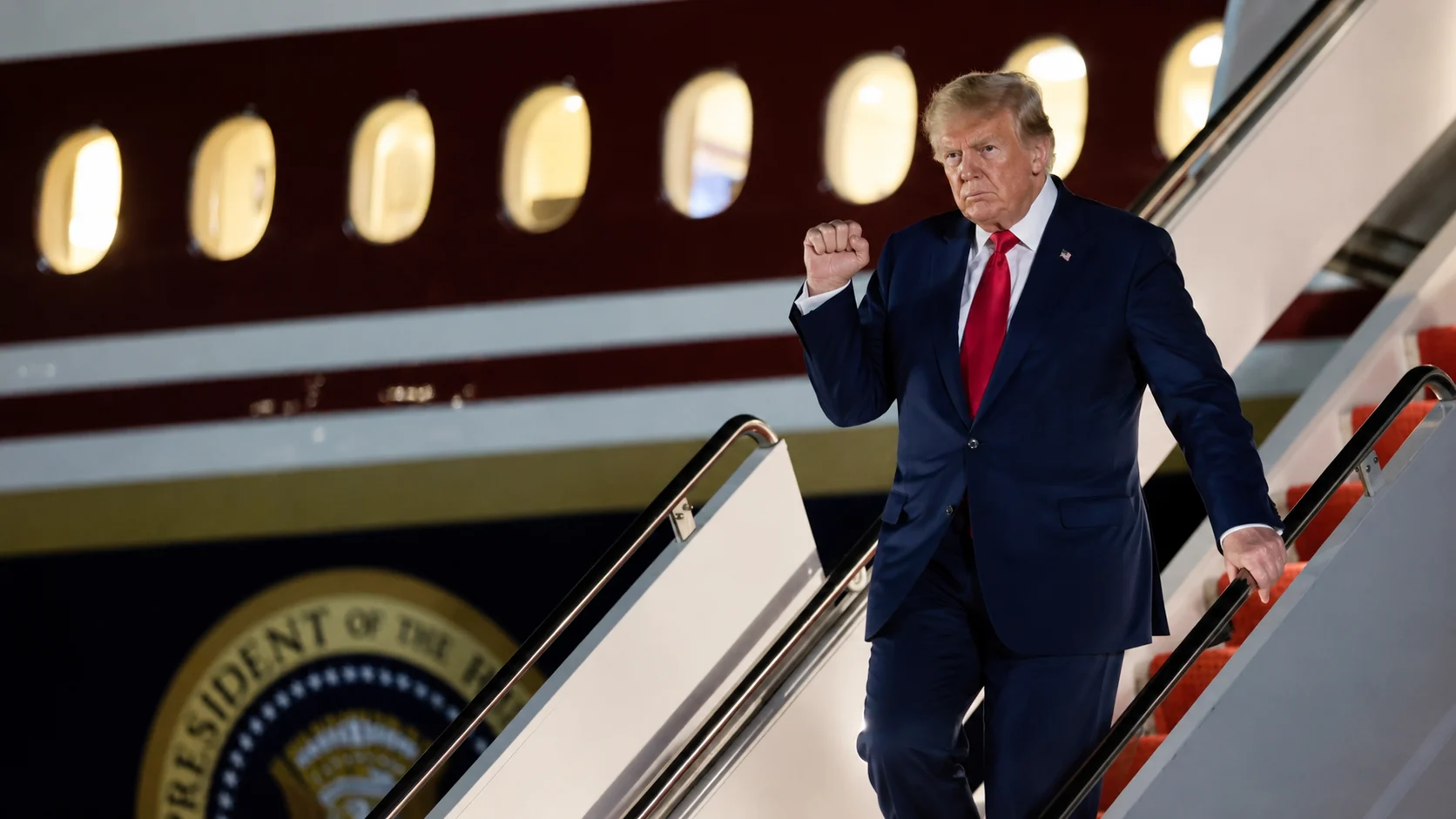
A secret security operation during Donald Trumps recent trip to Turkey has sparked a debate over presidential security, media access and transparency inside the White House. Reports state that after American officials learned of a plausible Iranian threat, Trump was discreetly transferred from an aircraft with Air Force One markings to a smaller, unmarked US Air Force aircraft. The operation was designed to keep the presidents actual location and aircraft difficult to identify. While the security maneuver has drawn comparisons with a similar operation carried out during Bill Clintons 2000 visit to Pakistan, there was one major difference between the two incidents: the way the White House handled the traveling press.
Trump Was Secretly Moved to Another Aircraft
The reported aircraft switch took place at an airport in Turkey during Trumps recent trip. Security officials reportedly used a catering vehicle as part of the operation to help conceal the presidents movement. Journalists traveling with Trump were instructed to keep their aircraft window shades closed. The reporters were apparently not informed that Trump had been transferred to another aircraft. The purpose of such an operation is straightforward: make it harder for a potential attacker to determine which aircraft is carrying the president. However, the decision not to inform the traveling press has become a major point of concern among journalists.
Why the Media Was Kept in the Dark
The White House press pool traditionally travels alongside the president and provides independent reporting on his movements and activities. Keeping journalists unaware of a major change in the president's transportation raises questions about how the press can independently verify events during a security emergency. Officials, however, could argue that revealing the president's locationeven to members of the presscould potentially compromise a security operation. That creates a difficult balance between protecting the president and maintaining transparency.
Clinton Used a Similar Strategy in Pakistan
The Trump operation has reminded people of Bill Clinton's March 2000 trip to Pakistan. Clinton's security team at the time also wished to keep possible assailants from being aware of the president's precise mode of arrival in Islamabad. A decoy aircraft carrying Air Force One markings was reportedly used as part of the deception. The aircraft landed in Islamabad in front of the media, creating the impression that Clinton was aboard. A Secret Service agent who reportedly resembled Clinton then emerged from the aircraft. But the real president was not on that plane. Clinton had arrived separately on an unmarked aircraft. The strategy was intended to make it difficult for anyone watching the airport to determine the president's actual location.
The Biggest Difference Was the Press Briefing
Although the two operations were similar in their use of deception, there was an important difference in the treatment of journalists. During Clinton's 2000 Pakistan trip, Susan Page, then a White House reporter for USA Today and president of the White House Correspondents' Association, was reportedly briefed about the operation beforehand. The briefing was conducted on an off-the-record basis. Page was told about the decoy aircraft and was made aware of the security concerns surrounding Clinton's visit. That meant the White House could maintain operational secrecy while ensuring that at least one member of the press understood what was actually happening.
Trumps Operation Followed a Different Approach
The reported Trump operation appears to have taken a much more restrictive approach. Journalists traveling with the president were reportedly not told about the aircraft transfer. They were instructed to keep their window shades closed, meaning they could not observe the movement taking place outside. For members of the press, this raises an important question: how much information should journalists traveling with the president receive when national security is involved? A security team may believe that even limited information could potentially reach people who pose a threat. At the same time, journalists argue that completely excluding the press can undermine their ability to independently document the president's movements.
National Security vs Press Independence
Presidential travel has always involved a delicate relationship between security agencies and the media. The Secret Service and other security officials need flexibility to change routes, aircraft and schedules without revealing sensitive information. This becomes even more important when intelligence agencies identify a potential threat. But the White House press corps also serves an important democratic function. Journalists traveling with the president are expected to provide an independent account of where the president goes and what happens during official trips. When they are deliberately kept unaware of major movements, that role becomes more difficult.
Why the Comparison Matters
The comparison between Trump and Clinton is therefore less about the aircraft themselves and more about how much information the White House shares with journalists during covert security operations. Both presidents faced situations where deception was considered necessary to protect their safety. Both operations involved concealing the president's actual aircraft. But Clinton's team reportedly allowed a journalist to understand the basic operation while maintaining secrecy from the wider public. \'In Trump's case, the traveling press was reportedly kept unaware.