
Trump Administration Dragged to Court Over New Global Tariffs
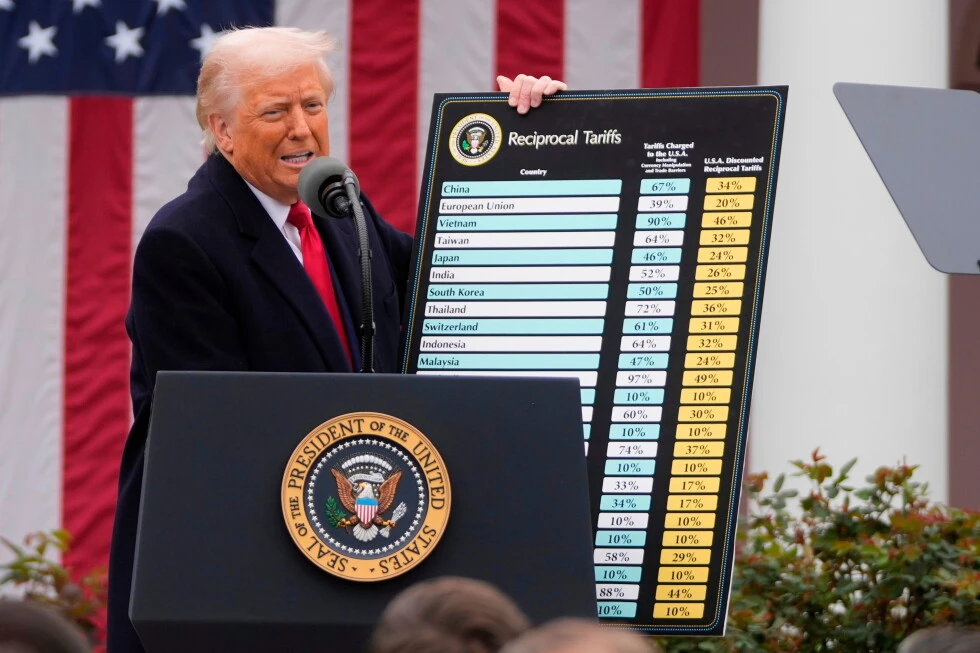
The administration of US President Donald Trump is facing another major legal battle after a coalition of 25 Democratic-led states filed a lawsuit challenging a fresh round of tariffs imposed on dozens of America's trading partners. The legal action contends that, following earlier court rejections of similar tariffs, the White House has once again overreached its constitutional authority by imposing broad import taxes using a different legal framework. The case, which was filed with the US Court of International Trade, aims to stop the recently announced tariffs on the grounds that they are an illegal attempt to reinstate trade barriers that have previously been ruled invalid. The case could have far-reaching effects on companies, consumers, and global markets, and it is anticipated to grow into one of the biggest legal debates over US trade policy in recent years.
Why Are the New Tariffs Being Challenged?
The legal action contends that, following earlier court rejections of similar tariffs, the White House has once again overreached its constitutional authority by imposing broad import taxes using a different legal framework. The case, which was filed with the US Court of International Trade, aims to stop the recently announced tariffs on the grounds that they are an illegal attempt to reinstate trade barriers that have previously been ruled invalid. The case could have far-reaching effects on companies, consumers, and global markets, and it is anticipated to grow into one of the biggest legal debates over US trade policy in recent years. State officials argue that such broad import taxes have little connection to addressing labour violations abroad and instead place a financial burden on American consumers and businesses.
25 States Unite Against the White House
The lawsuit has been brought by a coalition of 25 states led primarily by Democratic attorneys general and governors. States including New York and Oregon are among those leading the legal challenge. Attorney General Letitia James of New York attacked the administration's strategy, claiming that by enacting comparable tariffs under a different legal authority, the government is trying to get around earlier court decisions. According to the plaintiffs, only Congress has the authority to impose taxes and broad import duties, and the executive branch cannot expand its powers through creative legal interpretations. The coalition argues that businesses across the country are already dealing with rising costs, and the latest tariffs will only add further pressure on supply chains and inflation.
White House Defends the Tariff Decision
The Trump administration has firmly defended the new tariffs, maintaining that they are fully consistent with US law. White House officials argue that countries failing to prevent the export of goods allegedly produced through forced labour create unfair trade conditions that harm American workers and manufacturers. The administration believes stronger trade measures are necessary to protect domestic industries and ensure fair competition in global markets. Officials also insist that the new tariffs are based on provisions contained in Section 301 of the Trade Act of 1974, a law that allows the United States to respond to unfair foreign trade practices. According to the White House, protecting American manufacturing remains one of the administration's highest economic priorities.
Background: Earlier Tariffs Were Already Struck Down
The current legal dispute follows an earlier setback for the Trump administration. Earlier this year, the administration attempted to impose broad tariffs on imports from almost every country by invoking the International Emergency Economic Powers Act (IEEPA). The White House argued that America's long-running trade deficit constituted a national emergency. However, the US Supreme Court ruled that the law did not authorize the President to impose tariffs in that manner. Following the judgment, the administration was forced to establish procedures allowing importers to seek refunds for tariffs already paid. Rather than abandoning its broader trade strategy, the administration later introduced temporary tariffs before unveiling the current Section 301 tariff package. Critics now argue that the latest measures are effectively an attempt to restore the same trade restrictions using a different legal pathway.
Businesses Fear Higher Costs
Many business groups have expressed concern that additional tariffs could increase operating expenses across multiple industries. Importers often pay the duties when products arrive in the United States, with those additional costs frequently passed on to wholesalers, retailers, and ultimately consumers. Economists warn that higher import costs could affect prices on electronics, machinery, industrial equipment, clothing, household goods, and numerous consumer products. Manufacturers that rely on imported raw materials may also face higher production expenses, potentially reducing competitiveness and slowing investment. Several trade organizations have previously argued that while tariffs may protect certain domestic industries, they can also disrupt global supply chains and contribute to inflation.
States Say Tariffs Will Not Solve Forced Labour Concerns
The coalition of states argues that addressing forced labour requires targeted enforcement rather than blanket import duties affecting thousands of products. According to the lawsuit, broad tariffs do little to identify or eliminate products linked to labour abuses and instead function as a large-scale tax on imports. The plaintiffs contend that effective enforcement should focus on investigations, customs inspections, and cooperation with international partners instead of imposing sweeping trade restrictions. The states also argue that American families ultimately bear much of the financial burden created by higher import costs.
What Happens Next?
The US Court of International Trade will now examine whether the administration acted within the authority granted by Congress when imposing the latest tariffs under Section 301. If the court sides with the states, the administration could once again be forced to suspend the tariffs and potentially provide relief to affected importers. If the White House prevails, the ruling could strengthen presidential authority over future trade actions and reshape the legal boundaries of US tariff policy. Given the enormous economic impact of the tariffs, legal experts believe the case could eventually reach higher federal courts, making it another landmark battle over executive power, international trade, and the future of American economic policy.