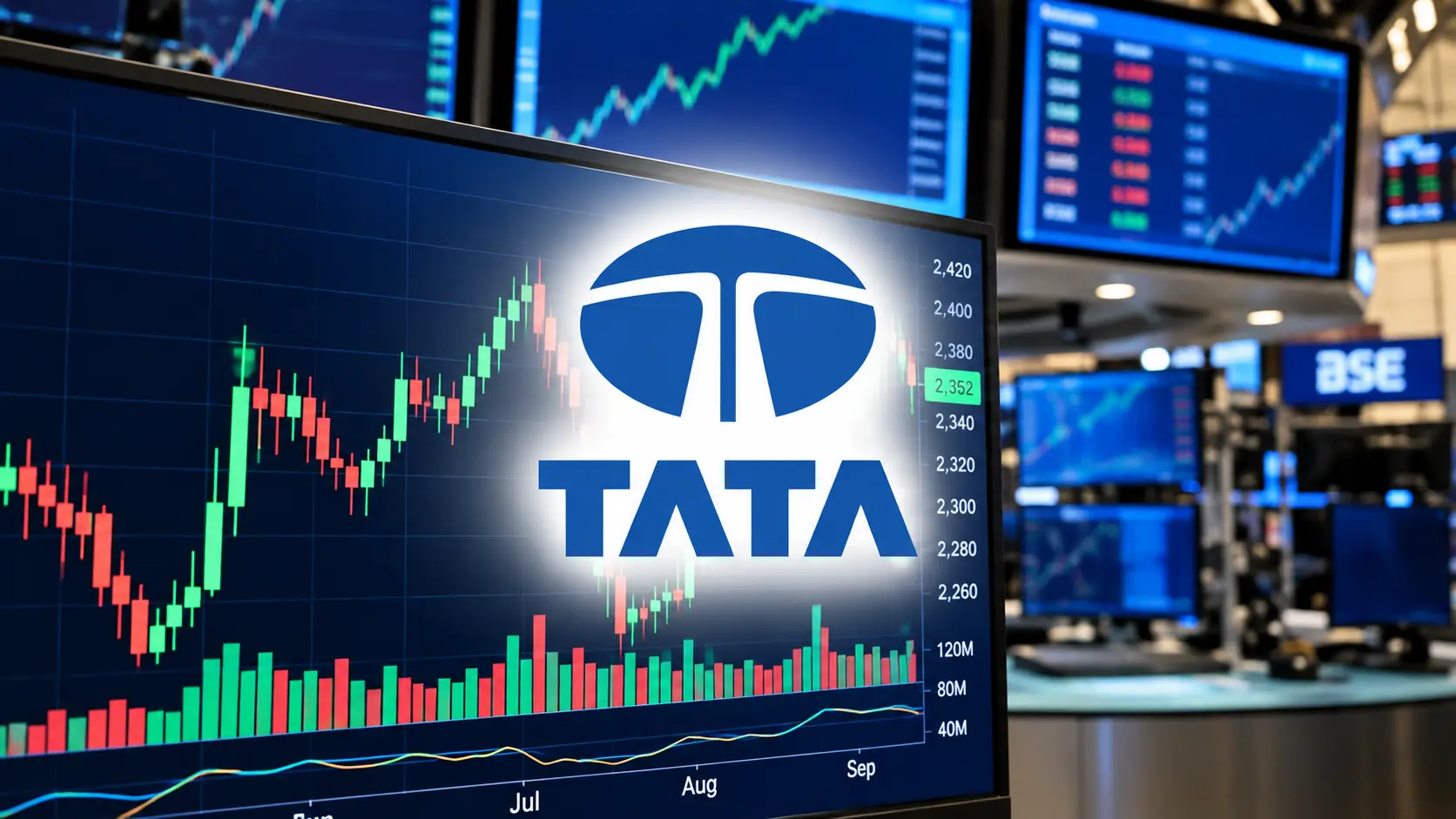
New Delhi: Tata Group stocks witnessed strong buying interest in the Indian stock market on Tuesday, September 15, after the Reserve Bank of Indias decision on Tata Sons revived expectations that the conglomerates holding company could eventually move toward a stock-market listing. The development triggered a sharp reaction across several Tata-linked companies. Tata Chemicals was the biggest standout, hitting the 20% upper circuit, while Tata Investment Corporation, Tata Motors Passenger Vehicles, TCS and other group stocks also moved higher during the session. The market reaction is being driven by expectations of potential value unlocking. Several listed Tata companies hold shares in Tata Sons, meaning a possible listing of the holding company could make the value of those investments more visible to public-market investors.
Why are Tata Group shares rising today?
The immediate trigger behind Tuesday's rally is the RBI's decision to reject Tata Sons' application to surrender its registration as a Core Investment Company. Tata Sons had sought to exit the regulatory framework that applies to certain non-banking financial companies. The rejection effectively keeps the company within the regulatory structure that has been associated with a listing requirement. That has brought the possibility of a Tata Sons IPO back into the spotlight. For investors in Tata companies that own stakes in Tata Sons, this is potentially significant. A public listing could establish a market value for Tata Sons and provide greater visibility into the value of the group's holding-company investments.
Tata Chemicals becomes the biggest market mover
Tata Chemicals emerged as the most dramatic mover among the group companies. The stock climbed 20% to ₹735, hitting its upper circuit during Tuesday's trading session. The rally was supported by expectations surrounding Tata Sons, although the company also had a separate positive corporate development involving its North American business. Tata Chemicals' connection to Tata Sons is particularly important for investors. The company owns around 2.5% of Tata Sons, and analysts have pointed out that the value of this holding could be substantial compared with Tata Chemicals' own market capitalisation. Reuters reported that ICICI Securities valued the stake at as much as ₹150 billion. This explains why Tata Chemicals has attracted unusually strong buying interest following the RBI decision.
Tata Investment Corporation also gains
Tata Investment Corporation was another major beneficiary of the renewed Tata Sons listing speculation. The company is viewed by investors as a direct play on the value of Tata Group's investment holdings. Its shares jumped sharply during early trading as market participants reassessed the potential value of Tata Sons-related assets. The rally illustrates an important feature of holding-company stocks: even without an immediate change in their underlying businesses, a regulatory or corporate event can significantly alter investor expectations about the value of their investments.
TCS, Tata Motors and other Tata shares in focus
The buying was not restricted to Tata Chemicals and Tata Investment. Tata Consultancy Services (TCS) also saw strong demand and was among the leading gainers in the Nifty 50 during the early part of the session. Tata Motors, Tata Technologies, Tata Elxsi and other Tata-linked counters also attracted investors. The breadth of the rally indicates that traders are looking beyond individual company earnings and focusing on the potential implications of the Tata Sons development for the wider group. However, each company's share-price movement is influenced by its own business fundamentals as well. Investors should therefore avoid assuming that every Tata stock will benefit equally from a possible Tata Sons listing.
What is the Tata Sons listing issue?
Tata Sons is the principal holding company of the Tata Group and owns significant interests across several major businesses. The current regulatory dispute has its roots in the RBI's scale-based framework for NBFCs. Tata Sons was classified as an Upper Layer NBFC in 2022. Under the framework, companies in this category face stricter regulatory requirements, including a listing obligation. Rather than proceeding with a public issue, Tata Sons attempted to surrender its Core Investment Company registration. The company also repaid more than ₹21,000 crore of debt in 2024 as it pursued a route that could allow it to remain privately held. The RBI, however, rejected the deregistration request on September 11, bringing the long-running issue to a critical stage.
Tata Sons IPO could unlock hidden value
The possibility of a Tata Sons IPO is important because the company sits at the centre of one of India's largest business groups. Its portfolio covers technology, automobiles, steel, consumer businesses, hospitality, aviation and financial services. A public listing would give investors a market-determined valuation for the holding company and increase transparency around its investments. That could also have an indirect effect on Tata companies that own shares in Tata Sons. The market is already attempting to price in this possibility. The combined market capitalisation of five Tata companies reportedly increased by more than ₹17,200 crore shortly after Tuesday's market opening as investors responded to the listing expectations.
But investors should remain cautious
Despite the excitement, a Tata Sons listing is not necessarily an immediate event. The regulatory decision has strengthened the possibility of a listing, but the process could involve legal, regulatory and corporate complications. Reuters also noted that analysts expect the issue could face a prolonged legal battle. There are also differences among Tata Sons' major shareholders over the company's future. Tata Trusts, which owns roughly two-thirds of Tata Sons, has opposed a listing, while the Shapoorji Pallonji Group, a significant minority shareholder, has supported the idea. That means investors should distinguish between listing expectations and an actual confirmed IPO timetable.
What could happen next?
Tuesday's rally shows how strongly markets can react when a major corporate restructuring possibility emerges. The immediate focus will now be on Tata Sons' next regulatory and legal steps, as well as how the company responds to the RBI's decision. Investors will also watch whether the Tata Group's listed companies continue to hold on to their gains after the initial excitement fades. For Tata Chemicals and Tata Investment Corporation, the valuation of their Tata Sons holdings could remain a key market theme. For companies such as TCS and Tata Motors, however, business performance, earnings growth and sector-specific factors will remain equally important. The Tata Sons IPO story is therefore becoming one of the biggest corporate-market developments to watch in India. While Tuesday's rally reflects optimism about potential value unlocking, the actual impact will depend on the eventual structure, valuation and timing of any listing. For now, the RBI's rejection of Tata Sons' deregistration request has clearly changed the market narrative and investors are betting that the next chapter of the Tata Sons listing saga could create significant value across the Tata Group.