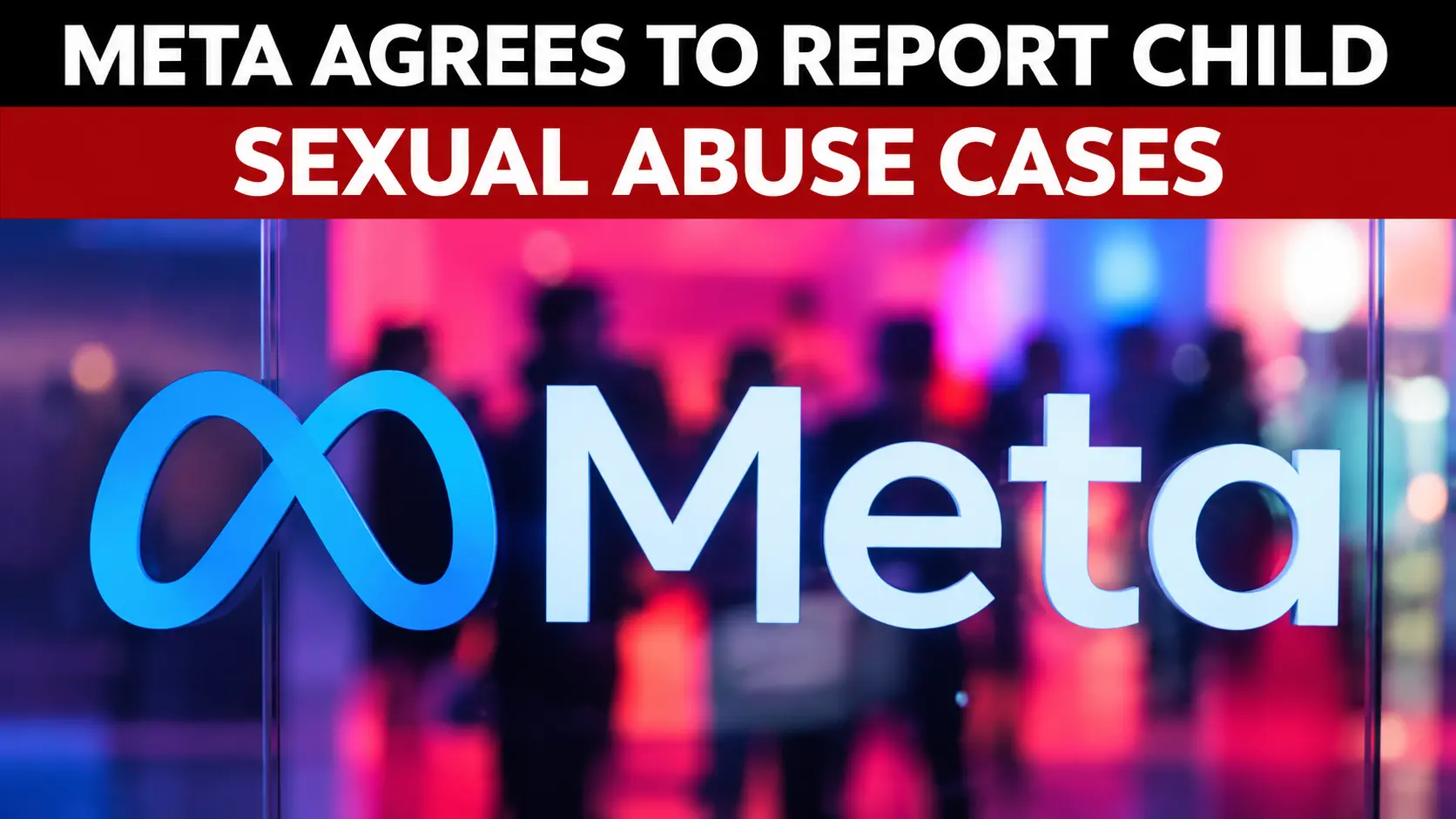
New Delhi: Meta has agreed to directly report cases involving child sexual abuse and exploitation to Indian law-enforcement authorities, marking a significant development in the government's efforts to strengthen online child safety in India. The decision comes at a time when social media companies are facing increased scrutiny over the circulation and promotion of harmful material involving children. Government officials have made it clear that protecting minors online is no longer an issue platforms can treat as optional. Meta, the parent company of Facebook, Instagram and WhatsApp, has confirmed that it will work with Indian authorities to strengthen reporting mechanisms. The company said it will now send child-safety matters directly to the cybercrime system operated by the Indian Cyber Crime Coordination Centre, or I4C.
Meta agrees to direct reporting through I4C
The latest move is being viewed as an important step in India's wider campaign to make digital platforms more accountable for illegal and harmful content. A Meta spokesperson said the protection of children remains a priority for the company and stressed the importance of cooperation with the Indian government and law-enforcement agencies. Under the new arrangement, child-safety cases identified by Meta can be reported directly through the government's cybercrime reporting mechanism. This could help investigators receive information faster and potentially improve the process of identifying accounts or individuals involved in online exploitation. The National Cyber Crime Reporting Portal already provides facilities for reporting cybercrime involving women and children, including complaints concerning child sexual abuse material and other sexually explicit content.
Government increases pressure on social media platforms
The development comes as the Centre steps up pressure on technology companies to take stronger action against harmful content. Government officials have indicated that online child safety is a fundamental requirement for platforms operating in India. Authorities are also engaging with other major social media companies to improve the detection and removal of illegal material. The government's message is increasingly direct: platforms are expected to take proactive measures rather than waiting for authorities or users to flag harmful material. The focus is particularly important because illegal content can spread rapidly across social networks, private groups and recommendation systems. Once such material is uploaded, removing one post or account may not be enough if copies have already been redistributed elsewhere.
NCPCR investigation puts Meta under scrutiny
The latest announcement follows a period of intense scrutiny of Meta in India. The National Commission for Protection of Child Rights (NCPCR) initiated an inquiry after a BBC Eye investigation raised allegations concerning advertisements linked to child sexual exploitation and abuse material on Instagram.NCPCR had sought an explanation from Meta earlier and subsequently summoned senior Meta India executives. Company representatives appeared before the child-rights body on September 9 as part of the inquiry. The investigation is examining how such advertisements allegedly appeared on the platform and whether adequate safeguards were in place to prevent their distribution. The matter has placed additional attention on the systems used by large technology companies to detect, review and remove prohibited content.
New reports add to concerns over platform moderation
The controversy has gained further attention following a separate report by the Tech Transparency Project. According to reporting based on the group's findings, hundreds of advertisements containing AI-generated child sexual abuse imagery were identified on Facebook and Instagram, including advertisements that appeared in India. The findings have intensified questions about the effectiveness of automated moderation systems and the responsibility of platforms to detect prohibited material before it reaches users. The issue is particularly complicated by the growing use of artificial intelligence to create manipulated or synthetic images. Technology companies increasingly rely on automated systems to identify harmful content, but investigators and child-safety advocates have continued to raise concerns about gaps in those systems.
NHRC also examining the allegations
The National Human Rights Commission has separately taken an interest in the allegations involving Meta-owned platforms. The NHRC has sought a comprehensive investigation into claims that paid advertisements on Instagram were being used to promote child sexual exploitation material. The wider scrutiny includes questions about whether platforms are meeting their legal obligations to report suspected offences to the appropriate authorities. This has shifted the discussion beyond simply asking whether illegal material appeared online. Regulators are increasingly examining how such content was approved, distributed, promoted and potentially monetised. That distinction could become important in determining the level of responsibility assigned to digital platforms.
What India's cybercrime system means for child safety
India's National Cyber Crime Reporting Portal provides a dedicated mechanism for reporting online crimes against women and children. It also allows certain complaints involving child sexual abuse material to be reported anonymously. Direct cooperation between platforms and law-enforcement agencies could make the system more effective by reducing delays in sharing relevant information. For investigators, speed can be crucial. Online accounts can disappear, digital evidence can be deleted, and harmful material can be repeatedly redistributed. Faster reporting could therefore assist agencies in preserving evidence and identifying suspected offenders. However, experts and officials are likely to continue demanding more than reporting alone. Platforms may also face pressure to improve detection systems, strengthen moderation procedures and prevent repeat offenders from returning through new accounts.
Meta faces a bigger responsibility
Meta's latest commitment may address one part of the problem, but the broader debate over children's safety online is far from over. The government wants social media companies to identify harmful material quickly, remove it, cooperate with investigations and ensure that their systems do not inadvertently amplify illegal content. For Meta, the challenge is particularly significant because its platforms reach millions of Indian users. Instagram, Facebook and WhatsApp play a major role in India's digital ecosystem, meaning that weaknesses in safety systems can potentially affect a large number of people. The company is therefore likely to face continued scrutiny over how its artificial intelligence tools, advertising systems and content-moderation processes operate.
A significant test for online platforms in India
Meta's decision to report child-safety cases directly to I4C represents an important change in how the company will cooperate with Indian authorities. But officials have already indicated that more work is required. The government's broader objective is to ensure that every major digital platform operating in India takes meaningful responsibility for protecting children. The latest move also sends a strong message to the wider technology industry: online child safety in India is becoming a central regulatory priority. As investigations by NCPCR and other authorities continue, the coming months could bring greater scrutiny of social media moderation, advertising approvals, reporting obligations and platform accountability. For parents and young users, the ultimate test will not simply be whether companies report abuse after it is detected. It will be whether platforms can prevent dangerous material from reaching children in the first place.