Sugar prices have become a growing concern for Indian households as retail and wholesale rates have climbed sharply across several parts of the country. The increase has come at a particularly sensitive time, with demand expected to rise ahead of the festive season. In some States, sugar is now selling above ₹65 per kilogram, putting additional pressure on household budgets as consumers prepare for festivals when the use of sugar typically increases. The sudden rise has also triggered a political debate. Opposition parties have questioned whether government policies, particularly the diversion of sugarcane towards ethanol production, have contributed to the shortage of sugar available for domestic consumption. The government, however, has pointed to several factors behind the increase, including lower domestic output, crop damage, stronger seasonal demand, international supply conditions and possible speculative activity.
How much have sugar prices increased?
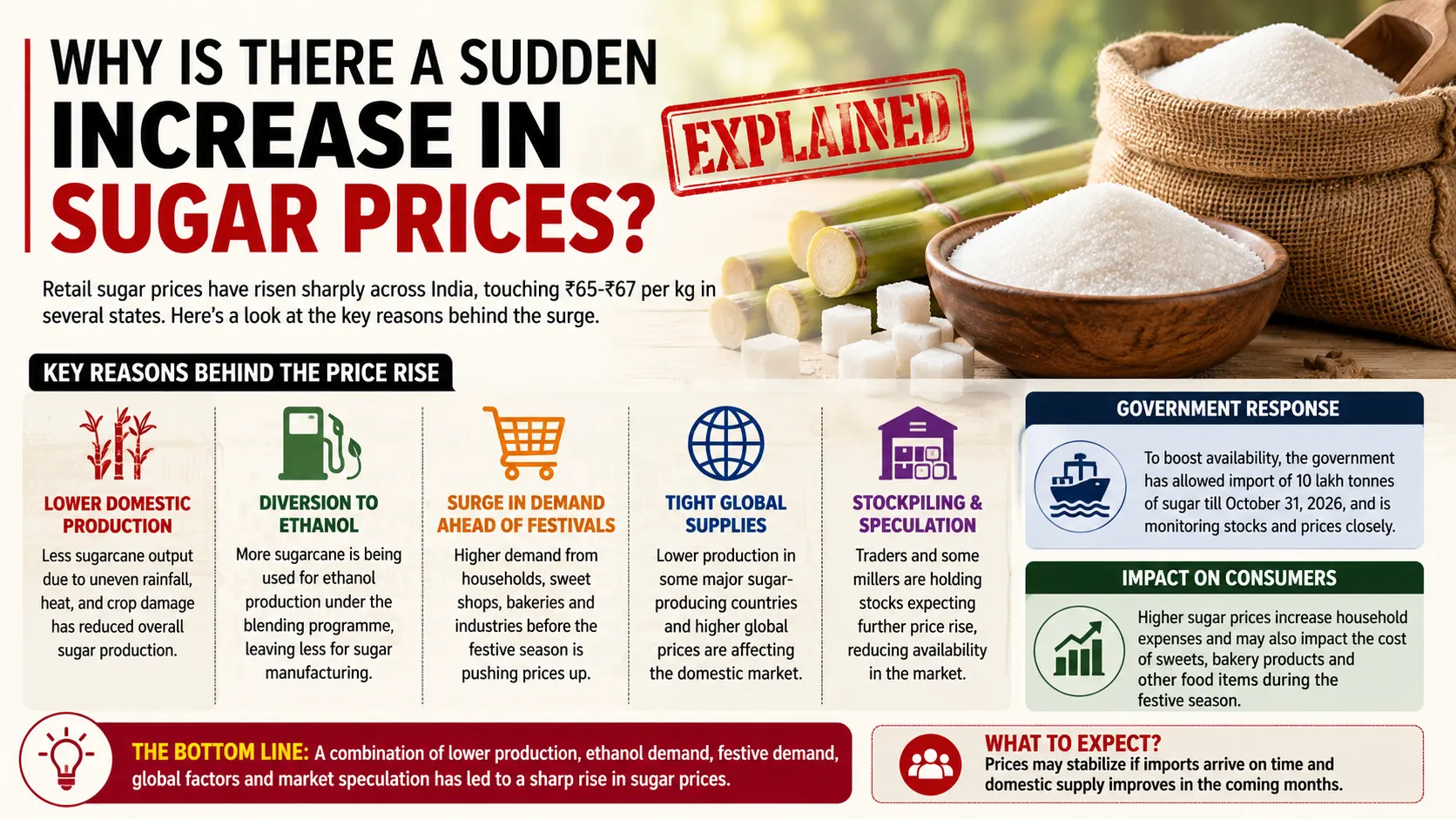
The increase has been significant in several markets. Odisha has emerged as one of the States reporting particularly high retail prices. Sugar prices there reached around ₹67.40 per kilogram on August 23, compared with substantially lower levels a year earlier. Other States, including Uttarakhand, Punjab and Madhya Pradesh, have also reported prices crossing the ₹65-per-kg mark. The rise is not uniform across India, but the broader trend has raised concerns because sugar is a widely consumed food product and an important ingredient in household cooking and food processing. For consumers, the timing is particularly important. Demand generally increases during the festive period as households purchase sweets, bakery products and other traditional foods.
Is ethanol production responsible for the price rise?
One of the biggest political arguments surrounding the issue is the use of sugarcane for ethanol production. India has significantly expanded its ethanol-blending programme as part of efforts to reduce dependence on imported crude oil and support alternative fuel production. The Opposition has argued that diverting a portion of sugarcane and related resources towards ethanol reduces the quantity available for sugar manufacturing. However, the relationship between ethanol production and retail sugar prices is more complicated than a simple supply shortage. Sugar mills make decisions based on government policies, cane availability, sugar production economics, ethanol prices and market conditions. Ethanol production can also provide mills with an alternative revenue stream and help improve payments to farmers. Therefore, while the diversion of sugarcane can influence the balance between sugar and ethanol production, it is not the only factor determining retail prices.
Why is sugar becoming expensive now?
Several factors appear to be working together. The first is domestic production. If sugar output is lower than market expectations, even a moderate increase in demand can tighten supplies. Weather conditions are another concern. Sugarcane is a water-intensive crop, and changes in rainfall, extreme heat or other weather-related disruptions can affect crop productivity. The third factor is seasonal demand. India's festive calendar typically creates stronger demand for sugar, particularly from sweet manufacturers, bakeries, restaurants and households. When traders and businesses begin stocking supplies ahead of the season, wholesale demand can increase quickly. International developments can also influence domestic sentiment. Global sugar availability has been tightening in some markets, making international prices an important factor for traders and policymakers.
Are traders hoarding sugar?
Another explanation being discussed is speculation and stockpiling. Farmer organisations have argued that some large traders may be holding stocks in anticipation of stronger festive-season demand. If wholesalers or other market participants accumulate supplies expecting prices to rise further, the amount of sugar immediately available in the market can decline. That can create additional upward pressure on prices. However, determining whether hoarding is responsible for a significant portion of the increase requires detailed stock and market data. The government has indicated that it is monitoring the situation and examining the different factors contributing to the price movement.
Government allows sugar imports
The Centre has taken a step to increase domestic availability by permitting imports of 10 lakh tonnes of sugar until October 31, 2026. The move is aimed at improving supply and reducing pressure on domestic prices. Imports can provide a temporary cushion when domestic availability is tight. However, their effectiveness will depend on international prices, shipping costs, import timelines, and the ability of traders and refiners to bring the additional sugar into the Indian market quickly. If imported sugar becomes available in sufficient quantities, it could help narrow the gap between demand and supply.
What does the price rise mean for consumers?
For households, higher sugar prices may appear relatively small compared with major food items, but the impact can become significant when combined with rising prices of other essentials. Sugar is also an important input for the food-processing industry. Sweet manufacturers, bakeries, beverage companies and restaurants use substantial quantities of sugar. If their input costs rise, some businesses may eventually increase retail prices. This means the impact of expensive sugar may extend beyond the price printed on a sugar packet. Festive sweets could become more expensive if manufacturers pass higher ingredient costs to customers.
What should consumers expect ahead of the festive season?
The next few weeks will be important for the sugar market. If imports improve availability and domestic supplies remain adequate, prices could stabilise. On the other hand, stronger-than-expected festive demand combined with limited stocks could keep prices elevated. Government monitoring of inventories and action against illegal stockpiling could also influence the market. For consumers, the key question is whether the current price spike is temporary or marks the beginning of a longer period of expensive sugar.
The bigger issue for India
The sugar price rise in India 2026 highlights a larger challenge for policymakers: balancing food availability, farmer incomes, sugar mill economics and the country's ethanol ambitions. India wants to expand ethanol use to reduce its dependence on imported petroleum while also ensuring that enough sugar remains available for domestic consumers. Maintaining that balance will require careful production estimates, transparent stock monitoring and timely policy intervention. For now, the government is relying on imports and market monitoring to address the immediate pressure. Whether these measures bring prices down will depend on how quickly additional supplies reach the market and whether domestic production and festive demand move in the expected direction. The coming weeks could therefore determine whether the current sugar prices in India are a temporary seasonal spike or a more sustained supply-side problem.