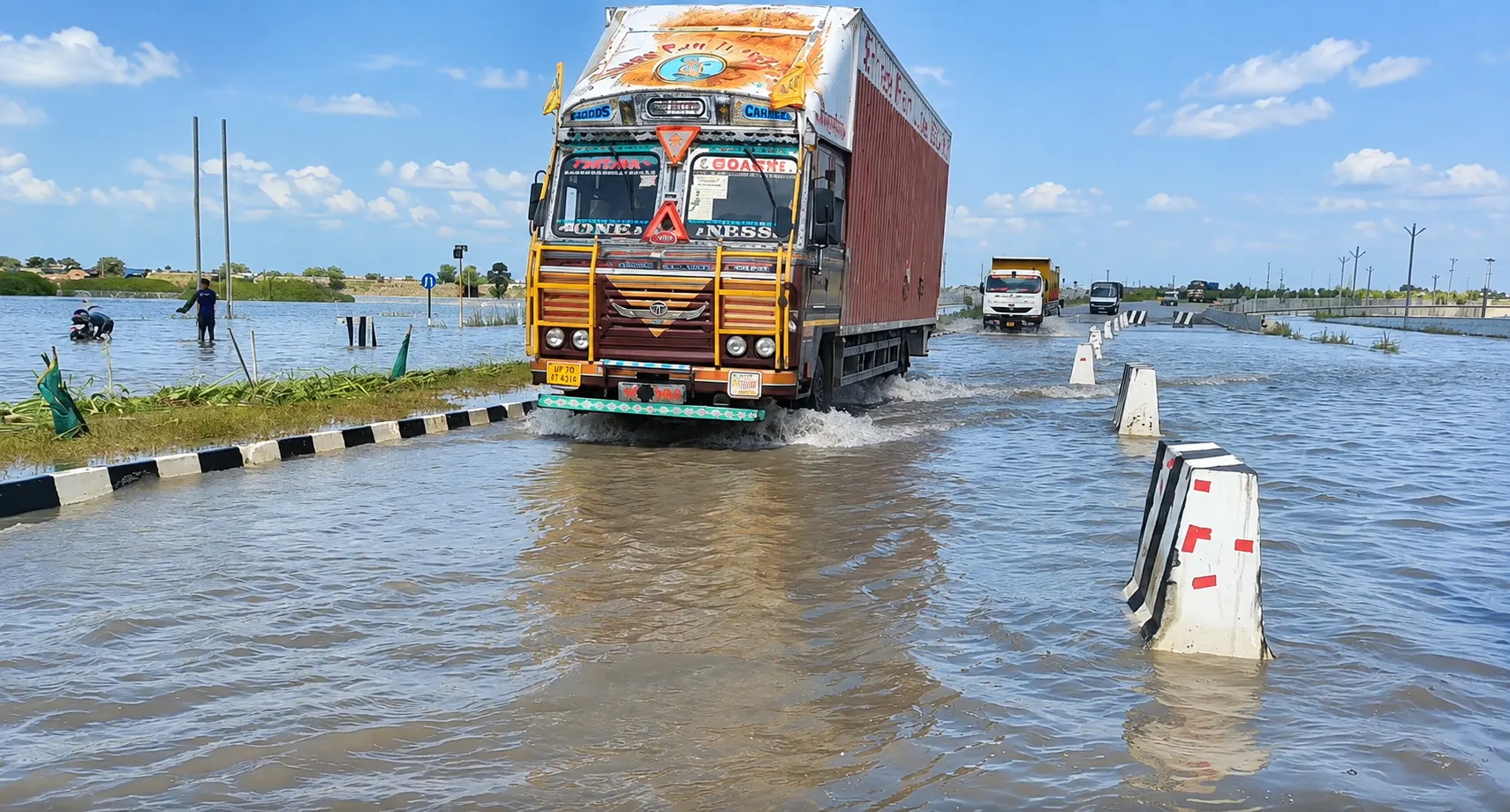
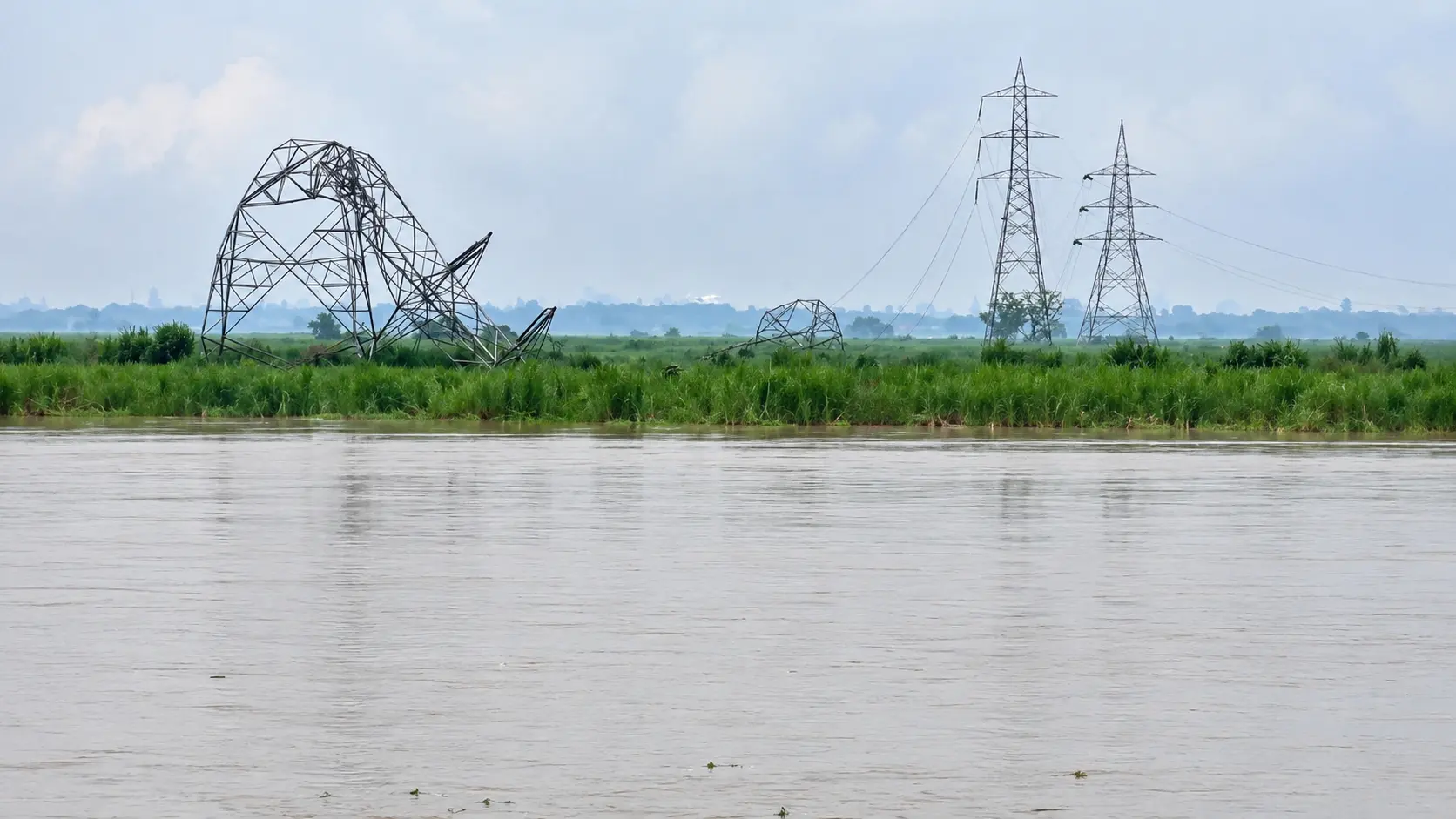
The Ganga River flood in Meerut has taken a dangerous turn after continuous heavy rainfall in the Himalayan region caused a sharp rise in the river's water level. In a dramatic incident reported from the Hastinapur Khadar area of Meerut, the powerful current washed away three towers of a 220kV high-tension transmission line, highlighting the growing impact of the flood situation across western Uttar Pradesh. Residents of low-lying settlements near the riverbed, as well as local authorities and power officials, have expressed grave concerns about the occurrence.
Officials said the sudden increase in the river's flow significantly weakened the soil supporting the transmission towers. As erosion intensified, the structures lost their foundation and eventually collapsed into the swollen river. The enormous steel towers were carried away by the current's fury in a matter of minutes, according to eyewitnesses, who characterized the event as startling.
The region's power system has been affected by the transmission tower collapse, which has forced electricity authorities to determine the extent of the damage. Technical teams have reached the affected location to inspect the transmission line and prepare a restoration plan. The region's power system has been affected by the transmission tower collapse, which has forced electricity authorities to determine the extent of the damage. The Ganga River water level has been steadily increasing due to relentless rainfall in Uttarakhand and other upstream areas. The river's discharge has increased due to water released from reservoirs and barrages, raising the risk of flooding in a number of Uttar Pradesh districts. As the river gets closer to the danger line, authorities are keeping a close eye on it, especially in places like Meerut, Bijnor, Bulandshahr, and Hapur.
One of the Meerut district's most flood-prone areas is still the Hastinapur Khadar area, which is located near the Ganga River. Residents of a number of villages are at risk of crop destruction, erosion of agricultural land, and overflowing river water during each monsoon. This year's strong river current has once again exposed the fragile nature of infrastructure located near the riverbanks. Local villagers reported that the river has expanded rapidly over the past few days, swallowing large portions of farmland. Farmers fear heavy financial losses as standing crops may remain submerged if the water level continues to rise. Many families have also begun moving livestock and essential belongings to safer locations after receiving warnings from district authorities.
Officials from the district administration have intensified surveillance across flood-sensitive villages. Revenue teams, disaster response personnel, and police officials are conducting regular inspections to identify vulnerable locations and coordinate evacuation efforts if required. Temporary relief arrangements are also being prepared in case floodwaters enter residential areas. The collapse of the high-voltage transmission towers has also highlighted the challenges of protecting critical infrastructure during extreme weather events. Experts note that prolonged erosion along riverbanks can destabilize transmission towers, bridges, roads, and embankments, especially when river currents become unusually strong during the monsoon season. Authorities are expected to examine whether additional protective measures, including riverbank reinforcement, are necessary in the affected area.
Power department officials stated that safety remains the highest priority. Electricity supply through the damaged transmission line has been isolated to prevent accidents while engineers inspect the remaining structures for any signs of instability. Restoration work will begin after water levels become safe enough for heavy machinery to operate near the river. Meteorological forecasts indicate that rainfall may continue in several parts of northern India over the coming days. This has increased concerns that the Ganga River flood situation could worsen if additional water enters the river system. Disaster management teams remain on alert as they monitor weather updates and river discharge data around the clock.
Residents living near the river have been advised to avoid unnecessary movement close to the banks, remain alert to official announcements, and cooperate with local authorities during emergency operations. Fishermen and boat operators have also been instructed to suspend activities until river conditions improve. Environmental experts say incidents like the collapse of transmission towers demonstrate the growing impact of extreme weather patterns linked to changing climate conditions. Increasingly intense rainfall events, stronger river currents, and accelerated erosion are placing greater pressure on public infrastructure across many parts of India. They stress the need for long-term flood management strategies, stronger embankments, and climate-resilient infrastructure to reduce future risks.
The Uttar Pradesh government is closely monitoring the flood situation in districts affected by the rising Ganga. Relief agencies have been directed to remain prepared for emergency response, while irrigation officials continue monitoring embankments and river levels to prevent further damage. Although no casualties have been reported in connection with the collapse of the transmission towers, the incident serves as a stark reminder of the destructive power of floodwaters. Authorities are urging people living in vulnerable areas to remain cautious and follow all safety advisories until the situation stabilizes.
As the Ganga River in Meerut continues to flow close to the danger mark, officials remain focused on protecting lives, restoring damaged infrastructure, and minimizing the impact of flooding. The coming days will be crucial as weather conditions and river levels determine the severity of the flood situation across western Uttar Pradesh.