Nepal flood rescue operations continue nearly a week after a devastating glacial collapse triggered catastrophic flooding, with more than 1,000 deaths reported and thousands of people still unaccounted for.
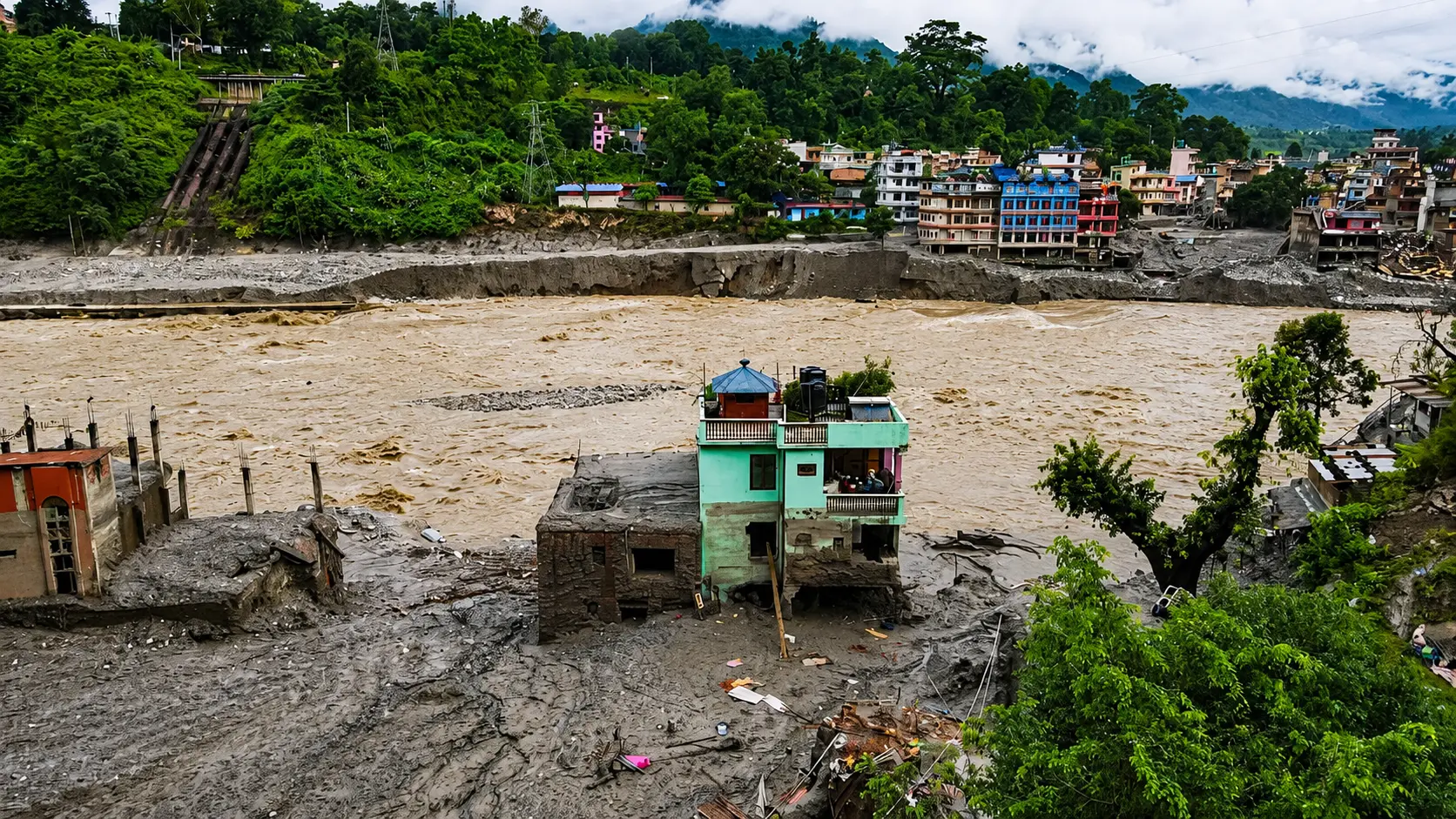
Rescue teams in Nepal are continuing an intense search for survivors nearly a week after devastating flash floods swept through communities near the Nepal-Tibet border. The Nepal floods have become one of the country's most severe disasters in recent years, destroying homes, roads, bridges and hydropower infrastructure while leaving thousands of people missing. The latest reports indicate that more than 1,000 people have died in the disaster, while over 3,900 remain unaccounted for. Nepal's Foreign Ministry has also reported that hundreds of foreign nationals were rescued or remain missing as authorities continue efforts to establish the whereabouts of people caught in the disaster.
Nepal Army reports 119 people rescued by air
The Nepal Army said on Tuesday that 119 people had been rescued using air resources from flood-affected areas. The group was initially reported to include one British national and 118 Nepali citizens. The Nepalese citizens reportedly included 44 women and 74 men. However, the circumstances surrounding the British national's inclusion in the rescue figure were later clarified. British aid worker Alastair Chambers said he had not actually been rescued. Instead, he had travelled to an affected area to assist with humanitarian relief work and later returned to Kathmandu on an aid flight. Nepalese authorities apparently recorded his return as part of the rescue operation. The clarification highlights the confusion surrounding rescue and evacuation efforts in remote areas where communications remain severely disrupted.
Thousands remain missing after Nepal flash floods
Despite significant progress in rescue operations, the humanitarian crisis remains extremely serious. More than 3,900 people are still reported missing, although officials have cautioned that the figure can change as communication is restored and people previously considered missing make contact with their families or authorities. Recent updates have brought some encouraging news. Several foreign tourists previously listed as missing have been located, while Nepal's Foreign Ministry said hundreds of foreign nationals have been rescued. Nevertheless, hundreds of people remain unaccounted for, including workers believed to have been inside hydropower tunnels when floodwaters and debris swept through the region.
Rescue teams face dangerous conditions
Search operations have been particularly difficult around hydropower projects along the Trishuli River. Hundreds of workers are believed to have been trapped or remain missing inside tunnels filled with mud and debris. Rescue personnel have had to work through unstable terrain, damaged infrastructure and difficult weather conditions. Nepalese and Chinese military teams are leading several operations, while specialist support from countries including India, South Korea and Australia has also been involved. Indian Army technical teams have joined Nepalese forces at tunnel sites, where rescuers are carefully working through dangerous conditions to reach potentially trapped workers. The scale of the operation has made helicopters, excavators, drones, temporary bridges and specialised rescue equipment essential.
What caused the devastating Nepal floods?
Initial reports suggested that an earthquake may have triggered the disaster. However, subsequent analysis by the US Geological Survey (USGS) indicated that the seismic signal was generated by a massive landslide and debris flow associated with a glacial collapse. The event produced seismic energy equivalent to a magnitude 5.2 earthquake. According to USGS findings, the slope failure involving a glacier generated enormous amounts of debris and sent a destructive flow downstream for roughly 100 kilometres. The agency said it remains uncertain whether the initial failure should be classified specifically as a landslide involving glacier material or a glacial collapse. The sudden movement of ice, rock and sediment created a powerful surge that travelled through river systems in the Himalayan region.
Rasuwa among the worst-hit areas
The disaster struck on August 26 in the mountainous Rasuwa region near Nepal's border with Tibet. Floodwaters and debris moved through the Lhende Khola river system before reaching the Bhote Koshi and Trishuli rivers. Several settlements downstream were badly affected. Roads and bridges were destroyed, making access to remote communities extremely challenging. Hydropower facilities, which are an important part of Nepal's infrastructure and economy, also suffered extensive damage. The destruction has left rescue teams dependent on air operations and temporary access routes in several areas.
International assistance expands
The worsening situation has prompted greater international involvement in Nepal's rescue and relief operations. Specialist teams from several countries are assisting local authorities, while foreign governments are also providing humanitarian supplies and technical expertise. The UK has deployed a rapid development team to support British citizens and their families affected by the disaster. The effort is being coordinated with the British embassy and Nepalese authorities. The United Kingdom has also announced financial assistance for Nepal's recovery efforts, while other countries have provided emergency response personnel and specialist equipment.
British nationals among those missing
The disaster has also affected a significant number of foreign visitors and workers. British authorities have revised the number of British citizens unaccounted for during the crisis. The situation remains fluid as authorities continue checking records and making contact with people who may have survived but lost communication during the floods. The mistaken identification of Alastair Chambers demonstrates how difficult it has been for authorities to maintain accurate records while dealing with damaged communication networks and large-scale displacement.
Nepal flood rescue enters a critical phase
As the immediate shock of the disaster begins to give way to a prolonged search and recovery operation, rescuers face a race against time. Mud-filled tunnels, unstable slopes and damaged roads continue to complicate searches for missing people. At the same time, authorities are working to provide food, medical assistance, shelter and other essential supplies to communities affected by the floods. The disaster has also renewed concerns about the growing risks faced by Himalayan communities as glaciers and high-altitude terrain become increasingly unstable. Scientists have warned that glacial and landslide-related disasters could pose greater challenges in a rapidly warming Himalayan environment. For Nepal, the focus now remains firmly on finding survivors, accounting for missing people and restoring access to isolated communities. With thousands still missing, the Nepal flood latest news remains closely watched across South Asia and around the world. Rescue teams continue to search devastated areas, hoping to locate more survivors while authorities work to determine the full scale of the tragedy.