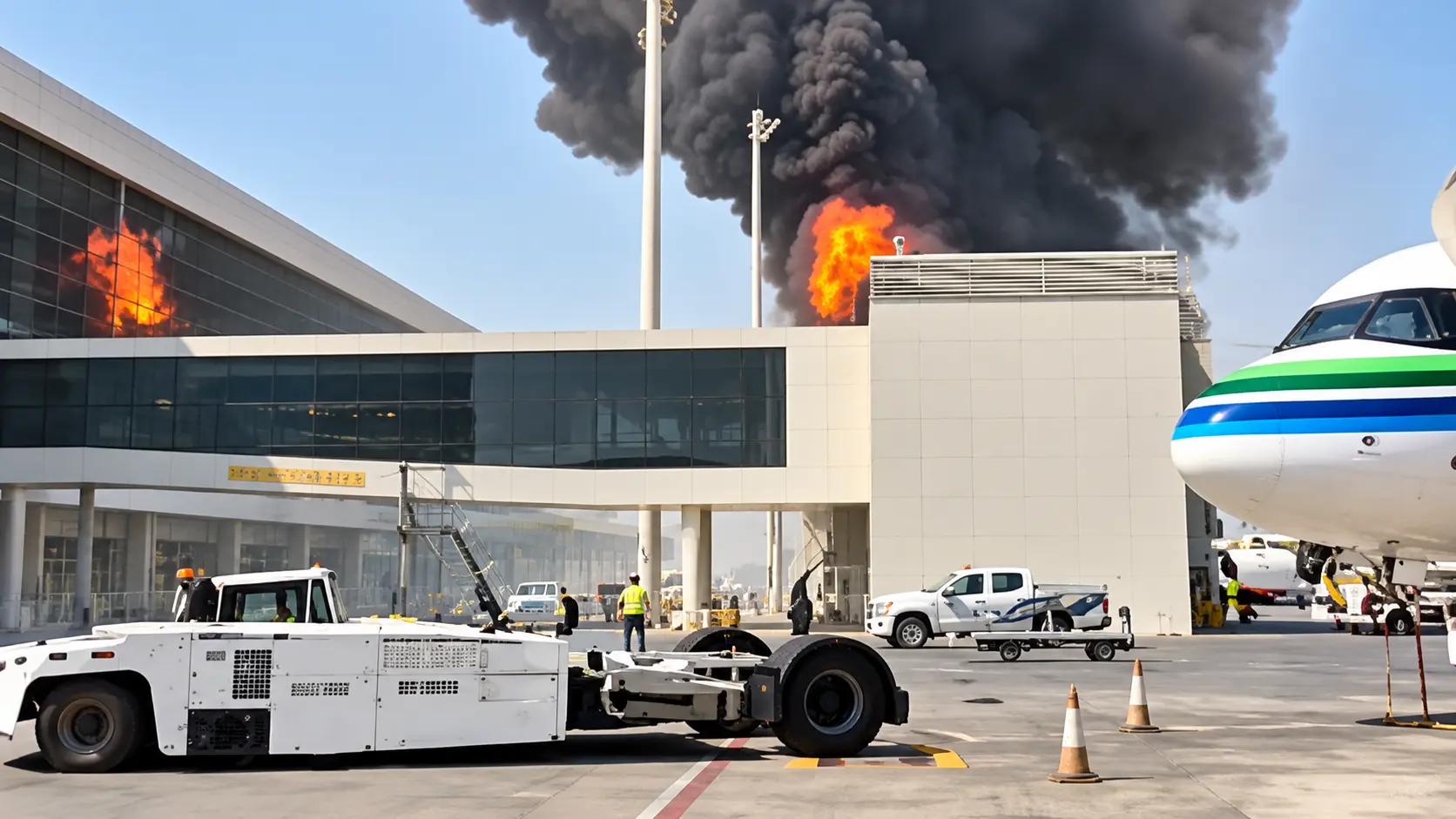
The confrontation between the United States and Iran has entered another dangerous phase after US forces destroyed five Iranian oil tankers and Tehran responded with ballistic missile attacks against a US military facility in Jordan. The latest exchange of attacks has intensified fears of a wider Middle East conflict, with military forces on both sides targeting strategic assets while tensions around the Strait of Hormuz continue to disrupt energy markets. The United States said its latest operation came after Iran's Islamic Revolutionary Guard Corps (IRGC) attempted to strike a US Navy warship with ballistic missiles on two occasions over two days. According to US Central Command, the American vessel successfully avoided the attacks and no US personnel were injured.
US military targets five Iranian oil tankers
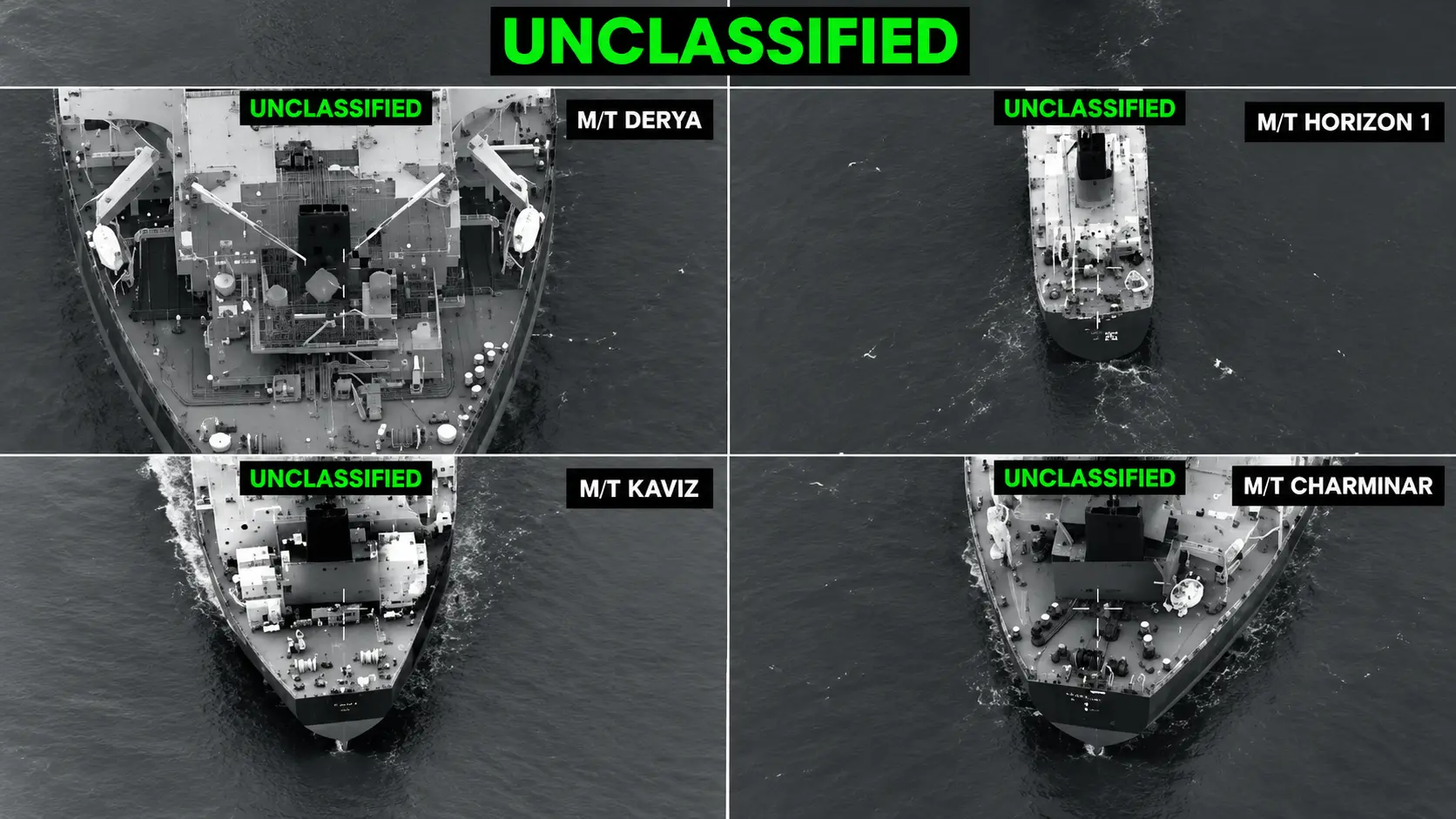
US Central Command said American forces destroyed five Iranian crude-oil carriers during operations in the Gulf of Oman and near Iran's Kharg Island. The vessels identified by US officials were the M/T Kaviz, M/T Charminar, M/T Horizon 1, M/T Riesco and M/T Derya. Four of the ships were targeted in the Gulf of Oman, while the Derya was struck near Kharg Island, a crucial centre for Iran's oil-export infrastructure.US officials said crews were warned and instructed to leave the vessels before the strikes were carried out. The ships were subsequently rendered inoperable, according to Central Command. Washington has described the tankers as part of an Iranian network connected to the financing of Tehran and regional groups backed by Iran. The latest action follows previous US strikes on Iranian tankers, suggesting that oil shipping has become a central part of Washington's military pressure campaign against Tehran.US Secretary of State Marco Rubio indicated that the United States would continue responding to attacks against American naval forces by targeting Iranian tankers.
Iran retaliates with missile attack on Jordan
Tehran quickly responded to the destruction of the tankers. Iran's Revolutionary Guard said it launched ballistic missiles against a US military facility near Al Azraq in Jordan. Iranian state media described the operation as retaliation for the US strikes against Iranian oil carriers. Jordan confirmed that Iranian missiles had been launched towards its territory. The Jordanian military said its air-defence systems engaged 20 ballistic missiles and intercepted 18 of them. The remaining two missiles landed in unpopulated locations, according to Jordanian authorities. No casualties were reported. Iran claimed that the attack caused damage to facilities used by US forces, including aircraft-related infrastructure. However, those claims have not been independently verified, and US officials had not immediately confirmed the extent of any damage. The attack is significant because Jordan has become another potential flashpoint in the widening US-Iran confrontation. American forces operate from several facilities across the region, making US military installations in neighbouring countries potential targets if Tehran continues expanding its retaliation.
Tehran also claims attacks on US warships
The IRGC has also claimed that Iranian forces attacked two US Navy destroyers in the region. Iranian officials said ballistic missiles caused significant damage to the vessels. The IRGC later claimed that two American vessels and several oil tankers had been targeted. There has been no immediate independent confirmation of the reported damage from the United States. The difference between confirmed military statements and battlefield claims is becoming increasingly important as both countries release competing accounts of operations. For now, the US has confirmed the tanker strikes, while Jordan has independently confirmed the missile launches and interceptions. Iranian claims concerning damage to American warships remain unverified.
Strait of Hormuz becomes the centre of the crisis
The latest confrontation is unfolding against the backdrop of an increasingly dangerous standoff around the Strait of Hormuz. The narrow waterway is one of the world's most important energy routes and carries a significant share of global oil shipments. Any prolonged disruption could have consequences far beyond the Middle East. Iran has threatened shipping connected to countries supporting the United States, while the IRGC has warned crews aboard tankers in or around Kuwaiti and Bahraini ports to leave their vessels. Such warnings have increased concerns among shipping companies and energy traders about the security of commercial vessels operating near the Gulf. The United States, meanwhile, is attempting to maintain pressure on Iran's oil exports while protecting American naval forces and keeping strategic maritime routes open.
Oil prices approach $100 a barrel
The military escalation has already been felt in global energy markets. Brent crude moved close to the psychologically important $100-per-barrel level on Wednesday as traders reacted to the growing possibility of further disruption around the Gulf. Brent was reported around $99.36 a barrel, while US West Texas Intermediate crude also gained. Energy analysts are closely watching developments around the Strait of Hormuz because a prolonged military confrontation could restrict oil supplies and raise transportation and insurance costs. Higher crude prices could eventually increase fuel costs for consumers and businesses in countries that depend heavily on imported energy.
A conflict with wider regional consequences
The latest strikes are part of a broader confrontation that has continued for more than six months. The conflict has already involved attacks on military facilities, commercial shipping and energy infrastructure. The growing involvement of regional actors has raised concerns that the fighting could spread beyond the immediate US-Iran confrontation. Iran has warned that American military installations across the region could face retaliation if Iranian oil infrastructure and shipping are attacked. Washington, however, has signalled that attacks on US naval forces will continue to trigger military responses. That cycle creates the possibility of repeated retaliation, with each side increasing the scale or geographical reach of its operations. The risk is particularly high around the Gulf, where military vessels and commercial tankers operate in close proximity.
What happens next?
The immediate question is whether the latest exchange remains limited or develops into a much broader regional confrontation. For the United States, protecting its naval forces and restricting Iranian oil revenue remain major priorities. For Tehran, attacks against American military assets and threats to regional shipping provide a way to increase the cost of Washington's campaign. But every additional strike raises the possibility of miscalculation. The destruction of five Iranian tankers followed by missile launches towards a US facility in Jordan shows how quickly the conflict can move from maritime operations to attacks on land-based military installations. With oil prices nearing $100 a barrel and commercial shipping facing increasing uncertainty, the consequences are no longer limited to the battlefield. The coming days will be closely watched by governments, energy markets and shipping companies around the world. Any further attacks on US forces, Iranian oil infrastructure or commercial vessels could trigger another round of escalation and put even greater pressure on an already fragile regional security situation.