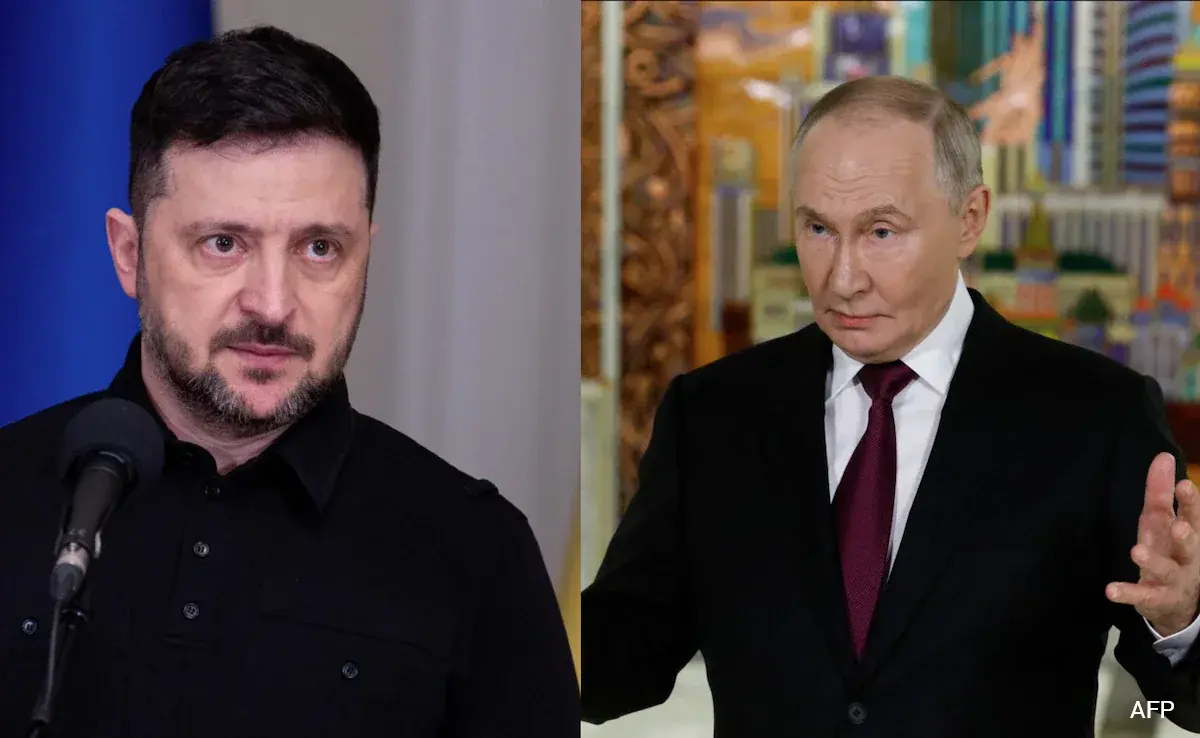
A temporary pause in Russian strikes against Kyiv has opened a new diplomatic window in the Russia-Ukraine war, just as US President Donald Trump's special envoys Steve Witkoff and Jared Kushner began a high-level mission aimed at reviving stalled peace negotiations. Russian President Vladimir Putin ordered his forces to stop strikes on Kyiv for three days, beginning around midnight on September 5, according to Kremlin spokesperson Dmitry Peskov. The announcement came as Witkoff and Kushner arrived in Moscow before travelling to Kyiv for talks with Ukrainian President Volodymyr Zelensky. The temporary arrangement is being closely watched because it comes after months of intense fighting and repeated attempts by Washington to bring Moscow and Kyiv back toward a negotiated settlement.
Putin announces temporary halt in Kyiv strikes
The Kremlin said Putin had instructed Russian forces to refrain from attacking Kyiv for three days. The pause was directly linked to the visit of the American envoys, who were sent by Trump to explore possible pathways toward ending the war. The move, however, does not represent a broad ceasefire across Ukraine. Fighting along the front line continues, and both Russia and Ukraine have continued to carry out military operations elsewhere. The Institute for the Study of War reported that Russia and Ukraine had agreed to temporarily halt long-range strikes against each other's capitals to facilitate the American delegation's diplomatic travel. Putin, however, did not accept Ukraine's broader proposal for a front-line ceasefire. That distinction is important. The latest arrangement is limited in scope and should not be interpreted as the beginning of a comprehensive peace agreement.
Zelensky had called for a wider temporary ceasefire
Before the Kremlin's announcement, Ukrainian President Volodymyr Zelensky had proposed a broader temporary halt to hostilities. Zelensky argued that Ukraine was prepared to suspend long-range attacks if Russia did the same, allowing the American diplomatic mission to take place without the immediate threat of attacks on the capitals. Following discussions with the US side, Zelensky said Ukraine was prepared to stop aerial strikes against Moscow and Kyiv during the diplomatic process. Ukraine's position was that a temporary period of silence could make it easier for negotiators to discuss practical arrangements and potentially establish a path toward a larger agreement. The proposal came after a period of particularly intense Russian aerial attacks against Kyiv and other Ukrainian cities.
US peace mission moves from Moscow to Kyiv
Witkoff and Kushner's diplomatic mission represents one of the most significant recent efforts by the Trump administration to restart negotiations. The two US representatives first met Putin in Moscow on September 5. Their meeting lasted several hours and was followed by a journey to Kyiv, where they met Zelensky the following day. After the discussions, US officials described the talks as encouraging and said the meetings had produced ideas for possible next steps. However, no breakthrough agreement was announced. Their visit to Kyiv was also significant because it was their first official trip to the Ukrainian capital in this diplomatic effort. The discussions have focused not only on ending the fighting but also on the difficult questions surrounding Ukraine's security, territory, and future relationship with Western countries.
Major obstacles remain between Moscow and Kyiv
Despite the temporary reduction in attacks around the capitals, the biggest disagreements between Russia and Ukraine remain unresolved. Territorial control is one of the most difficult issues. Moscow continues to demand concessions relating to occupied Ukrainian territories, while Kyiv has repeatedly rejected proposals that would require it to surrender territory. Ukraine is also seeking credible security guarantees that would protect the country from another major Russian offensive if a peace agreement is reached. The question of NATO membership and Ukraine's long-term military position remains another major point of disagreement. These issues mean that even successful discussions between American, Russian and Ukrainian officials are unlikely to immediately produce a final peace agreement.
Kyiv still faces a serious security threat
The temporary pause comes after a period of heavy aerial attacks. Russian forces have intensified drone and missile operations against Ukrainian cities, while Ukraine has increasingly used long-range weapons to strike targets inside Russia. The attacks have extended far beyond the immediate battlefield. According to the Institute for the Study of War, Russia launched a large overnight attack involving ballistic missiles and more than 160 drones against multiple parts of Ukraine on September 4-5. Ukrainian authorities reported damage in several regions, including Kyiv. Ukraine has meanwhile continued targeting Russian military infrastructure, fuel facilities and other strategic assets. The continuing attacks demonstrate why diplomatic efforts remain difficult. Even while negotiations are taking place, both sides continue trying to improve their military position.
What does the three-day pause mean?
The latest pause is best viewed as a confidence-building measure rather than a full Russia-Ukraine ceasefire. A temporary reduction in attacks could provide diplomats with an opportunity to hold meetings without the immediate pressure of incoming strikes. It could also offer both sides a chance to test whether limited agreements can actually be observed. However, the short duration of the arrangement means its significance will depend heavily on what happens after the three-day period ends. If attacks resume at the previous intensity, the pause could be remembered as only a brief diplomatic interruption. If it leads to additional agreements, however, it could become an important first step toward wider negotiations.
Trump administration hopes to restart direct negotiations
The United States has been pushing for a diplomatic solution to the war, which has now entered its fifth year. The latest mission by Witkoff and Kushner comes after previous negotiation efforts failed to resolve the central disputes between Moscow and Kyiv. Following their meetings with Putin and Zelensky, US officials expressed hope that further Russia-Ukraine discussions could be arranged. Reuters reported that the American envoys were encouraged by ideas discussed during their meetings and hoped to see new trilateral talks announced soon. That would represent an important development because direct negotiations between Russia and Ukraine have struggled to make substantial progress.
Zelensky seeks military and winter support
For Ukraine, peace discussions are taking place alongside preparations for another difficult winter. During his meeting with the US envoys, Zelensky reportedly raised the need for additional military and energy assistance, including air-defence capabilities. Ukraine's ability to protect its cities and energy infrastructure from Russian missile and drone attacks remains a major concern. The country is also seeking strong security guarantees as part of any eventual settlement. For Kyiv, therefore, a peace agreement cannot simply mean stopping the fighting. Ukrainian officials want assurances that a future agreement will prevent another large-scale invasion.
A fragile moment for Russia-Ukraine diplomacy
The three-day Kyiv strike pause represents a rare moment in which military and diplomatic developments have moved in the same direction. For now, however, expectations remain cautious. The meetings between Putin, the US envoys and Zelensky have created a new opportunity for diplomacy, but the fundamental disagreements over territory, security guarantees and the future of Ukraine remain. The coming days could therefore prove critical. If Moscow and Kyiv can maintain the limited reduction in attacks and use the diplomatic channel to resolve some of their differences, the latest initiative could develop into a broader Ukraine peace deal. But if fighting quickly returns to its previous level, the temporary pause may instead highlight just how difficult ending the Russia-Ukraine war remains. For millions of Ukrainians and Russians affected by the conflict, the real test will not be the diplomatic meetings themselves, but whether they can ultimately produce a lasting end to the violence.