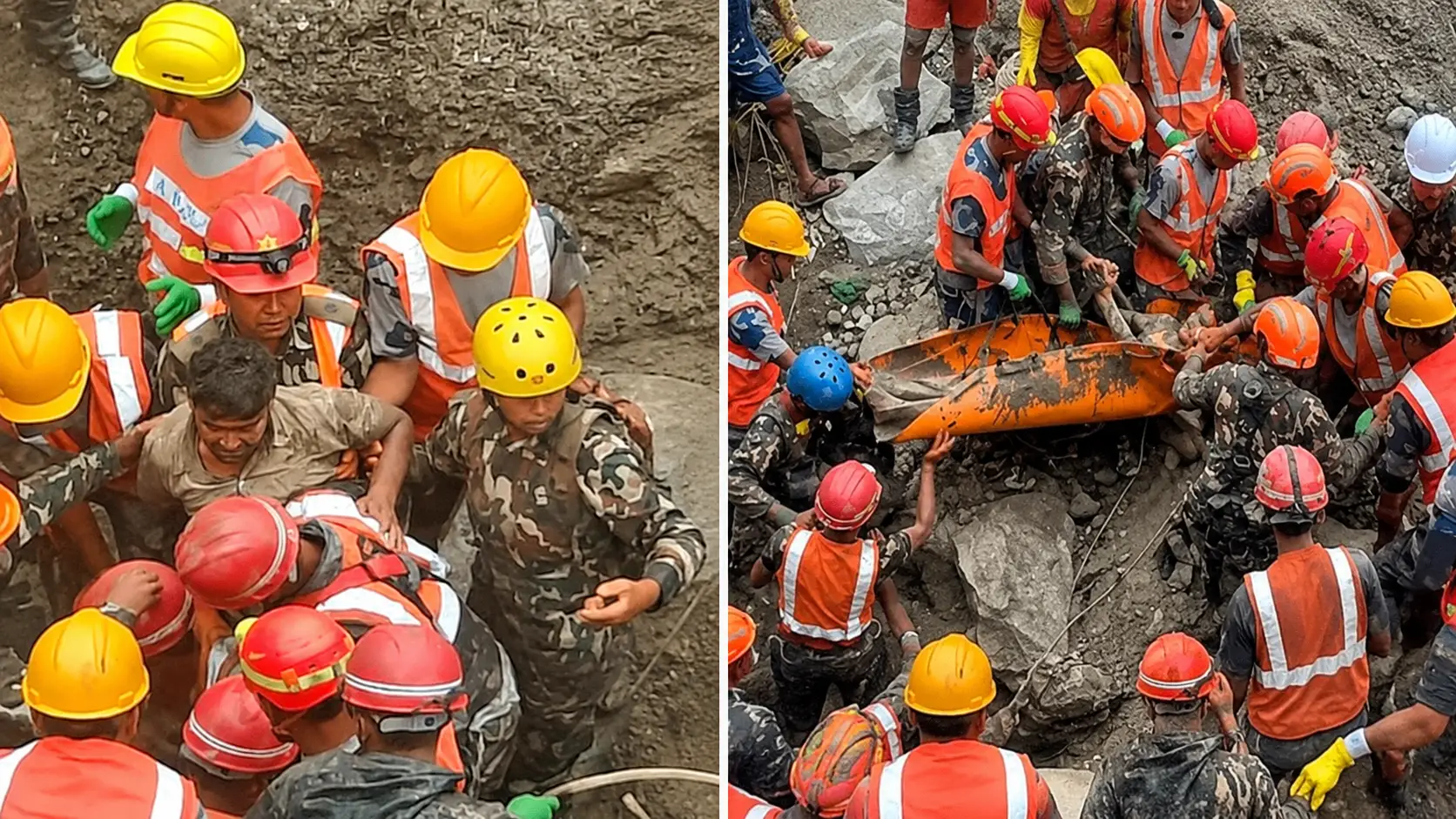
A major breakthrough has brought relief in Nepal after two workers trapped inside a hydropower tunnel were rescued alive nine days after a flash flood struck the area. The workers had been trapped inside the Trishul 3A hydropower project tunnel after floodwaters and debris entered the underground section, cutting off their escape route. Rescue teams continued their efforts for more than a week before finally managing to bring both men to safety. The rescue has provided a much-needed moment of relief for the families of the workers, who had been waiting anxiously for news since the incident.
Two workers found alive after nine days
According to officials, the two rescued workers were identified as a mechanical foreman and a mechanical supervisor. They were among the employees who became trapped inside the tunnel following the sudden flooding. The conditions inside the tunnel made the rescue operation particularly challenging. Floodwater, debris, and the difficult underground environment created major obstacles for teams trying to reach the workers. Despite the challenges, rescuers continued working to clear access routes and reach the trapped employees. Their efforts eventually resulted in the successful recovery of both workers alive. The fact that the men survived for nine days inside the tunnel has brought renewed attention to the difficult conditions faced by workers caught in the disaster.
Nepal Army confirms first rescue
The first confirmation of the rescue came from Nepal Army spokesperson Brigadier General Raja Ram Basnet, who announced that one of the trapped workers had been pulled out alive. The development was followed by another important update from Nepalese lawmaker Shri Ram Neupane, who shared information about the rescue of the second worker on his Facebook page. The updates quickly brought relief to those following the rescue operation and to the families who had been waiting for their loved ones to return safely. Officials later confirmed that the two men rescued from the tunnel were a mechanical foreman and a mechanical supervisor.
Rescue teams faced difficult conditions
The operation was carried out under extremely challenging circumstances. Flash floods can rapidly push large amounts of water, mud and debris into confined areas, making underground rescue missions particularly dangerous. In this case, the floodwaters trapped workers inside the hydropower tunnel and made access difficult for rescuers. Teams had to work carefully while dealing with the aftermath of the flooding and the unstable conditions inside the affected area. The rescue operation continued for days as teams worked to locate the trapped workers and create a safe way to bring them out. The successful rescue of both men after nine days marks a significant achievement for the teams involved in the operation.
Families finally receive good news
For the families of the trapped workers, the rescue brought an enormous sense of relief. After spending nine days without knowing whether their loved ones would return home safely, the news that both men had been found alive offered hope amid an otherwise devastating situation. The incident also highlights the risks faced by workers involved in major infrastructure and hydropower projects in Nepal's mountainous regions. Nepal frequently experiences heavy rainfall, flash floods and landslides during the monsoon season. Such events can create serious risks for communities as well as workers operating in remote and difficult-to-access locations. Hydropower projects are particularly vulnerable in areas where rivers and steep terrain can quickly turn heavy rainfall into dangerous flooding.
Focus now shifts to safety and further assessment
Following the successful rescue, authorities are expected to assess the condition of the affected tunnel and the surrounding project area. Officials will also need to determine whether additional workers could still be affected by the flooding and whether further safety measures are required. The incident is another reminder of the importance of emergency response systems at large infrastructure projects, particularly those located in areas exposed to natural disasters. For now, the successful rescue of the two workers stands out as the biggest positive development from the incident. After nine difficult days underground, both men were finally brought back to safety, giving their families the news they had been desperately hoping to hear. The rescue operation demonstrates how persistence and coordinated efforts can make a difference even in extremely difficult circumstances. While the wider impact of the flash flood is still being assessed, the survival and recovery of the two workers has offered a rare moment of hope following the disaster.