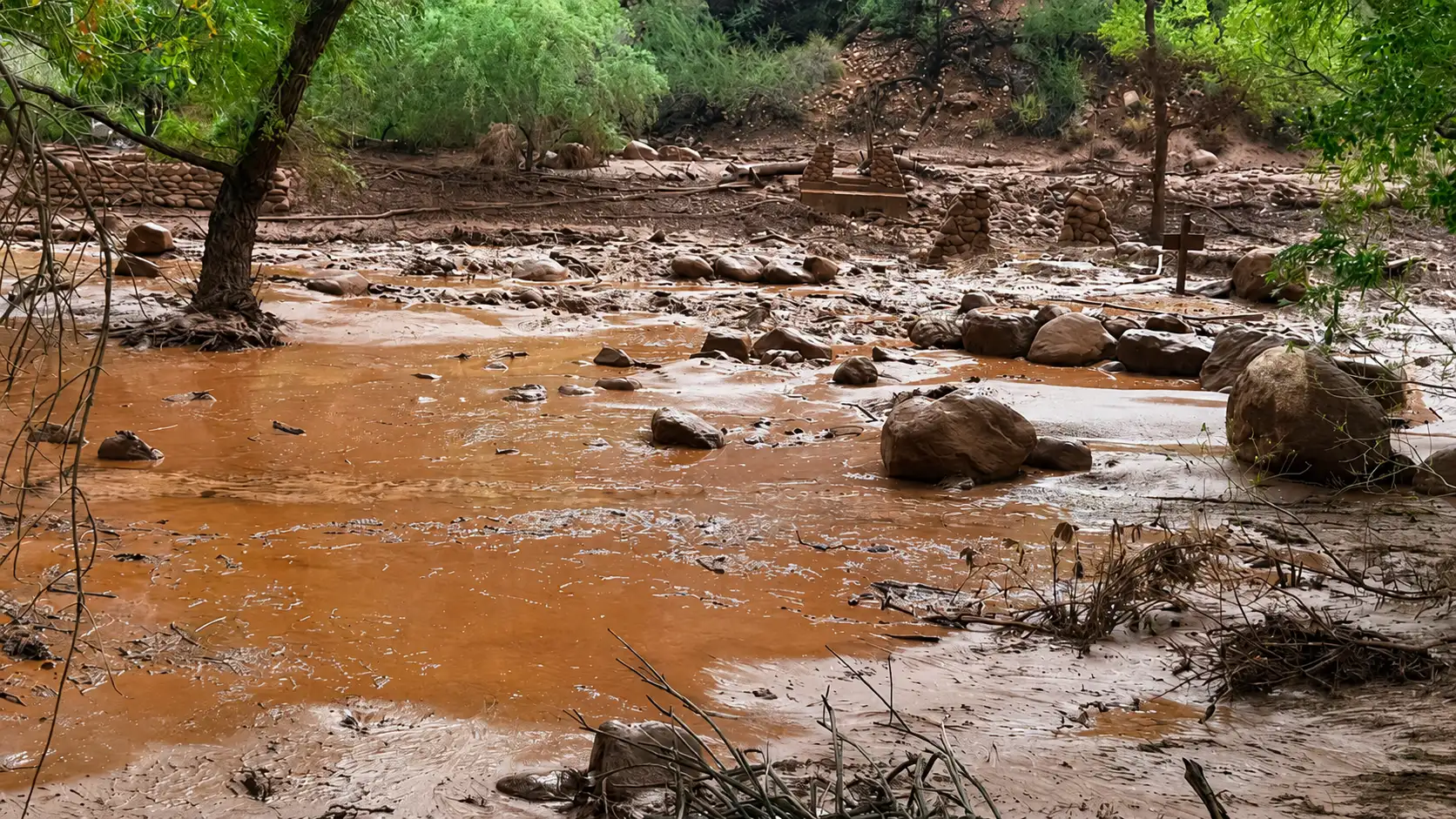
A powerful flash flood swept through parts of Grand Canyon National Park in Arizona on Saturday, August 29, causing extensive destruction across the Bright Angel Canyon and Phantom Ranch areas. The sudden surge of water damaged trails, destroyed footbridges and carried huge amounts of rocks, mud, and debris toward the Colorado River. The National Park Service (NPS) has launched an extensive response operation and is seeking information about hikers, backpackers and campers who may have been in the affected areas when the flooding occurred. The situation remains serious, with several people still unaccounted for. Officials initially sought information about more than 20 potentially missing people. A later NPS update said one person had died and around 15 others remained missing or unaccounted for.
Flash Flood Hit Bright Angel Canyon in the Afternoon
According to the National Park Service, the flash flood began at approximately 2:30 p.m. on August 29 after intense rainfall affected the region. The rapidly rising water moved through Bright Angel Creek and surrounding canyon areas with tremendous force. The narrow landscape of the Grand Canyon made the situation particularly dangerous, as water, rocks, and other debris were swept through the canyon. The flooding caused significant damage to infrastructure throughout Bright Angel Canyon. Nearly all footbridges crossing Bright Angel Creek were destroyed, making it difficult for hikers to move between sections of the canyon.
Photos and Videos Show Scale of Destruction
Images released from the affected area show the aftermath of the flooding, including damaged bridges, debris and heavily altered sections of Bright Angel Creek. The force of the water was strong enough to move large boulders, metal structures and other debris downstream toward the Colorado River. Parts of the creek were also significantly reshaped by the flood. The destruction has made several routes inaccessible and complicated rescue and evacuation efforts inside the canyon.
One Person Confirmed Dead
The National Park Service has confirmed that at least one person died following the flash flood. The body of a 46-year-old man was recovered near Crystal Rapids along the Colorado River, according to officials. His identity had not been publicly released at the time of the latest reports. Authorities continue to search for people who may have been in the affected corridor when the flood struck. Earlier, the NPS had asked the public to provide information about more than 20 individuals who might have been in the area and had not been accounted for. As rescue teams gathered more information, the number of people still unaccounted for was revised.
National Park Service Appeals for Information
The NPS is asking anyone who knows about hikers, backpackers, or campers who were in the Bright Angel Creek corridor on August 29 to contact authorities. Officials are particularly interested in information about people who may have been travelling along the North Kaibab Trail, staying at Bright Angel Campground or Phantom Ranch, or visiting an area known as the Box north of Phantom Ranch. The information could help search teams determine who was in the area when the flood occurred and who has safely returned.
More Than 60 People Evacuated
Rescue and evacuation operations began soon after the flooding. According to the NPS, 62 people were evacuated from Phantom Ranch and the lower North Kaibab Trail during the initial response. Additional evacuations were also planned from Cottonwood Campground and other locations. Helicopters have been used to move people out of dangerous areas, while park officials and emergency personnel continue assessing conditions inside the canyon. Evacuees have been taken toward the South Rim, where assistance has been coordinated for those affected.
Popular Trails and Phantom Ranch Closed
Because of the damage, the National Park Service has closed several major areas until further notice. These include Phantom Ranch, Bright Angel Campground, Phantom Ranch Canteen and cabins, as well as the entire North Kaibab Trail between the North Kaibab Trailhead and Phantom Ranch. The Black Bridge and Silver Bridge crossings over the Colorado River have also been closed. Officials have not provided an estimated reopening date. River traffic has also been suspended because metal structures and debris were carried into the Colorado River.
Water Supply Also Damaged
The flooding caused another major problem for the park by damaging the Transcanyon Waterline, an important system that supplies water from the canyon to areas of the park. With the pipeline out of operation, the National Park Service announced strict water conservation measures. The park is also implementing Stage 4 water restrictions on the South Rim, with overnight accommodations inside the park being halted from August 31. Visitors and residents have been asked to conserve water while officials work to manage the limited reserves.
More Storms Could Bring Additional Flooding
The danger may not be over yet. The National Park Service has warned that additional thunderstorms and heavy rainfall could trigger more flash floods, debris flows, and rockfalls in the region. The Grand Canyon is particularly vulnerable to sudden flooding because water can travel rapidly through narrow canyon channels. Areas affected by previous wildfires can also experience increased runoff and debris-flow risks during heavy rain. For now, search and rescue operations remain underway, while officials continue assessing the damage and trying to account for everyone who may have been in the affected parts of the Grand Canyon when the flash flood struck.