Paris: A fresh controversy surrounding the Eiffel Tower has erupted in France after employees protested alleged instructions that female staff should stay away from certain areas during a private visit by a Hindu religious delegation associated with the Bochasanwasi Akshar Purushottam Swaminarayan Sanstha (BAPS). The dispute led to a temporary closure of the iconic Paris landmark on Monday, September 7, after employees held a protest over what they described as discriminatory treatment of women workers. Paris authorities have now moved to examine what happened during the visit. The Eiffel Tower controversy has attracted considerable attention in France and India because the allegations involve workplace equality, religious sensitivities and the management of one of the world's most recognisable tourist attractions.
What happened during the BAPS visit?
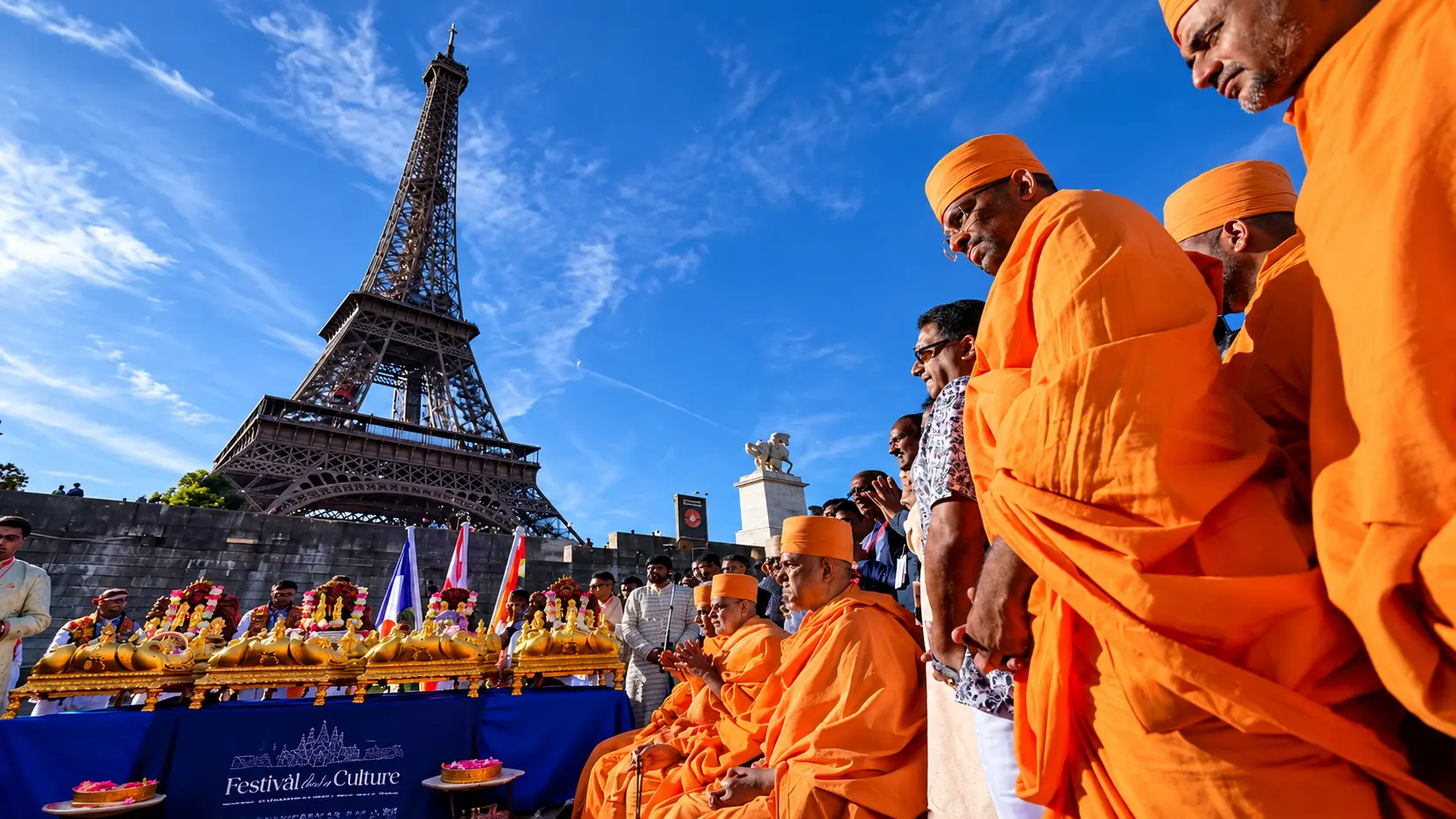
The controversy centres on a private visit by a delegation of around 100 people linked to BAPS. The group was in France for events connected with the inauguration of a Hindu temple in the Paris region. According to union representatives and Eiffel Tower employees, some female workers were allegedly instructed to leave their normal positions as the delegation moved through the monument. In certain locations, male employees reportedly took over their positions. Staff representatives said women were also allegedly told not to enter or cross particular areas while the delegation was present. The claims quickly caused anger among employees, who argued that professional responsibilities at the Eiffel Tower should not be determined by gender. Reuters reported that Paris authorities announced an investigation following the staff protest.
Eiffel Tower staff protest
The allegations culminated in a staff protest on Monday, resulting in the temporary closure of the Eiffel Tower. Employees expressed concern that instructions given during the private visit had effectively made some women invisible because of their gender. They said such arrangements were incompatible with the principles of equality expected in a French workplace. The Eiffel Tower's operating company, SETE, acknowledged that arrangements had been made to limit interactions between the delegation and female employees. The company said such conditions should not have been accepted. The incident prompted management and employees to hold discussions about what happened and how similar situations should be handled in the future.
BAPS rejects allegation of excluding women
BAPS has strongly disputed the suggestion that it specifically sought to remove women employees from the Eiffel Tower. In its response, the organisation said the visit had been coordinated with Eiffel Tower management because of the size of the delegation. It said the timing was arranged around the beginning of normal opening hours to minimise disruption to other visitors.BAPS also stated that, to its knowledge, no one had been prevented from accessing the Eiffel Tower during the visit. At the same time, the organisation expressed regret over the controversy and apologised for any pain or inconvenience caused by the incident. This distinction is important because the exact sequence of events and who gave the instructions remain matters for the ongoing investigation.
Paris authorities order investigation
The controversy has now moved beyond an internal workplace dispute. Paris officials have said the incident needs to be examined to establish exactly what instructions were issued, who issued them and whether the treatment of employees breached workplace principles. Paris Mayor Emmanuel Grégoire said employees' anger was understandable and backed a prompt investigation. French political leaders have also reacted strongly, particularly because France places considerable emphasis on gender equality and the equal participation of women in public life. National Assembly President Yaël Braun-Pivet criticised the reported treatment, arguing that welcoming visitors should not mean abandoning France's principles of equality. The political response has helped turn what began as a workplace dispute into a wider national conversation.
Why the controversy is significant
The incident has raised questions about how public institutions should balance religious customs and cultural sensitivities with local laws and workplace rights. The Eiffel Tower is not merely a tourist attraction. It is one of France's most recognisable public symbols and receives millions of visitors every year. Any controversy involving access, equality or discrimination at the monument can therefore attract international attention. For critics, the reported sidelining of women represents a serious equality issue. For BAPS, the organisation's statement suggests the delegation's visit was organised primarily to manage its size and avoid disruption rather than to discriminate against female employees. The investigation will be important in determining whether the reported instructions originated from the delegation, the tower's management, or operational arrangements made by staff.
Eiffel Tower reopens after staff protest
The disruption was temporary. The Eiffel Tower was expected to reopen on Tuesday, September 8, after the staff-management discussions following Monday's closure. The reopening means tourists can once again visit the landmark, but the controversy surrounding the BAPS delegation has not disappeared. The issue is now being closely watched because the findings could determine whether changes are required in the way private religious or cultural delegations are accommodated at major public attractions.
France's equality debate takes centre stage
The BAPS Eiffel Tower row has also generated a broader debate about France's approach to religious freedom and gender equality. France is home to communities representing many different religious and cultural traditions. Private groups visiting public landmarks can have specific requirements, but the latest controversy has highlighted the question of where accommodation ends and discriminatory treatment begins. For now, BAPS maintains that it did not intend to exclude women or prevent anyone from accessing the monument. Employees, meanwhile, have raised serious concerns about what they were allegedly instructed to do during the visit. The Paris investigation is expected to provide greater clarity. Until then, the Eiffel Tower controversy remains a developing story, with the central question being whether female workers were deliberately sidelined because of their gender or whether the incident resulted from a misunderstanding or operational decision made while organising the large delegation's visit. What began as a private visit has consequently become an international discussion involving BAPS, the Eiffel Tower, workplace equality and religious sensitivities in France.