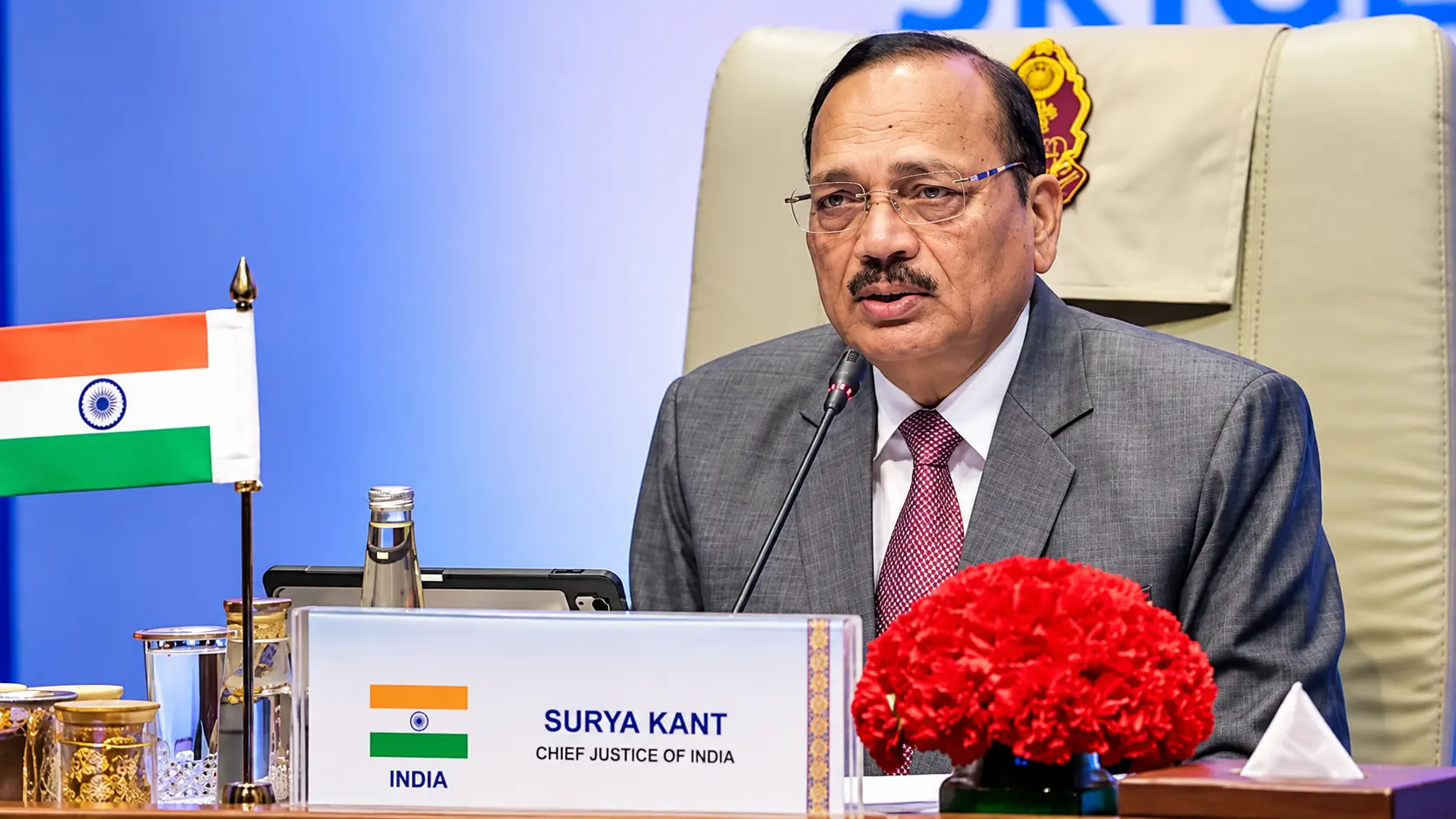
The Supreme Court on Wednesday expressed strong displeasure over a preventive notice issued to a 20-year-old law student from Gautam Buddha University in connection with his alleged participation in a Cockroach Janta Party (CJP) protest at Delhis Jantar Mantar. Chief Justice of India Surya Kant questioned how an executive magistrate could issue such a notice when the Supreme Court had already passed a clear order protecting students who participated in the July protests. The CJI indicated that the court may seek an explanation from the Gautam Budh Nagar administration over the action. The development has triggered fresh debate over student protests, freedom of expression, administrative overreach and the Supreme Courts protection of protesters.
Supreme Court questions action against Noida student
The matter came before the Supreme Court after senior advocate Bishwajit Bhattacharyya brought the notice issued to Gautam Buddha University student Akshat Tripathi to the courts attention. The notice, dated September 4, sought a personal bond of ₹5 lakh from Tripathi and two sureties of the same amount. Authorities had alleged that he was involved in spreading anti-government information and encouraging students to participate in the CJP protest at Jantar Mantar. The notice was subsequently withdrawn after police examined the allegations and found that the information on which the action was based was incorrect. Reports said the withdrawal came shortly after the notice was issued. During Wednesdays hearing, the Chief Justice questioned the authority of the magistrate to proceed against a student despite the Supreme Courts earlier directions. The CJI also indicated that the Gautam Budh Nagar magistrate could be asked to explain how the notice came to be issued.
What was the notice against Akshat Tripathi?
According to reports, Tripathi is a second-year LLB student at Gautam Buddha University. Police alleged that his activities had contributed to tension on the university campus and could potentially disturb public order. The preventive proceedings were initiated under the provisions of the Bharatiya Nagarik Suraksha Sanhita (BNSS). The notice required him to explain why he should not be directed to execute a bond for maintaining peace for six months. The proposed personal bond was ₹5 lakh, with two sureties of an equivalent amount. Tripathi, however, denied the allegations. He said he had attended the Jantar Mantar protest peacefully but was not attending university classes during that period. He also reportedly said he had left the university for his semester break and was in Prayagraj when the alleged activities on campus were supposed to have taken place. This raised questions about the factual basis of the police report.
Supreme Court had already protected protesting students
The controversy comes just days after a significant Supreme Court order on CJP protests. On September 1, a three-judge bench headed by CJI Surya Kant invoked Article 142 of the Constitution and quashed FIRs registered in connection with the protests held between July 20 and 25. The bench included Justices Joymalya Bagchi and V Mohana. The court made an important observation that participation in a protest, by itself, does not amount to a criminal offence. The order provided major relief to students and others who had participated in the demonstrations. However, the court did not prevent authorities from taking action against individuals allegedly involved in violence, physical harm or destruction of property. The Supreme Court's order therefore did not provide blanket immunity for criminal conduct. Instead, it distinguished peaceful participation in a demonstration from specific criminal acts.
Why the latest notice has raised legal questions
The timing of the Noida notice has become the central issue. The Supreme Court had only recently passed its order concerning CJP protesters, yet a preventive proceeding was initiated against a student who allegedly attended one of those demonstrations. Although the administration later cancelled the notice, the episode has raised questions about how police reports are prepared and how executive magistrates exercise preventive powers. The issue is particularly significant because preventive provisions can have serious consequences for an individual even when no criminal conviction is involved. Legal experts and civil liberties advocates are likely to closely watch the Supreme Court proceedings as the bench examines the circumstances surrounding the notice.
Allahabad High Court had also criticised Noida administration
The Supreme Court's concern comes shortly after strong criticism from the Allahabad High Court over another case involving the Gautam Budh Nagar administration. The High Court recently quashed the National Security Act detention of Delhi University student and activist Akriti Chaudhary, who had been detained in connection with a Noida workers' protest. The court directed that ₹5 lakh be paid as compensation and ordered recovery of the amount from the salaries of officials found responsible. It also sharply criticised the manner in which the preventive detention proceedings had been handled. In its detailed observations, the High Court warned that excessive use of bureaucratic power could push Uttar Pradesh towards what it described as an Orwellian Dystopia. The court also stressed that civil servants' primary loyalty must be to the Constitution rather than the political executive. The two developments, although involving different students and different legal proceedings, have placed the Gautam Budh Nagar administration under renewed judicial scrutiny.
Bigger debate over students' right to protest
The latest India news development goes beyond the case of one student. Universities and government authorities routinely have powers to maintain discipline and prevent disturbances. At the same time, students enjoy constitutional rights, including freedom of speech and peaceful assembly, subject to reasonable restrictions prescribed by law. The challenge for authorities is to distinguish genuine threats to public order from peaceful political expression. In Tripathi's case, the fact that the notice was withdrawn after an inquiry reportedly found the underlying information to be false makes the episode particularly significant. The Supreme Court's response suggests that the judiciary is closely monitoring whether administrative authorities are complying with its September 1 directions. For now, the court has asked that the relevant facts and supporting material be placed on record. The next stage could provide greater clarity on who initiated the proceedings, what information was relied upon and why the notice was issued despite the Supreme Court's recent order. The case is therefore likely to remain an important Supreme Court latest news story, particularly for students, universities and civil rights groups watching the boundaries of executive power.