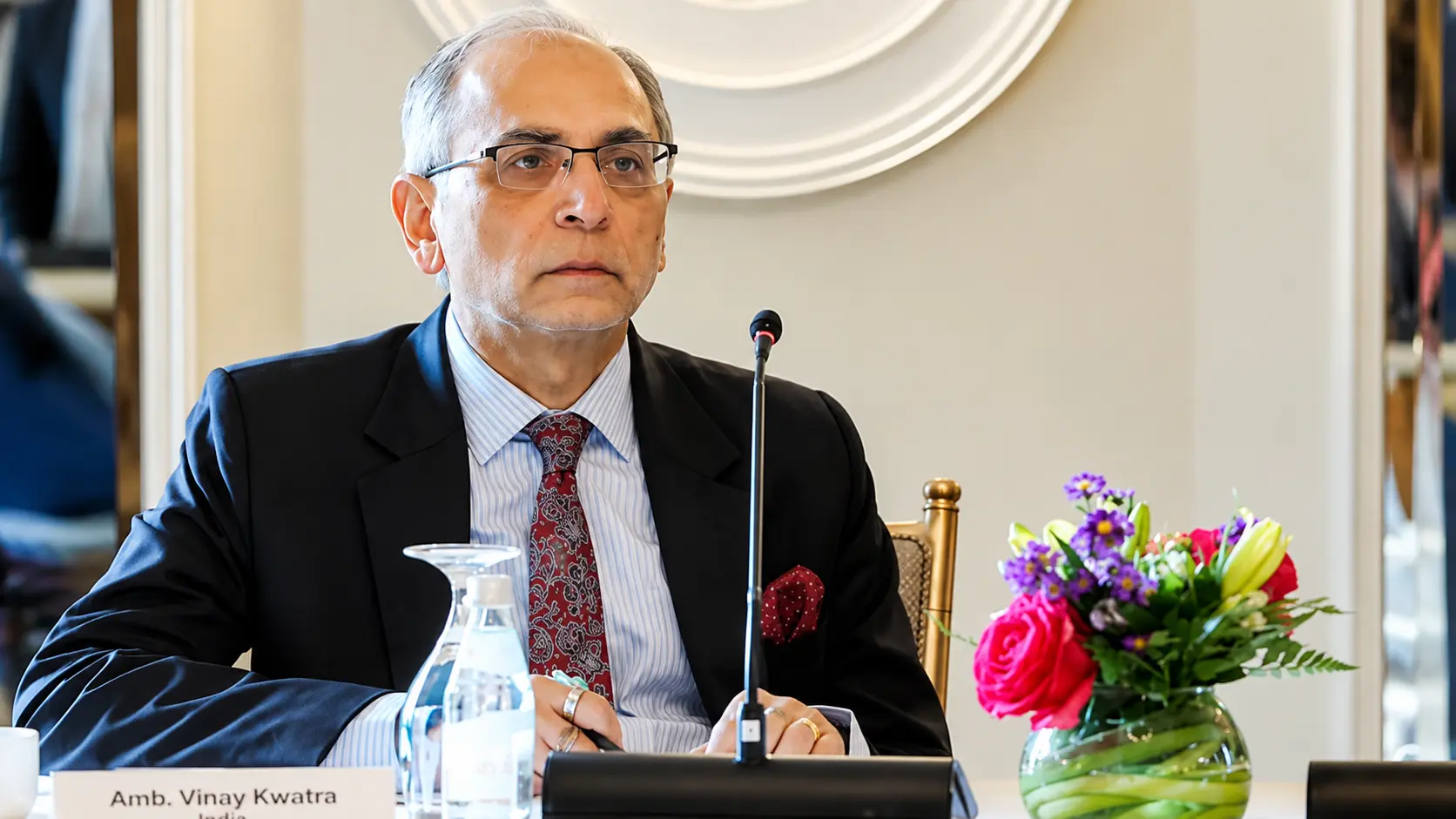
A political and public discussion over foreign funding, non-governmental organizations, religious institutions, and the administration of assets generated by foreign contributions has been sparked by India's proposed FCRA Bill 2026. Vinay Mohan Kwatra, India's ambassador to the US, has attempted to dispel what he called misunderstandings about the new law in the face of mounting opposition. Kwatra outlined the government's stance on the Foreign Contribution (Regulation) Amendment Bill, 2026 in a number of posts on X. He made the case that the proposed modifications are meant to improve oversight, increase transparency, and create clearer processes for organizations that receive foreign contributions. Since some US politicians expressed worries about the potential effects of the proposed FCRA reforms on religious charities and civil society organizations, the debate has drawn attention from throughout the world.
What is the FCRA Bill 2026?
On March 25, 2026, the Foreign Contribution (Regulation) Amendment Bill, 2026 was presented to the Lok Sabha. The proposed legislation aims to amend the current structure that governs foreign donations received by associations, trusts, NGOs, and other qualified organizations in India. One of the most discussed provisions involves the creation of a Designated Authority. The authority would have a role in managing assets linked to foreign contributions when an organisations FCRA registration is cancelled, surrendered, or not renewed. This specific clause has become the focal point of the dispute, with detractors claiming that if an organization's registration status changes, it may lose control over its assets. However, the government insists that rather than targeting reputable organizations, the proposed method is intended to safeguard assets financed by foreign contributions.
Vinay Mohan Kwatra addresses five major concerns
Kwatra's explanation comes at a time when the FCRA Bill 2026 controversy has intensified both in India and abroad. The envoy stated that the suggested modifications shouldn't be seen as an effort to stop lawful foreign donations from getting to Indian civil society. He maintained that controlling foreign financial flows is a typical sovereign duty and is connected to matters like financial transparency, national security, and responsibility. India has had legislation regulating foreign contributions for decades. Before a new framework took its place in 2010, the old FCRA was first presented in 1976. Later, the law was changed in 2016, 2018, and 2020. The 2026 plan was provided by Kwatra as an additional phase in the development of that regulatory framework.
Are foreign donations being stopped?
One of the major claims surrounding the proposed law is that it could effectively shut down foreign funding for Indian NGOs.Kwatra rejected this interpretation. He pointed to government figures indicating that foreign contributions received by registered organisations increased from approximately $1.2 billion in 2010-11 to around $2.67 billion in 2024-25. The ambassador also highlighted the difference between Indias large civil society sector and the comparatively small number of organisations operating under FCRA registration. His argument is that the law does not prohibit foreign assistance but establishes conditions for receiving and using it. Organisations receiving overseas contributions must comply with registration requirements, follow designated financial procedures and provide details about the utilisation of funds.
What happens to NGO assets?
The question of NGO assets under FCRA has emerged as one of the most sensitive issues. Opposition parties and several critics have expressed concerns that organisations could lose assets if their FCRA registration is cancelled or not renewed. Kwatra argued that provisions concerning foreign-funded assets are not entirely new. According to his explanation, when an organisation loses or surrenders its FCRA registration, foreign contributions and assets created from those contributions already come under the control of a government authority under the existing framework. The proposed legislation, he said, would introduce a designated mechanism for safeguarding such assets. Importantly, the governments explanation also refers to a possible route for restoration. If an organisation subsequently regains its FCRA registration, the relevant assets and unused foreign funds could be returned.
Does the FCRA Bill target any particular religion?
Another major controversy involves allegations that the proposed legislation could disproportionately affect minority communities or faith-based organisations. Kwatra rejected the allegation that the FCRA framework is designed to target a particular religion. He maintained that the law applies across organisations irrespective of their religious identity, community or ideology. Religious charities, educational institutions and welfare organisations can continue receiving foreign contributions provided they satisfy the applicable legal requirements. The proposed provisions concerning properties associated with places of worship have nevertheless attracted considerable attention, particularly from critics who fear government intervention in religious institutions.
Why has the US raised concerns?
The controversy has also moved beyond India's domestic political debate.US Congressman Riley Moore publicly criticised the proposed FCRA changes, arguing that they could affect churches and Christian charitable organisations in India. His comments added an international dimension to an already heated debate. The Indian government responded by emphasising that legislative decisions concerning India are matters for the country's Parliament.MEA spokesperson Randhir Jaiswal also pointed out that several countries, including the United States, have mechanisms for regulating foreign financial flows. Kwatra similarly referred to international examples, including the US Foreign Agents Registration Act (FARA), FATCA, Australia's foreign influence regulations, Canada's recent framework and the UK's foreign influence registration system.
FCRA Bill 2026: Transparency or tighter control?
The central disagreement over the proposed legislation is therefore not simply about foreign donations. It is about how India should balance national security, financial transparency, NGO independence and religious freedom. Supporters argue that stronger monitoring of overseas funds can improve accountability and prevent misuse of foreign contributions. Critics, meanwhile, fear that greater government powers could create uncertainty for NGOs and charitable institutions, particularly if registration decisions affect their assets and operations. As the FCRA Amendment Bill 2026 moves through the legislative process, its final provisions and implementation rules will be closely watched by NGOs, religious organisations, political parties and international observers. For now, the government's position is clear: the proposed changes are being presented as a move towards greater transparency and clearer regulation, while critics continue to demand stronger safeguards against arbitrary action. The debate over the FCRA Bill 2026, foreign funding rules and NGO regulation is therefore likely to remain an important political and legal issue in India in the coming months.